
Solar geoengineering isn’t a quick fix, it’s an unsolved engineering puzzle
From stratosphere logistics to “sticky” sulfur chemistry, the hardest parts are practical, political, and hard to govern.
MIT Technology Review frames solar geoengineering as a far more complex challenge than the “emergency brake” narrative suggests, focusing on engineering hurdles and governance questions. For decision-makers, the consequence is clear: practical R&D can outpace oversight and reshape who gets to decide about climate interventions.
Solar geoengineering is often sold like an emergency brake: in a climate crisis, scatter light-reflecting particles high in the atmosphere to cool the planet. MIT Technology Review’s reporting argues the reality looks less like a brake and more like a complicated, entirely unsolved puzzle, especially once you move from climate modeling into actual engineering.
The biggest takeaway from the article is blunt: actively cooling the planet in a significant way, while also understanding the exact effects, is harder than many people assume. The piece walks through the practical bottlenecks, starting with the basic problem of reaching the right layer of the atmosphere. Most solar geoengineering concepts target the stratosphere. The air there is drier and more stable, which would help particles stay aloft and spread around the planet, lowering temperatures over a wider area and for longer. That’s the theory. The practice runs into constraints: balloons can’t be relied on to go where you want them to, and at a large scale they would amount to littering the planet with deployed payloads.
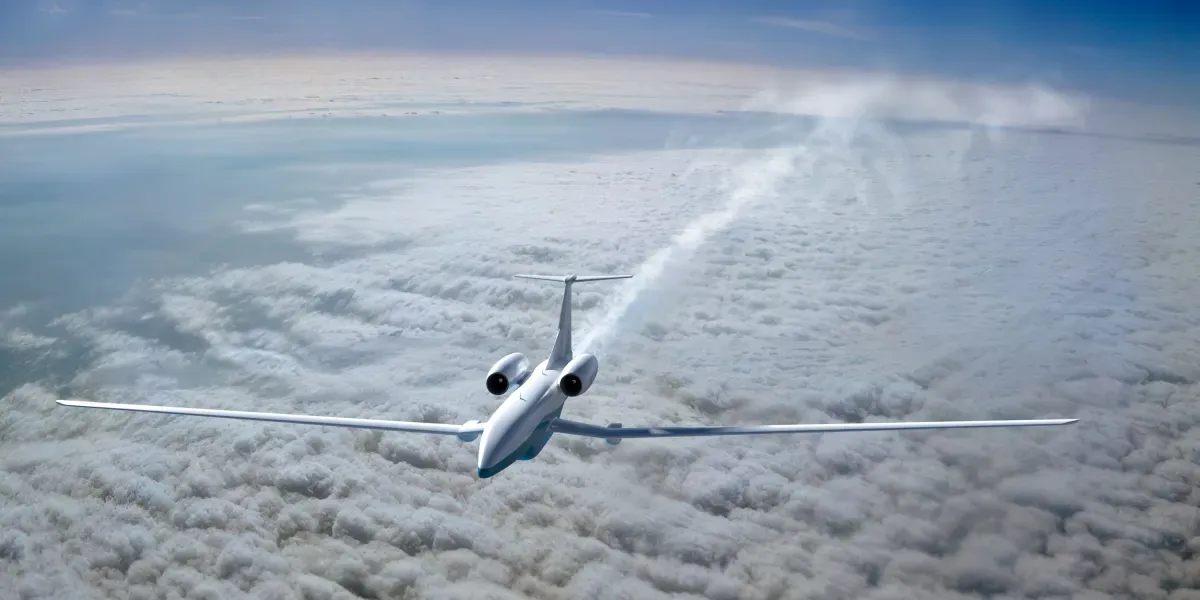
So what’s left? Aircraft. But conventional planes are not suited for this specific mission profile. Commercial aircraft typically fly at about 12 kilometers above Earth’s surface, while geoengineering would require reaching roughly 20 kilometers. The air is thinner higher up, so aircraft would likely need massive wings compared with today’s designs. The article points to an example from a startup called Iris Aero, whose proposed plane would require substantial rethinking of current flight technology. The description is intentionally striking: the plane’s wings are so long for its stubby body that it’s compared to a water strider, a bug that scurries across a pond using super-long legs. The point is not just aesthetic. If the platform itself has to look unlike anything used for routine flights, then “low-tech” is probably the wrong mental model.
Even if you can get to the stratosphere, there’s the next engineering question: what would you actually scatter? The article ties this to volcanoes, because an eruption releases sulfuric acid into the atmosphere, where it can temporarily cool the planet. But sulfuric acid is sticky and heavy, which makes directly carrying and dispersing it impractical. The practical implication is that researchers would likely look for a precursor to sulfuric acid, something that can convert or produce the cooling-related chemistry after deployment. The article cites work by researchers including some at the University of Chicago, one of the leading institutions in the field, aimed at figuring out the best formula.
This is where the story pivots from “can we do it?” to “what does it mean that we are doing it?” The article highlights major concerns about effects that could be positive in some parts of the globe and negative in others. It also flags the risk of shifting established weather patterns, including monsoon seasons in South Asia. In other words, even if the goal is global cooling, the impacts are not guaranteed to be uniformly distributed. That distribution matters for governance, because it changes who bears risk and who benefits.
Governance is the other half of the puzzle. The piece notes major questions about what the decision-making framework should be and who gets to decide whether to proceed. It also draws attention to a boundary that experts often defend: research to learn versus deployment to act. Many supporters of geoengineering research argue that you need understanding first so decisions can be informed. But the article makes a sharp distinction between atmospheric modeling and detailed engineering work on an aircraft. Once research starts functioning as a set of practical instructions, it may lower the barriers for individual actors or nations to attempt geoengineering on their own, outside the intended deliberation.
The article includes concerns from experts who told James Temple that the shift toward practical engineering work requires more oversight, with some characterizing parts of this work as dangerous. It also offers an alternative perspective from Shuchi Talati, executive director of the nonprofit Alliance for Just Deliberation on Solar Geoengineering. Her argument, as summarized in the piece, is that moving practical R&D forward could create a “sticky slope” in the opposite direction: instead of making the slippery slide slipperier, the actual practice of R&D will surface real-world problems that people may not have even considered yet. She suggests engineering research could challenge “idealized notions” of how easy the technology would be.
For executives watching adjacent climate and aerospace innovation, this framing carries a strategic warning. When the technical bottlenecks are this concrete, the governance bottlenecks become just as real. Practical progress in stratosphere logistics, aircraft design, and dispersal chemistry does not happen in a vacuum; it can change who gets to act, how quickly decisions form, and whether oversight keeps pace with capability. In the boardroom, that means the question isn’t only whether solar geoengineering could work. It is whether the path toward “how it would work” can be managed responsibly enough that the world does not end up with a capability that outpaces control.
This story's Key Insights and Take-aways are locked.
Create a free account to unlock Executive Actions for one credit.
Register to UnlockAlways free for Executives Club members. Join the Club
More in Technology

Nvidia's $89B data center quarter: the 9 companies cashing in
The AI buildout is minting fortunes beyond GPUs, and memory, cloud, and cooling suppliers are riding the same wave.

Google quietly links your phone number to every Android account on your SIM
Adding a SIM now ties your phone number to all Google accounts - and future accounts inherit it. Here's the security and privacy stakes.

Hijacker AI 'Skynet mode' runs 100,000 attack steps against exposed models
Symantec caught a criminal AI agent that borrows other models, steals data, and mines crypto; the only relief is no confirmed victims yet.