
Sony Bravia Theater Trio swaps traditional home theater rules and beats Sonos’ setup
A real-world replacement shows how Sony’s design choices matter when “innovation” meets living-room constraints.
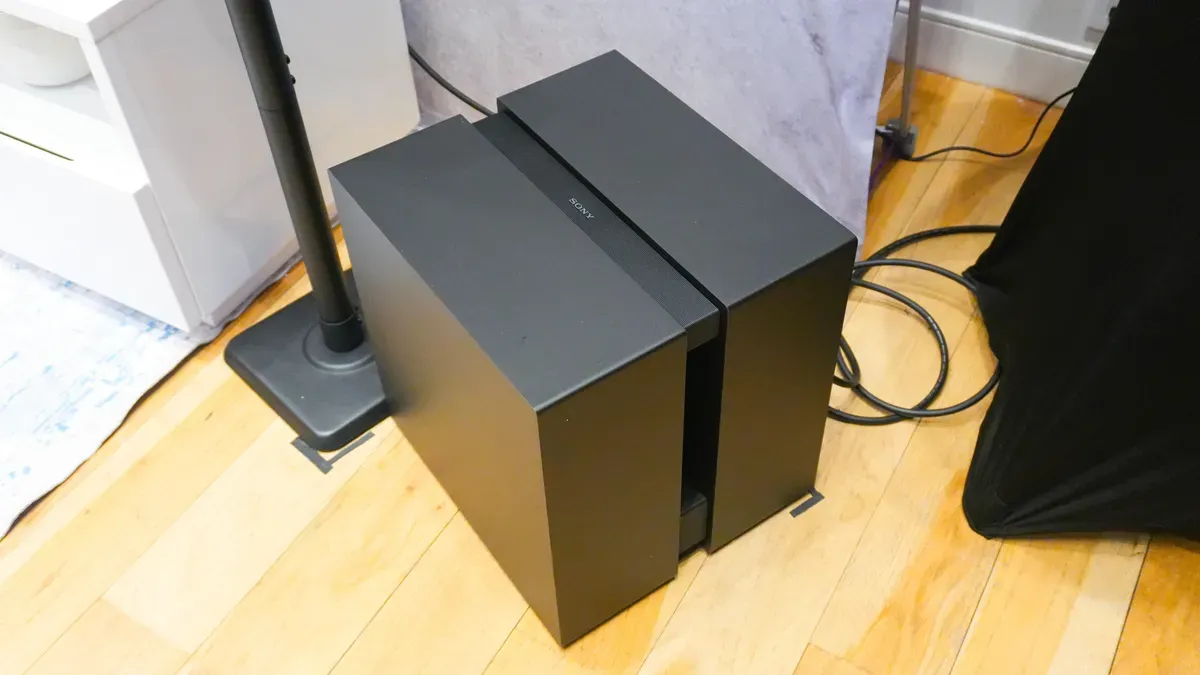
Sony’s Bravia Theater Trio arrives in a unique form factor, and the real test is replacing a Sonos home theater. For decision-makers, it signals how product innovation can outperform familiar benchmarks in consumer audio.
The headline is not just audio gear flexing. It is a practical teardown of what happens when a Sonos home theater gets replaced with Sony’s Bravia Theater Trio, and the author argues the upgrade works because innovation is not constrained by the usual home theater playbook.
That is the core claim, and it matters: the Bravia Theater Trio “arrives in a unique form,” and the replacement is presented as evidence that you do not need to follow traditional layout rules to get a strong result. The author’s point is straightforward. When the product is built differently, it can deliver the experience without forcing the room and the owner to behave like a conventional theater setup.
If you work in consumer tech, media, or retail, this is a reminder that the product category is often held hostage by conventions. Home theater has habits: how speakers are placed, what people expect from “surround,” and what counts as “proper” sound staging. Those expectations can become mental templates, not just buyer preferences. Sony’s move with the Bravia Theater Trio, as framed in this piece, is essentially a challenge to those templates. The system is designed to work through its specific form factor, rather than by asking the customer to recreate a textbook environment.
There is also an incentive story hiding in plain sight. Sonos, like many consumer audio brands, benefits from a well-known set of assumptions about placement, expansion, and user experience. Those assumptions reduce friction for buyers. But they also create an opening: when a new design approach arrives that changes the underlying rules, it can win customers who are tired of compromising their living spaces. In other words, “innovation is king” is not a slogan here. It is a category-level argument. If you can get comparable or better results without the usual constraints, you lower the cost of adoption for customers who have rooms, furniture, and patience.
The Bravia Theater Trio’s “unique form” is the hinge between promise and performance in this story. Traditional home theater setups often revolve around separate components and specific spatial arrangements. A system that is shaped differently can still be judged by familiar outcomes, like dialogue clarity, sound separation, and immersion. But the path to those outcomes can be different. The author is explicitly saying that the Trio does not let traditional home theater rules hinder its performance. That line is doing heavy lifting. It implies that the system has been engineered to meet the practical goal of home theater, rather than to mirror conventional architecture.
Zoom out further and the second-order effect gets more interesting for leadership teams. When consumers replace one ecosystem with another, it is not just a one-time purchase. It can reflect switching behavior across multiple products. Audio is a persistent category, meaning the buyer is often building a long-running home setup, not testing a novelty. So replacements like “I swapped my Sonos home theater with this Sony system” can become proof points that design direction matters more than brand familiarity.
There is also the regulatory and compliance angle, even if the piece is not spending time on it. In consumer electronics, design choices are still shaped by safety standards, RF rules for wireless features (if present), and labeling requirements. Even when innovation is aesthetic or structural, it usually runs through constraint layers that manufacturers cannot ignore. So a system that successfully delivers without relying on conventional speaker placement suggests that Sony did the work to make the experience hold together under real-world constraints.
For peers and investors watching the category, the takeaway is not “everyone should abandon tradition tomorrow.” It is more nuanced. When the market rewards familiar templates, innovation is still possible, but it must translate into a clear reduction in customer pain. The customer pain in home theater is not theoretical. It is installation complexity, room fit, and the fear that the system will not work the way the buyer imagined. The author’s replacement of a Sonos setup with the Bravia Theater Trio, framed around innovation that ignores “traditional home theater rules,” is a concrete example of innovation that aims at those pains first.
In an industry full of specs, this piece argues for the more durable signal: a product can win by changing the rules of how it is used. That is strategically relevant for anyone leading a consumer hardware team, building a platform, or allocating capital. If innovation actually improves the customer experience in the living room, it can outcompete familiarity even when the category has long rewarded conventional thinking.
This story's Key Insights and Take-aways are locked.
Create a free account to unlock Executive Actions for one credit.
Register to UnlockAlways free for Executives Club members. Join the Club
More in Technology

Google quietly links your phone number to every Android account on your SIM
Adding a SIM now ties your phone number to all Google accounts - and future accounts inherit it. Here's the security and privacy stakes.

Hijacker AI 'Skynet mode' runs 100,000 attack steps against exposed models
Symantec caught a criminal AI agent that borrows other models, steals data, and mines crypto; the only relief is no confirmed victims yet.

Nvidia's AI-financier shift faces its first big test as neoclouds stumble
A rout in neocloud stocks is forcing investors to weigh Nvidia's hidden exposure as both supplier and lender to the AI buildout.