
Southern Black lawmakers say Callais left them to fight alone as Democrats look elsewhere
Deep South Democrats warn the Voting Rights Act rollback could erase their seats while national party strategy focuses on other battlegrounds.
After the Supreme Court’s April decision in Louisiana v. Callais gutted key parts of the Voting Rights Act, Black lawmakers and activists in the Deep South say Democratic leadership is neglecting them. The consequence for decision-makers: redistricting plans and underfunded voter infrastructure could sharply weaken Black representation in Congress and state legislatures.
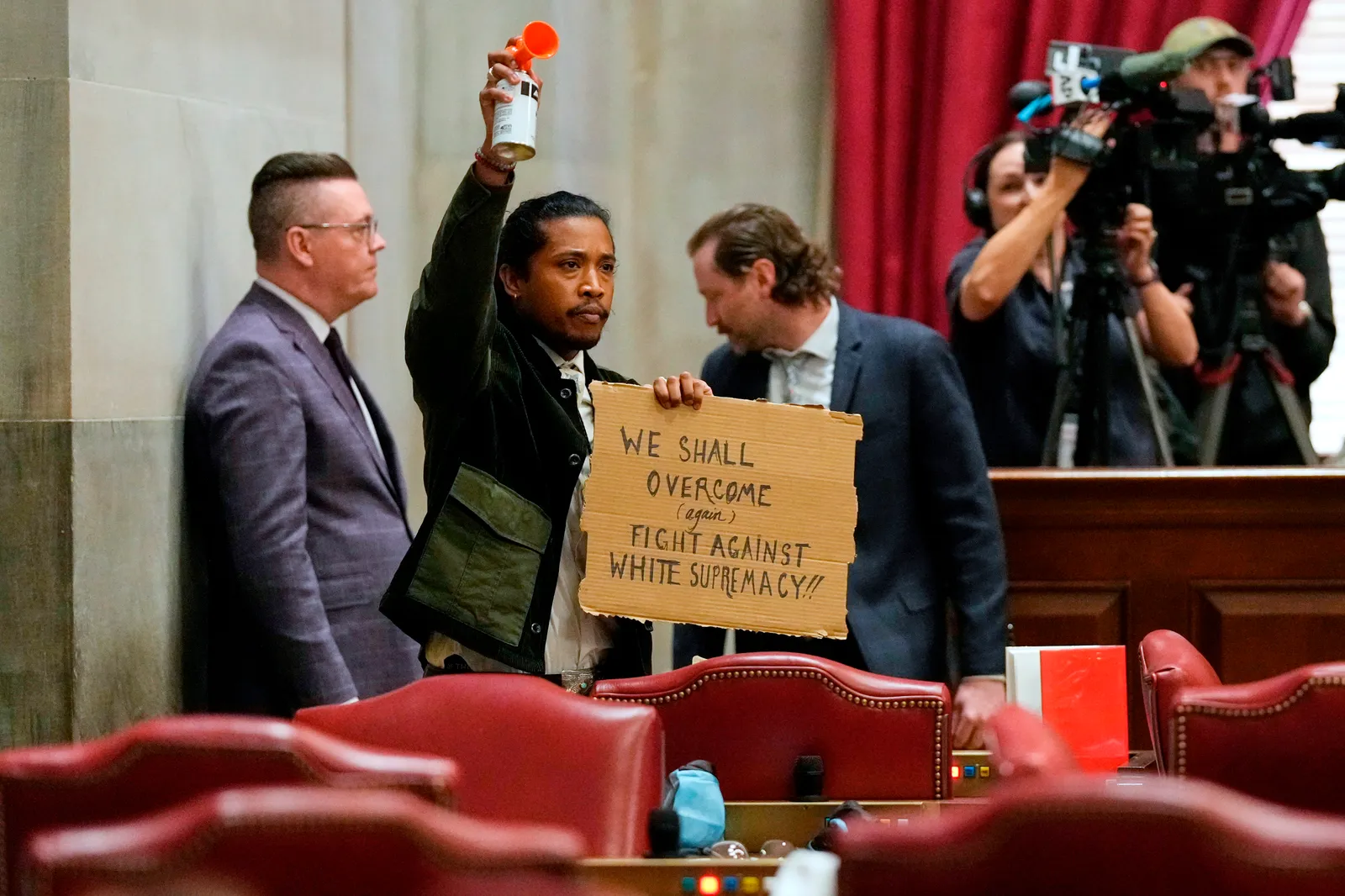
In Tennessee state Rep. Justin Jones’s telling, the Supreme Court’s April decision gutting the Voting Rights Act did not just change law. It created a crisis where Black leaders in the Deep South feel they are being abandoned while Democrats chase power elsewhere.
Jones described a pattern where party leaders show up with megaphones in early and swing states, like North Carolina and Georgia, but treat states such as Mississippi, Tennessee, Alabama, and South Carolina as forgotten. He said voters there are effectively left to live in “apartheid type of politics,” a critique that lands because the legal shock is immediate. The April Supreme Court decision in Louisiana v. Callais took aim at the VRA, and Black Southern lawmakers argue the long-term damage to their congressional delegations and statehouses could be severe, especially as Republican leaders in several Southern strongholds signal plans to redraw district lines ahead of 2028.
That is the central tension POLITICO reports: while many Black leaders hold Republicans responsible for Callais and for the subsequent redistricting scramble, frustration with congressional Democrats is also palpable. Black leaders, particularly younger Black Americans, say Democrats had a chance to strengthen protections during the Biden administration, including by passing the John R. Lewis Voting Rights Advancement Act, but the opportunity was missed. Yolanda Renee King, the granddaughter of Martin Luther King Jr., said the party “fumbled its chance” to pass the John R. Lewis Voting Rights Advancement Act, and she raised the practical question of capacity: “As of right now, I'm not sure if we necessarily have the infrastructure for that.”
This matters because redistricting is not abstract political theater. It is where representation either survives or gets structurally weakened. Florida state House Minority Leader Fentrice Driskell, speaking to POLITICO, framed it as suppression, pointing to a “concerted effort to suppress Black votes” across the Supreme Court, the White House, and GOP-controlled statehouses. She said Republicans in legislatures and the Supreme Court have effectively normalized reversing civil rights progress, and that Black voices are being targeted through map-making.
The legal and strategic fight now sits at the intersection of three forces. First, Republicans are signaling that they plan to draw new lines. Second, some Democrats are pushing for counter-moves even when that means making tradeoffs, like redrawing maps in blue states to favor Democratic candidates. Others want to rely primarily on lawsuits challenging new GOP maps. And a third, more operational force runs under all of it: chronic underfunding has, in the view of these Deep South lawmakers, atrophied local party apparatus in places where voter protection operations are most needed.
The Democratic Party’s response, as reported, is that it is using tools beyond map policy. The DNC defended its work with Black communities and voters, saying it has been providing tools to Southern states, including training and staffing for infrastructure needs. POLITICO reports a specific example: a 10-week training for states without a voter protection director. DNC Chair Ken Martin has also traveled to cities including Atlanta, Selma, Alabama, and Memphis, Tennessee. Angelo Fernández Hernández, a DNC spokesperson, said in a statement that the DNC will “use every tool at our disposal” to protect the right to vote and fight dilution of Black political power resulting from the “disastrous Callais decision.”
Still, on the ground, many Black Democrats say they are stuck trying to build defenses while party leaders argue over offense. Driskell said, “I don't need anybody to hold my hand, but what I need is strategy,” adding that she believes what is missing is thoughtful, coherent direction. It is a subtle but meaningful distinction: not a lack of effort, but a mismatch between the scale of the threat and the focus of national strategy.
That focus, POLITICO notes, has been heavily oriented toward winning back the House and Senate. Even the chair of the Congressional Black Caucus PAC, Rep. Gregory Meeks (D-N.Y.), told POLITICO in May that the PAC’s focus remains taking back Congress and reclaiming majority control. In the weeks since the Callais ruling, the Congressional Black Caucus and its PAC have actively pushed back against redistricting efforts targeting Black political power. That includes endorsing candidates in places like Memphis, launching TV advertisements in Alabama and North Carolina, and establishing a specialized program to determine how best to support VRA members facing elimination. The limitation is structural too: the CBCPAC’s war chest is described as fairly small compared with the overall Democratic Party.
In numbers, the stakes are stark. CBC leadership projected that roughly a third of its members could see their seats erased with redistricting. POLITICO also cites The POLITICO Poll in May: 45 percent of Democratic voters said the party should consider countering Republican efforts by drawing its own maps that create more Democratic seats, even if it reduces the number of majority-minority districts. That suggests a coalition tension inside the party itself, not just between parties.
The broader second-order implication for any executive or board-level strategist tracking politics as a risk factor is this: when voter protection infrastructure weakens and representation is diluted, consequences cascade. It can change committee power, influence legislative timelines, reshape state policy agendas, and shift the credibility of institutions with the communities most affected. And when Black leaders in the Deep South describe the moment as the “largest assault on Black representation since the end of Reconstruction,” they are signaling a category of threat that is bigger than any single election cycle.
In short, the legal rollback of Voting Rights protections after Callais has become a map-and-money problem with a staffing problem underneath. For Democrats deciding where to deploy limited time and dollars, the Deep South warning is blunt: if the national focus stays elsewhere while district lines move in the states that historically provided the margin for Black political power, the party may find it cannot regain what it fails to protect early. The moment is now, and the units at stake are seats, not slogans.
This story's Key Insights and Take-aways are locked.
Create a free account to unlock Executive Actions for one credit.
Register to UnlockAlways free for Executives Club members. Join the Club
More in Politics

Glacial collapse, not rain, killed 180 in Nepal's Himalayan flood
The Himalaya's extreme geography hid the true cause of Nepal's catastrophic flood, a glacial collapse that turned a geological battleground into a mass-casualty zone.

Iran’s Esmail Baghaei says Oman talks start shipping via Hormuz, not US talks yet
Temporary route plans with Oman aim to restart commerce while Tehran says Washington dialogue is not on the table.

Standards watchdog opens probe into Reform UK deputy leader Richard Tice over interests
The parliamentary standards commissioner says it began an investigation on 28 July into a possible undeclared interest.