
SpaceX delays orbital Flight 13; Gwynne Shotwell links Starship timing to engine restart failure
Flight 13 could slip into next month, but Starship stays suborbital until after Flight 14.
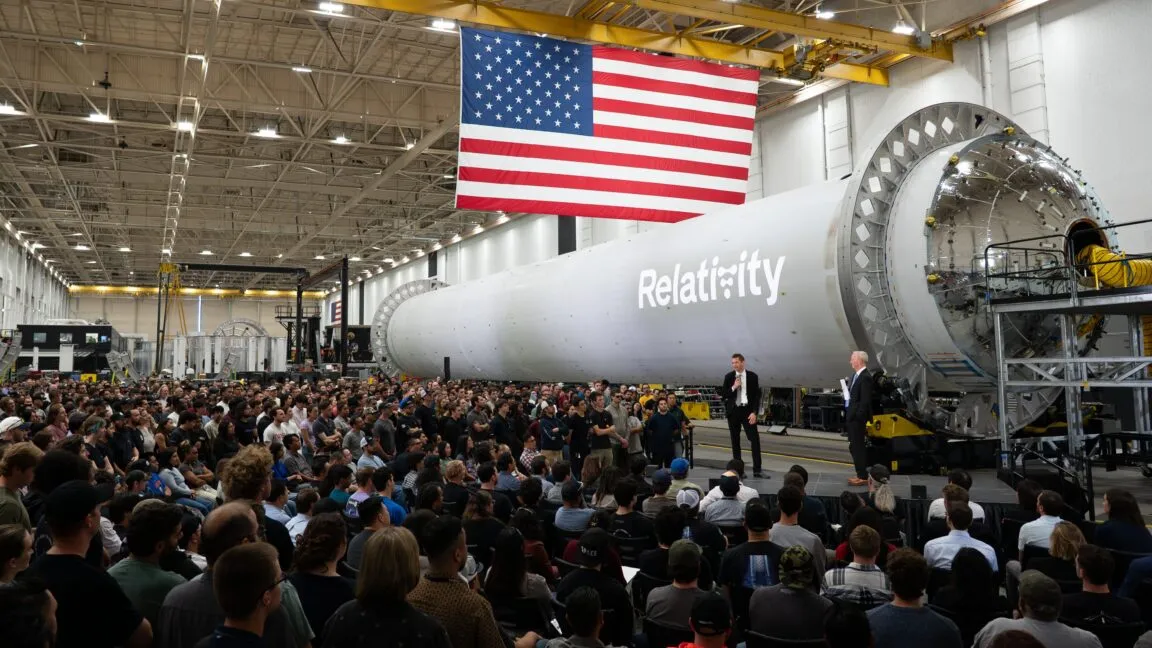
Gwynne Shotwell, SpaceX president and chief operating officer, said the next Flight 13 for Starship could happen as soon as next month. But SpaceX is holding orbital tests until at least Flight 14 after it failed to complete a critical engine restart in space on the last flight.
Edition 8.46 of the Rocket Report is basically a lesson in timing, risk, and why “soon” in rocketry usually means “soon-ish, but only after the hardware cooperates.” SpaceX could be gearing up for its next mega-rocket test flight, Flight 13, as soon as next month, according to Gwynne Shotwell. She is SpaceX's president and chief operating officer, and she said the company is not staring into a crystal ball, it is doing the work required to get to the next milestone.
Here is the catch. Shotwell also made clear that the next Starship test flight will not be an orbital mission. Instead, SpaceX is planning a suborbital flight path and a splashdown of the ship in the Indian Ocean, which is broadly consistent with the previous test flight's approach last month. At the same time, SpaceX is holding off on an orbital flight until at least the following launch, Flight 14, because Starship was unable to complete a critical engine restart in space on the last flight. In plain English, SpaceX can launch, but the step that matters for going orbital is still not reliably landing.
For decision-makers, that distinction matters because it changes what “progress” looks like. Suborbital tests are about checking systems under real flight conditions, gathering data, and proving incrementally that the vehicle works in the messy middle of ascent and reentry. Orbital tests are where things get unforgiving: you need not only good engines, but the ability to restart them when and how the mission profile demands. When a critical engine restart fails to complete in space, it is not a minor inconvenience. It is the kind of missing capability that can force a reshuffle of the test campaign, push schedules, and turn internal debates into very practical questions about engineering priorities.
This is why Shotwell's comments, as reported in the interview with CNBC, land with extra weight for operators and investors watching the next cadence of high-stakes launches. A schedule that slips by a couple of test windows can ripple across supply chains, ground systems, tracking assets, and the broader narrative around development velocity. Even when the company believes Flight 13 can happen as soon as next month, SpaceX is effectively telling the market that it will not trade orbital readiness for calendar optics.
While SpaceX works its way through engine restart lessons, European startup momentum has its own kind of reality check. Isar Aerospace, which Ars reports remains in a top position among a new generation of European rocket startups, is still pushing toward launching a critical Spectrum test flight. That attempt was scrubbed again after “detecting off nominal behavior in the vehicle’s fluid systems,” according to a social media post shared by the company. The team says it is analyzing the new data to isolate the root cause.
The practical story here is less about drama and more about development maturity. Isar is flush with cash, having raised nearly $1 billion to date. That is the kind of funding cushion that usually prevents a company from having to slow down for financial reasons. But Spectrum's track record shows that cash does not automatically solve the flight experience gap. The Spectrum rocket has flown just once to date, on a failed launch last year that lasted less than 30 seconds. So even with strong capital behind it, the program is still earning the right to move from constrained test events to higher-confidence flights.
In both cases, the second-order implication for boards, exec teams, and anyone tracking aerospace execution is the same: schedules are not just engineering timelines, they are governance timelines. They are what management says, what investors underwrite, and what regulators expect when the next mission profile carries different categories of risk. For SpaceX, the decision to delay orbital flight until at least Flight 14 after a critical engine restart failure in space reflects a disciplined approach to a known failure mode. For Isar, the scrub after detecting off nominal behavior in fluid systems highlights how quickly early-stage rockets can surface new anomalies that demand analysis before the next attempt.
The strategic stake for peers is obvious. In a market where launch cadence is a signal to customers and capital providers, every test flight becomes both a technical event and a confidence event. SpaceX is mapping out a path where suborbital flights keep the program moving while orbital readiness waits on restart reliability. Isar is showing that even well-funded teams can hit the wall on fluid system behavior and need more iteration before they can translate funding into consistent flight performance. The rocket business runs on physics, but it is also run on patience, evidence, and the ability to slow down without losing momentum.
This story's Key Insights and Take-aways are locked.
Create a free account to unlock Executive Actions for one credit.
Register to UnlockAlways free for Executives Club members. Join the Club
More in Business
Accenture’s $4.18bn play fails as AI fears spark a 20% worst-ever stock plunge
On Thursday, Accenture hit its biggest one-day drop on record after forecasting worries that AI could hollow out consulting.

SpaceX stock jumps 3% after it overtakes Amazon’s market cap
CNBC says SpaceX’s shares surge following its IPO Friday, forcing investors to reprice what “space” and “AI” are worth.
SpaceX’s first options day breaks U.S. records after a $85B IPO win
Big IPO, bigger options debut: what it means for investors, risk teams, and anyone benchmarking market appetite.