

SpaceX lands on Starship’s 13th test, giving NASA moon plans and data-center dreams a boost
Starship’s newest design clears its second try, turning a tense test cycle into momentum for NASA and SpaceX.
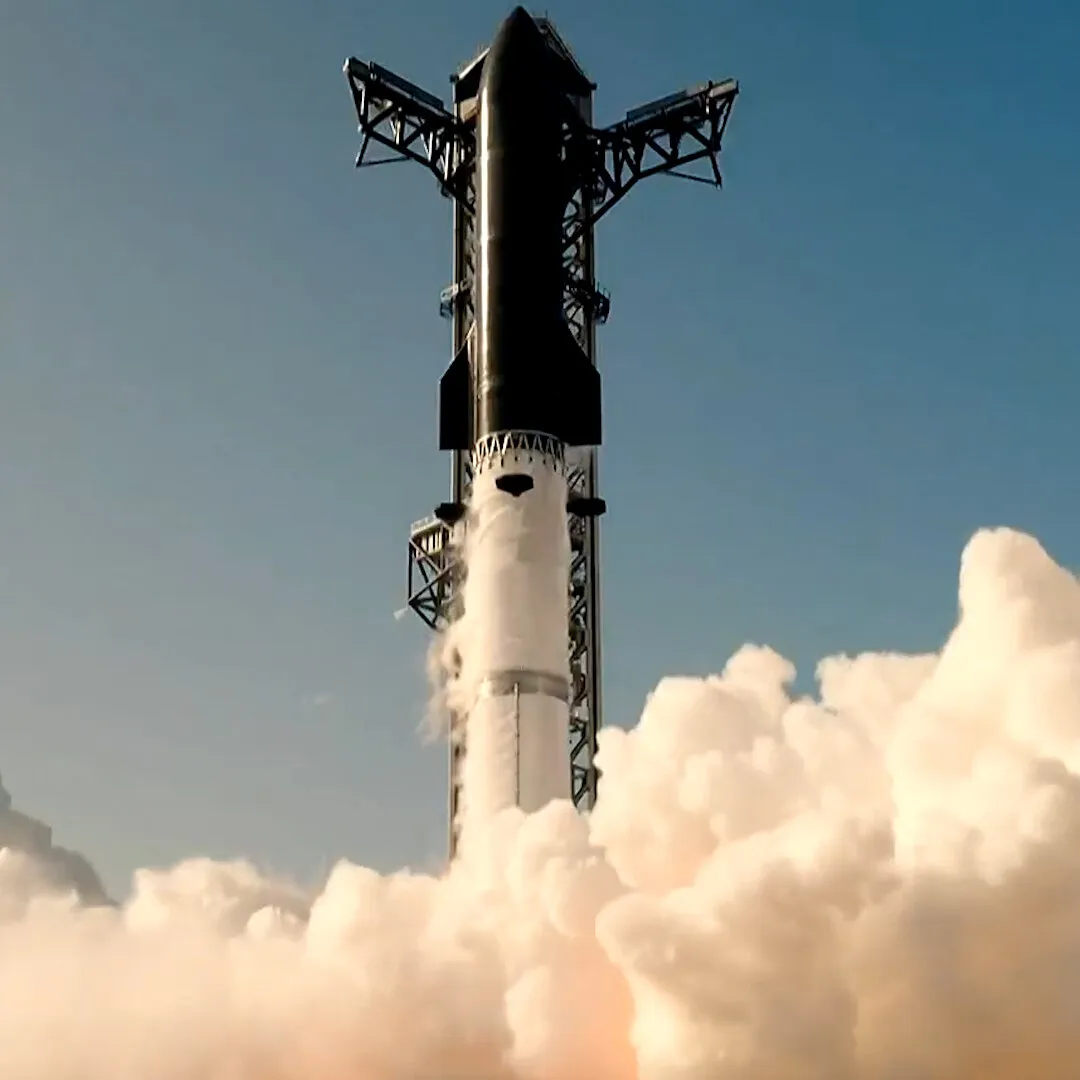
SpaceX’s Starship completed its 13th test overall, including a successful second test of its newest design. The landing success matters because it supports NASA’s moon plans and SpaceX’s ambition to deploy a million data centers in orbit.
SpaceX stuck the landing on Starship’s second test of its newest design, and that success landed on a very specific milestone: it was the 13th test overall of Starship. In a program like this, “successful landing” is not a vibe. It is the kind of mechanical proof that reduces uncertainty for the next design iteration, the next flight window, and the next set of stakeholders trying to map risk to schedules.
For decision-makers watching this from the NASA side and the capital and infrastructure side, the headline consequence is simple and immediate. The success is a boon to NASA’s moon plans, and it also strengthens SpaceX’s hopes to deploy a million data centers in orbit. Translation: when Starship performs the way the company needs it to, it gives both a government program seeking reliable access to space and a private infrastructure vision seeking scalable deployment a reason to move from “maybe” to “planning.”
This is where the business reality gets interesting. NASA moon plans are not just about landing on the Moon someday. They are about building a cadence. Programs like these live and die on dependable launch and logistics. Every test flight that goes well gives planners more confidence in timelines, integration, and mission architecture choices. Every test flight that does not goes into the risk ledger, and that ledger then pressures internal and external commitments.
On SpaceX’s side, the stakes are equally operational, but the framing changes. Starship is not just a vehicle, it is an enabling platform for whatever comes after. The source points to a very large-scale objective: deploying a million data centers in orbit. That number is eye-catching because it implies a new kind of space infrastructure. But the underlying business logic is grounded in something more old-school: to build anything at that scale, you need repeatable performance and a development path that does not constantly reset the calendar.
Regulatory and oversight considerations also hover over every test, even when the mechanics are the only things visible on screen. Launch systems operate in a world of approvals, safety reviews, and mission-specific scrutiny. Test success does not eliminate oversight, but it can shift how teams and regulators view feasibility. If a new design’s second test yields a landing, it reduces the unknowns regulators and mission planners typically stress over: vehicle behavior, control at critical phases, and overall reliability.
Then there is the second-order effect that boards and senior executives care about: momentum is a financial asset. When a flagship program is threading the needle, the market, partners, and internal teams all measure whether progress is compounding or merely stalling. A successful landing on a subsequent test of a newest design sends a signal that the engineering work is translating into outcomes that stakeholders can plan around.
For peers in aerospace, space-adjacent infrastructure, and deep tech, the strategic takeaway is not “copy Starship.” It is the broader pattern that high-risk programs need real-world checkpoints that de-risk the next phase. The source’s concrete facts point to exactly that: Starship’s 13th test overall includes a second test of its newest design, and it ends with the landing working. When those checkpoints align with high-value end goals like NASA’s moon plans and SpaceX’s orbital data center vision, the entire ecosystem gets a clearer runway.
In short, this is what it looks like when testing stops being abstract and becomes an enabler. A successful second test of a newest Starship design is a technical win. It is also a planning win for NASA’s moon ambitions and for SpaceX’s bid to scale orbital computing infrastructure. In programs where schedules, budgets, and stakeholder confidence are all coupled, that is the real prize.
This story's Key Insights and Take-aways are locked.
Create a free account to unlock Executive Actions for one credit.
Register to UnlockAlways free for Executives Club members. Join the Club
More in Science

Scientists put wild marmots on OnlyFans to fund research as budgets get cut
A team of researchers turned adult subscriptions into a stopgap for wildlife science, raising money amid government budget cuts.
Mandarin learners' speech changes with prior language, Taiwan-led study finds
New research shows how what you hear and produce is tuned by your language history, reshaping theories of human communication.
Misinformation spreads through receivers, not just creators, study says
A new model argues social media users who get posts matter more for false news spread, shifting countermeasures toward sharing behavior.