
SpaceX’s Starship completes a successful test flight, proving steps toward reusable lunar transport
A successful Starship launch validated capabilities that matter for the economics, schedule, and regulation of human Moon missions.
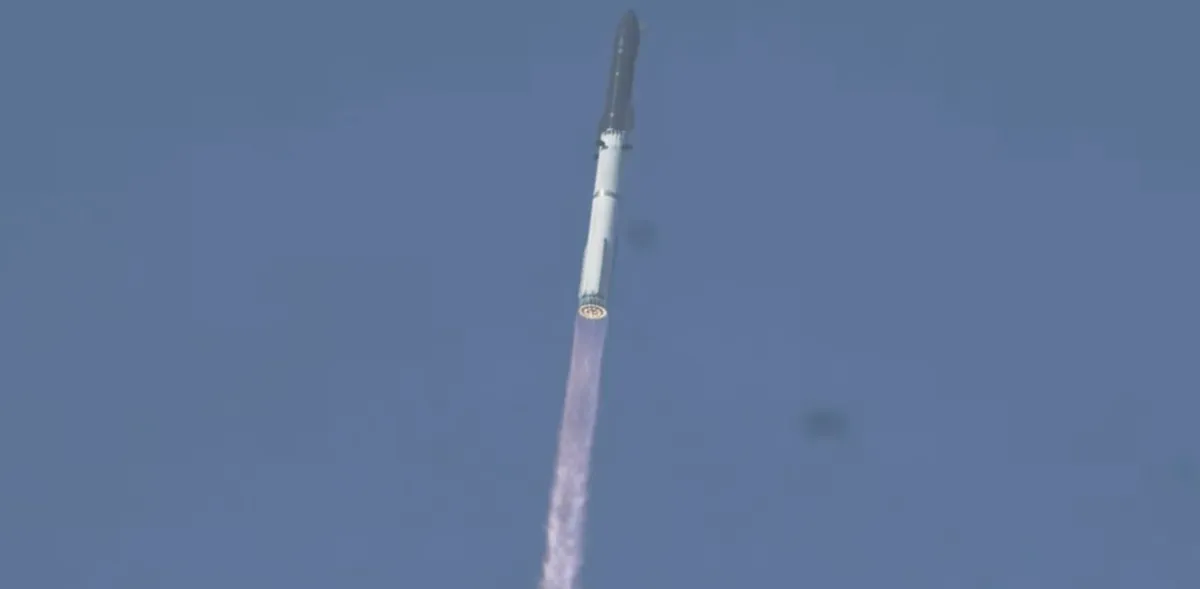
SpaceX launched Starship on a successful test flight, demonstrating key abilities aimed at making the spacecraft fully reusable. For decision-makers, the win is not just technical. It reduces timeline and cost risk for future astronaut missions bound for the moon.
SpaceX just launched Starship on a successful test flight, and the mission used that moment to show off more than spectacle. Starship demonstrated key abilities on its path to becoming a fully reusable transport for astronauts to the moon. That “fully reusable” phrase is doing heavy lifting, because for human spaceflight it is the difference between a program that scales and a program that constantly restarts with fresh money, fresh vehicles, and fresh operational risk.
A successful launch is good. A successful test flight that demonstrates specific capabilities is better. In this case, the important payoff is that Starship did what the program is designed to do in stages: prove it can perform critical steps on its journey toward reusable operations. That matters for how missions get priced and planned, because reusability is supposed to turn expensive, one-time hardware into repeatable infrastructure. If you can reuse the system reliably, you can iterate faster. You can plan more launches with less uncertainty. And you can start treating spacecraft like vehicles, not like one-off scientific exhibits.
Now zoom out to why this kind of test flight is a board-level story, not just an engineering update. Building toward lunar missions is not a single decision. It is a chain of decisions across hardware, launch operations, ground systems, crew safety planning, and regulatory compliance. Each successful test flight is a signal to internal stakeholders and external partners that the program is tightening the loop between design, manufacturing, and operational learning. In other words, it helps convert “future potential” into “current evidence,” which is exactly what investors, insurers, and mission partners tend to want.
There is also a regulatory backdrop that executives usually have to manage quietly in the background, even when the headlines focus on rocket performance. Human missions require a safety case, and safety cases require data. In the US, that typically involves coordination among multiple federal entities and the agency responsible for commercial space safety, along with ongoing documentation of risk, procedures, and mitigation strategies. While today’s report focuses on the successful test flight and the demonstration of key abilities, the subtext is that better flight data can support smoother progress through the kind of oversight that turns “it works on the test stand” into “it is ready to carry people.”
For companies building adjacent systems, the strategic second-order effect is timing. Lunar exploration is not only about landing. It is about sustaining a cadence. Fully reusable transport is the core ingredient that could enable more frequent sorties to the moon, which changes everything from mission design to supply chain planning. If Starship can become a workhorse for moving astronauts, cargo, and equipment, then the economic model for lunar logistics shifts. That can influence partner contracts, procurement cycles, and even how quickly new payloads can be scheduled.
For SpaceX specifically, a successful test flight also helps with internal momentum. Programs like Starship operate in a world where iteration speed matters. Every test flight that demonstrates key capabilities becomes a reference point for what to keep, what to improve, and what to redesign. That kind of learning is the only thing that can meaningfully compress the path from prototypes to operational vehicles. In space, where components face extreme thermal and mechanical stresses, “we think it will work” is never enough. You need repeated demonstrations, and you need them to show progress toward the end state, which here is reusable transport for astronauts to the moon.
Executives at other space and aerospace firms should care because the market signal is clear: the bar for lunar readiness is moving from concept to demonstrated capability. If Starship is able to keep proving steps toward full reusability, it raises competitive pressure on timelines and cost structures across the industry. It also forces boards and management teams to ask a hard question about their own development roadmaps: are you building toward repeatable operations with measurable evidence, or are you still in the stage where success is mostly theoretical?
The headline is about a successful test flight. The deeper stake is about what that success is trying to unlock: a fully reusable transport pathway for astronauts to the moon. If Starship continues to demonstrate the right capabilities on the way there, it can reshape the economics and operational planning assumptions that underpin lunar mission strategies across public agencies, commercial partners, and the investors financing the next wave of space infrastructure.
This story's Key Insights and Take-aways are locked.
Create a free account to unlock Executive Actions for one credit.
Register to UnlockAlways free for Executives Club members. Join the Club
More in Science

2026 Nikon Small World Winners Reveal the Hidden Machinery of Everyday Life
A mycologist's frozen Edinburgh garden became the backdrop for vivid views inside cells, a reminder of what advanced imaging now makes visible to researchers and the industries built on biology.

Study: 1 in 4 depression cases may be a body-clock problem, not a chemical one
A 10,000-person study finds standard antidepressants often fail these patients, but melatonin and morning sunlight may hit the real root cause.

Start-Up Says A.I. Designed a Virus to Attack One Patient's Superbug
If the claim holds up, personalized phage therapy could become a new frontline weapon against antibiotic resistance - but proof is far from final.