
SpaceX slips Starship Flight 13 to July 23 after last-second July 16 abort
What changed, what will fly next, and why a single test window matters to Artemis and Starlink.

SpaceX is targeting Thursday, July 23 for Starship Flight 13, the second attempt after a July 16 abort occurred just as 33 Raptor engines fired. The new timing, the engine swap plan, and a suborbital payload that will deploy 20 Starlink V3 satellites shape execution risk for NASA Artemis and early Mars timelines.
SpaceX is now targeting Thursday, July 23 for Starship Flight 13, after the first attempt on July 16 ended in an abort at the last second. The rocket is the giant, fully reusable Starship that is designed to help carry people to the moon and Mars, and the plan is to launch from SpaceX's Starbase site in South Texas during a 90-minute window that opens at 6:45 p.m. EDT (2245 GMT; 5:45 p.m. local Texas time). If you are the type of decision-maker who cares about mission timelines, this is the kind of delay that signals more than scheduling. It usually means hardware confidence had to be rebuilt, and the flight window is being treated like a critical dependency rather than a suggestion.
The reason SpaceX gave for the July 16 failure response was unusually specific. Elon Musk said on July 16 via X that “To be confident of a good flight, 2 Raptors will be removed & replaced. Most probable launch timing is early next week.” That statement lines up with how SpaceX handled the calendar: the company first targeted July 20 for the second attempt, then announced on Sunday, July 19 that it would not be earlier than Thursday. In other words, Flight 13 is not just “rescheduled.” It is a retry with a defined mitigation step, the replacement of two Raptor engines, aimed at turning a near-attempt into a clean enough flight to gather the data Starship needs.
Flight 13 will be the second launch attempt for Starship Flight 13 and the second launch of Starship Version 3 (V3), the latest iteration of the megarocket. V3 matters because it is the variant SpaceX is associating with landing astronauts on the moon for NASA's Artemis program and flying SpaceX's first Mars missions, if all goes to plan. That “if” is doing a lot of work, but the structure is clear: you do suborbital tests to de-risk big orbital objectives, you iterate on systems, and you keep pushing toward operational reliability. Starship debuted in April 2023, and all of its test flights to date have been suborbital, which makes Flight 13 part of a longer runway toward the heavier mission claims.
The launch architecture for this attempt is also straightforward and worth tracking because it shows where risk is being concentrated. The 408-foot-tall (124.4 meters) Starship will fly in a suborbital profile. The Super Heavy first stage will aim to steer itself back to Earth for a controlled splashdown in the Gulf of Mexico. The Ship upper stage will do the same halfway around the world, off the coast of Western Australia. SpaceX accomplished the Ship's objective on Flight 12 but not the Super Heavy's; Super Heavy suffered engine issues during its return to Earth and ended up hitting the Gulf waters hard. That history matters because it tells you which part of the system is still fighting for consistency, even when the mission concept is working.
Flight 13 will introduce at least one notable change in payload even while it stays within the suborbital test concept. It will carry 20 of SpaceX's next-gen Starlink V3 internet satellites, which have never flown to space before. SpaceX plans to build a constellation of 100,000 Starlink V3 spacecraft in low Earth orbit over the coming years, and Starship is expected to do the heavy lifting. For executives watching the intersection of space hardware and communications scale-up, this is the key second-order signal: the rocket test is also a manufacturing and deployment stress test for a brand-new satellite generation. Even if the satellites will not remain on orbit long, the flight still has to execute precisely.
Because the launch is suborbital, those satellites come back relatively quickly after deployment. SpaceX's Flight 13 mission description says the Starlinks will be deployed about 20 minutes after deployment and will return to Earth relatively quickly, roughly about 20 minutes after deployment. That short timeline is operationally useful for testing, but it is still a real risk window. Launch and deployment sequencing for a fresh satellite platform can expose integration issues, thermal constraints, communications timing, and mechanical separation problems. For a board or investment committee, this means Flight 13 is simultaneously answering questions about rocket reusability and about whether Starlink V3 can survive the ride and behave as expected immediately after separation.
The overall picture is that SpaceX is trying to keep momentum without pretending risk is gone. After a July 16 abort that occurred just as 33 first-stage Raptor engines were firing up, the company is taking a concrete corrective action, replacing two Raptors, and shifting the attempt from July 20 to July 23. If the July 23 attempt stays on track, it advances the Flight 13 milestone for Starship V3 while also giving SpaceX its next datapoint on reentry and stage recovery, based on what happened on Flight 12. If it does not, it suggests that engine readiness and return-to-Earth reliability remain stubborn bottlenecks.
For executives and investors tracking space as a strategic sector, this is the kind of update that tends to ripple through expectations. Artemis and early Mars planning are built on a steady pattern of suborbital credibility translating into orbital confidence. Meanwhile, Starlink's ambition to grow to 100,000 V3 spacecraft depends on launch cadence and payload integration that can scale without surprise. In that context, a single launch window on July 23 is not just another date on a calendar. It is a decision-point where engineering confidence, mission execution, and downstream satellite deployment all either align or collide again.
This story's Key Insights and Take-aways are locked.
Create a free account to unlock Executive Actions for one credit.
Register to UnlockAlways free for Executives Club members. Join the Club
More in Business

Uber buys Delivery Hero for nearly $15B, vaulting to top food delivery outside China
The deal doubles Uber's dual-services footprint and pushes a ride-and-eats bundling play into 50 more markets.

Epic and Google drop settlement bid, forcing rival Android app stores by July 22
Google told the court it is ready to carry third-party app stores starting Wednesday, July 22.
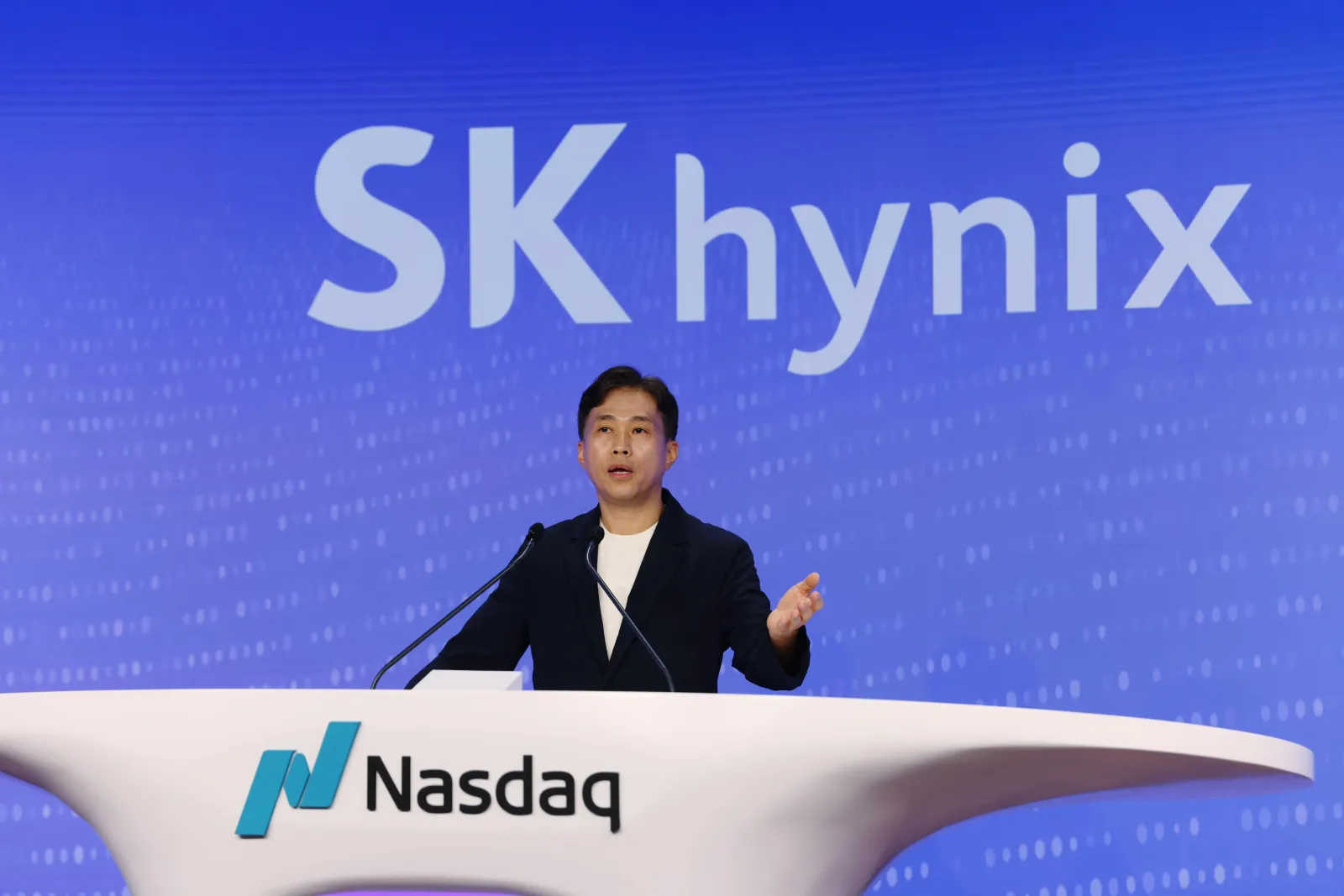
SK Hynix opens at $170, raises $26.5B, and tops foreign IPO records
In Friday's Wall Street debut, SK Hynix turns AI RAM demand into a $26.5B fundraising moment that rewrites comps.