

Spain declares emergency as France requests EU wildfire help after thousands evacuate
Extreme heat and winds turned western Europe into a mass evacuation zone, forcing governments to coordinate across the EU.
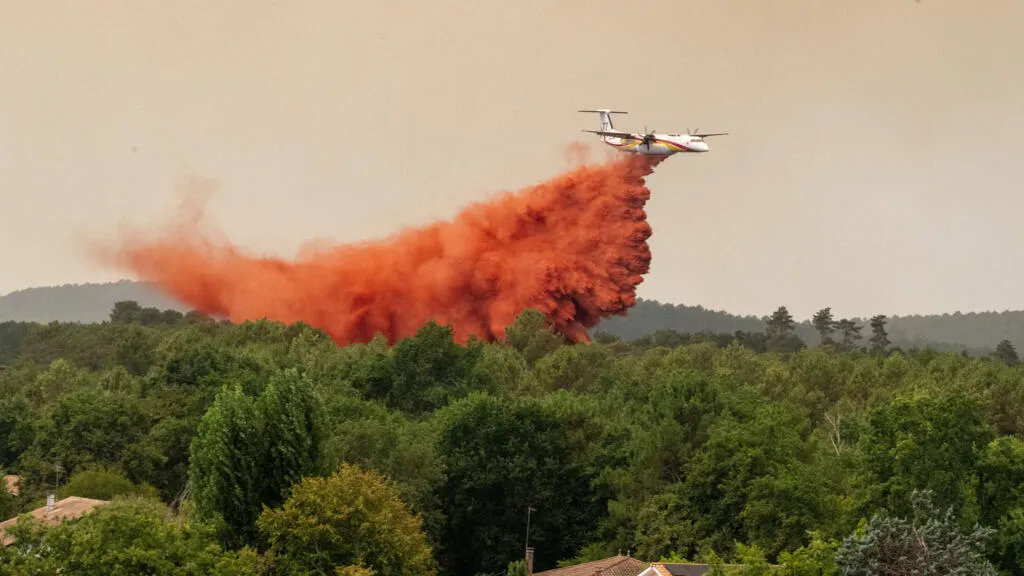
Spain declared a state of emergency in the Madrid region as wildfires raged, while France sought emergency assistance from the European Union. For decision-makers, the episode is a real-time stress test of cross-border response capacity and public-risk management.
Wildfires fueled by extreme heat and strong winds swept across western Europe on Friday, forcing thousands to evacuate in France. In the same week, Spain triggered a state of emergency in the Madrid region, and France moved beyond national channels by prompting Paris to seek emergency assistance from the European Union.
The timeline matters because it shows governments escalating in parallel, not sequentially. France first absorbed the immediate operational shock at ground level, with evacuations underway for thousands of people, while Spain shifted to a formal emergency posture in Madrid. Then France took the next step: it pushed for EU help. In a crisis like this, the “who helps whom” question is not academic. It decides how fast resources move, how systems avoid overload, and how much uncertainty hangs over public services.
Wildfire seasons are increasingly about logistics, not just flames. When extreme heat and strong winds combine, fire behavior can change quickly, and the practical constraints are brutal: evacuation capacity, transport routes, firefighting personnel availability, water and aircraft scheduling, and the ability to maintain order amid rapid, localized disruptions. Evacuations in France are the visible part. Behind them are emergency management teams trying to keep hospitals functioning, schools and shelters supplied, and traffic and communications systems from collapsing under the strain.
Spain’s state of emergency in the Madrid region is the governance layer of that same reality. Declaring an emergency is a signal that normal rules are too slow for the pace of the hazard. It typically gives authorities more room to mobilize response efforts and coordinate across agencies. The important part, from an executive perspective, is that these decisions shape how budgets are unlocked and how legal processes adapt in real time. Even when the threat is geographic, the consequences are institutional: agencies must act quickly, and they must document decisions for later accountability.
Then there is the EU angle, and it is where boardrooms should pay attention. France’s move to seek emergency assistance from the European Union indicates that national capability alone may not be enough, at least not at the speed required. In practical terms, EU-level assistance can mean access to additional operational resources, cross-border coordination, and a faster way to align capacity across member states. In other words, this is not just politics. It is an attempt to reduce response latency when heat-driven, wind-driven wildfire spread can outpace a single country’s internal reserves.
For companies tied to infrastructure, supply chains, insurance, property, or travel and logistics, such events quickly ripple outward. Evacuations disrupt transportation and demand re-routing. Emergency declarations can affect permits, operations, and the availability of local labor. Even where businesses are not directly in the affected areas, workforce accessibility, regional electrical or water systems, and municipal services can get strained. And once governments shift to emergency mode, uncertainty rises for schedules, contracts, and compliance timelines.
There is also the second-order reputational and governance angle. When wildfires force evacuations and trigger emergency declarations, stakeholders look for preparedness maturity: scenario planning, interagency coordination, crisis communications, and the ability to request help early. The fact pattern here is clear: thousands evacuated in France, Spain declared a state of emergency in Madrid, and France sought EU assistance. These are not isolated headlines. They are visible markers of how public systems escalate when conditions deteriorate quickly.
Strategically, this episode should matter to peers in public-sector-adjacent roles and to executives managing continuity planning. It reinforces a simple, uncomfortable truth: extreme weather turns coordination into the main variable. When heat and strong winds drive fire behavior, the ability to mobilize, evacuate safely, and request additional support across jurisdictional boundaries becomes a competitive advantage for resilience, not a nice-to-have. The executives reading this should treat the Friday escalation as a live example of what can happen when multiple governments must move at once, and when EU assistance becomes the bridge between capacity constraints and real-world timelines.
This story's Key Insights and Take-aways are locked.
Create a free account to unlock Executive Actions for one credit.
Register to UnlockAlways free for Executives Club members. Join the Club
More in Politics

LA County: DOJ's 20,000 'noncitizen' voter list is 'unreliable,' includes U.S.-born
Preliminary review by Los Angeles County election officials finds errors in the federal list, raising the stakes for voter roll integrity ahead of November.

Trump's $1.5B Pentagon chip investment lands in North Carolina
A $1.5 billion defense infusion for North Carolina chipmaking signals a new era of Pentagon-backed reshoring - here's what it means for the industry.
Nigeria confirms first Ebola case in Abuja, a woman just off a Uganda flight
Health Minister Muhammad Ali Pate says the patient flew in from Uganda, putting Africa's latest outbreak on Nigeria's doorstep.