

Splatoon Raiders’ developers say it began as a base defense game, then sped up
Nintendo EPD lays out how Splatoon Raiders’ “action-first” feel evolved from a slower defense concept before launch on Switch 2.
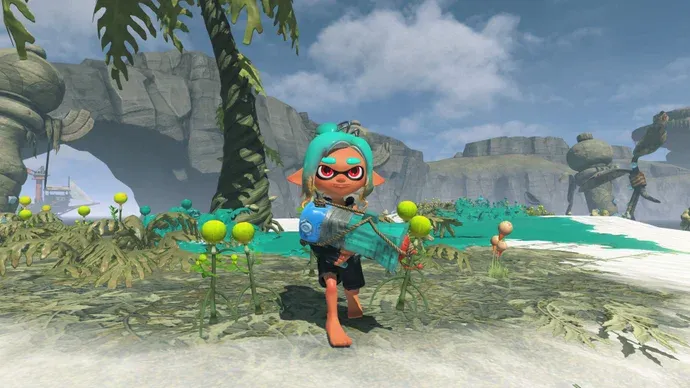
Nintendo is using a Switch 2 launch moment to share a surprisingly in-depth chat with four Nintendo EPD developers about Splatoon Raiders. The devs explain the game started “like a base defence game” and evolved into a faster spin-off with a strong sense of action.
Splatoon Raiders is set to try to make a splash tomorrow, 23rd July, and Nintendo is marking its Switch 2 launch with an unusually detailed look at how one of its new releases took shape. In an in-depth chat with four Nintendo EPD developers, the team describes how the project originally felt “like a base defence game” before evolving into a faster spin-off, built around “a strong sense of action.”
That design pivot is the headline, and it matters because it signals what Nintendo thinks players should feel in the moment-to-moment play. A “base defence” loop typically asks you to manage space, timing, and survivability, often rewarding awareness and endurance. By contrast, a faster, action-heavy spin-off pushes players toward faster decisions, tighter loops, and a more kinetic rhythm. The devs are basically telling you that the game’s core fantasy changed early enough to steer the whole tempo, not just the presentation.
For decision-makers, this kind of “evolution” story is more than trivia. Game studios, especially within large publishers like Nintendo EPD, juggle many competing incentives at once. Teams need to find a hook that matches the audience and the platform while also differentiating the product from what already exists in the franchise universe. When a project begins with one identity, like defense, and later becomes something else, like action-first speed, it implies the team made tradeoffs that would affect everything downstream: combat pacing, map design, player movement, moment-to-moment readability, and even how learning progression works.
It is also a reminder that spin-offs are not always side quests. In the case of Splatoon Raiders, the “spin-off” framing comes with an explicit tonal shift. The devs describe a movement toward speed and action, not just a new mode skinned with familiar assets. That matters to operators and investors watching the games market because it suggests Nintendo is willing to restructure the core loop rather than simply repackage an existing formula. In a crowded landscape where players can bounce instantly, the loop is the product.
There is also a second-order implication here for how teams communicate internally and externally. Nintendo is choosing to spotlight four Nintendo EPD developers and the process behind the shift, rather than just announcing features. That kind of communication can reduce uncertainty for the market. For example, it gives players a clearer expectation about what they are buying on Switch 2, and it gives partners and stakeholders a stronger signal about the design direction. When launch day approaches, clarity can be as valuable as hype.
From an industry context perspective, launches on a new platform can amplify the stakes of design. Switch 2 is not simply a bigger screen version of the past. Platform transitions tend to force changes in performance, responsiveness, and how developers craft input feel. The fact that the devs emphasize speed and action suggests they are aligning the game with what fast play needs: crisp controls, smooth motion, and immediate feedback. Even without technical details in the source, the principle holds. Action-forward games live or die on responsiveness.
There is also an organizational angle. Nintendo EPD is a big ecosystem, and the presence of four developers in the conversation implies more than one function shaped the pivot. A shift from base defence to fast action usually touches multiple domains: systems design, level or map logic, character movement behavior, balance, and the overall “flow” from one encounter to the next. When multiple voices show up, it can be a sign that the pivot was real and not a cosmetic adjustment.
Ultimately, Splatoon Raiders is launching on Switch 2 on 23rd July, and Nintendo is tying that release to a narrative of transformation. The developers say the project started “like a base defence game” and evolved into a faster spin-off with a “strong sense of action.” For executives and boards evaluating game studios and pipeline risk, the takeaway is straightforward: design pivots that change tempo and player fantasy are early signals of where a studio believes the value actually is. And if Nintendo gets the action feel right, the splash will not be just marketing. It will be in the gameplay loop itself.
This story's Key Insights and Take-aways are locked.
Create a free account to unlock Executive Actions for one credit.
Register to UnlockAlways free for Executives Club members. Join the Club
More in Entertainment
12TB Steam 'teraleak' goes beyond Valve: GTA 3, Mafia 2 prototypes exposed
A 12-terabyte dump of Steam data reveals prototypes and builds of third-party classics like GTA 3 and Mafia 2, plus unreleased Valve content, rewriting game history.

LinkedIn's romance problem: 1 in 4 workers say dating on it is fair game
A new survey shows a quarter of U.S. employees treat the professional network as fair game for romance, even as LinkedIn bans it and removes hundreds of thousands of offending posts.

Enhypen's first No. 1 album breaks K-pop's Billboard 200 streak
The K-pop group's 98,000-unit debut tops the chart while Dolly Parton's catalog reentry shows how death reshapes streaming.