

Steam now labels Crazy Taxi: World Tour with generative AI help, and fans react
Sega says generative AI supported development, but the disclosure on Steam has sparked backlash and “Lazy Taxi” memes.
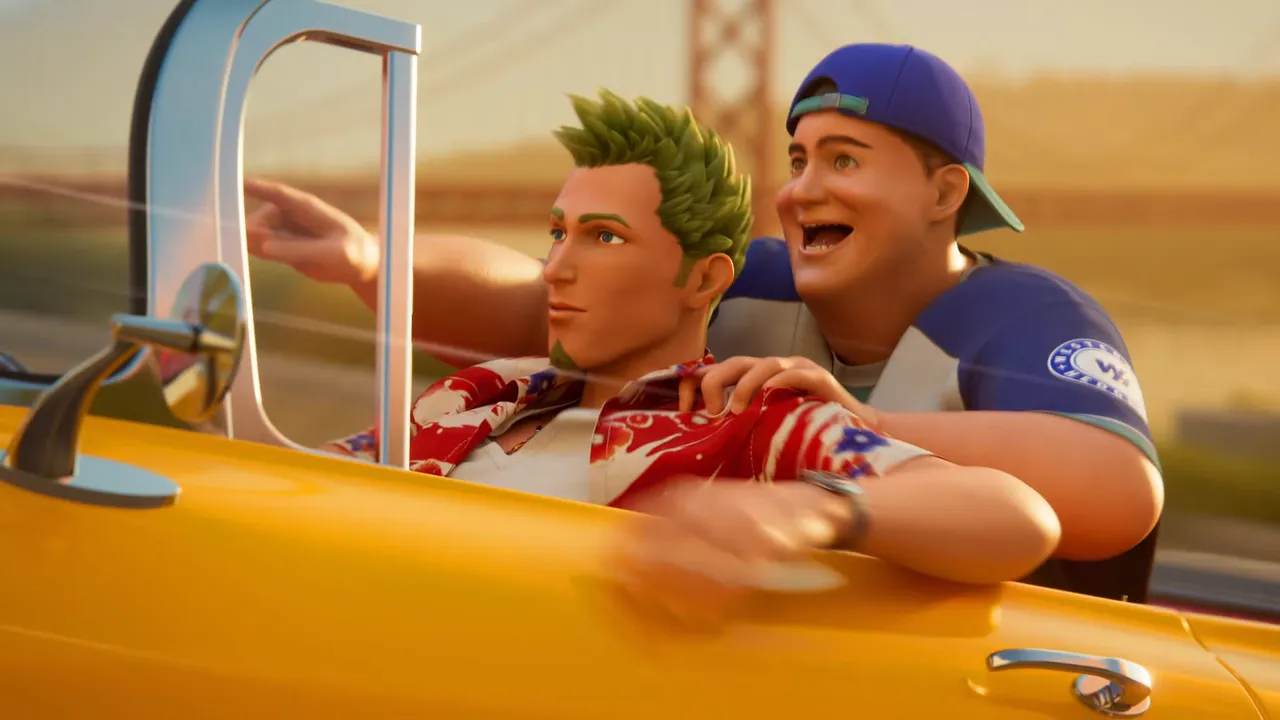
Crazy Taxi: World Tour, developed with help from generative AI, now carries a disclosure on its Steam page from Sega. The reaction matters to decision-makers because it shows AI transparency is quickly becoming a brand and market risk, not just a compliance checkbox.
Crazy Taxi: World Tour, a game some people were already looking forward to, now comes with a generative AI disclosure on its Steam page. Sega states on that page that “At Sega Corporation, we utilize generative AI as a support tool for developers, aiming to provide better content to our users and enable developers to focus more on creative tasks,” and it adds, “No AI was used in reference to the performers in the game.”
The key detail is not the fact that AI was used. It is the decision to disclose it on Steam, right after the broader gaming conversation shifted toward AI transparency. In a follow-up context, Game Informer’s Brian Shea got an expanded statement from Sega (posted on Bluesky) that includes: “Assets generated were still subject to review by the development team.” That gives buyers more information, but it does not calm the anger. Fans took to social media fast, using the phrase “Lazy Taxi” as a punchline. “Using AI slop to make shit for you, more like Lazy Taxi,” wrote mat-draws on Bluesky. “Lazy Taxi,” concurred Bluesky user tehsnakerer. “Lazy Taxi,” mused mluckas, also on Bluesky.
So what is actually happening here? First, this is a clear example of generative AI entering mainstream production pipelines, even for recognizable, personality-heavy franchises. Crazy Taxi has always leaned hard into a specific kind of chaos and counterculture energy, with pop punk blaring as you try not to crash into the nearest KFC. Sega’s disclosure frames AI as an internal support tool and emphasizes that no AI was used “in reference to the performers in the game,” which likely aims to reassure players that voice or likeness tied to human performers is not being AI-mimicked. The expanded Sega line about review suggests a workflow where generated assets are not simply auto-shipped into the game, but checked by the development team.
Second, the backlash suggests that for players, the label itself changes the emotional contract. Even when a company provides guardrails (no AI used regarding performers, assets reviewed by the development team), the presence of generative AI can still be interpreted as “less craft” and “more shortcuts.” That is why the meme language is so consistent. On Reddit, user RORSCHACH_INC_ commented, “Know what... think I’ll just walk home.” Whether every individual reaction is fair is a separate issue. The business reality is that sentiment spreads quickly, and it often clusters around metaphors that are easy to repeat.
Third, this lands at a particularly sensitive moment for the industry. PC Gamer’s Andy Chalk previously wrote about how “gaming trailer livestreams” would start to have their hype trains “robbed and wrecked” by AI disclosures. Less than a week later, the same dynamic appears to be playing out around a major Steam page. In other words, disclosure is no longer hypothetical. It is becoming a repeatable pattern that audiences actively look for, react to, and use as a shorthand for trust.
Fourth, the Crazy Taxi specifics make the conflict feel bigger than it might for a smaller title. The game is described in the coverage as an open world campaign-driven experience that takes you across five different cities. That is a tall order for content and variety, and it is exactly the kind of production-heavy environment where companies may be tempted to lean on generative tools to speed up asset creation, iteration, or variation. The problem is that when players imagine “what AI might do,” they do not always separate “support tool” from “replacement.” So even with Sega’s language, the implied concern is that 2027 could bring a version of Crazy Taxi that feels less like a crafted ride and more like an automated approximation of one.
This is where regulatory background and governance incentives come in, even if the source does not cite a specific law. Across tech and media, the industry has been moving toward more formal disclosure expectations for AI-generated or AI-assisted content. But in games, the disclosure is landing on storefronts where purchase decisions happen emotionally, in public, and at scale. Boards and executives should notice the second-order effect: the company might be doing the “right thing” operationally, but the “right thing” still creates a reputational surface area that competitors and audiences will test.
Sega’s posted statement that generated assets were reviewed indicates there is at least some human-in-the-loop control. Yet the fan response shows that human review is not the metric people use in the moment. Many players are using a simpler yardstick: did AI help make the game? If the answer is yes, the conversation quickly becomes about authenticity and effort. That makes Steam disclosures behave like brand messaging, not like technical footnotes.
Strategically, the stakes for decision-makers in similar roles are straightforward. If you operate in a creative industry where fans care about authorship and craft, transparency around AI use can reduce uncertainty, but it can also trigger immediate backlash if the framing does not land. The gaming market is crowded, and attention is expensive. Every disclosure becomes part of the product launch narrative, whether leadership wants it or not. In that environment, the next big question for executives is not just “Are we using generative AI?” It is “How will players interpret the story we tell with the disclosure, and how quickly can we bridge the trust gap after we ship the label?”
(And yes, for anyone tracking launch schedules: the PC Gaming Show returns Sunday, June 7 at 12 pm PDT. Visit the show’s Steam page to wishlist anticipated games and get more information on how to tune in for big reveals.)
This story's Key Insights and Take-aways are locked.
Create a free account to unlock Executive Actions for one credit.
Register to UnlockAlways free for Executives Club members. Join the Club
More in Entertainment

Christopher Nolan’s “The Odyssey” posts his biggest Tuesday haul, surpassing “The Dark Knight’s” record
The film’s Tuesday breakout reframes Nolan’s box-office ceiling and forces competitors to rethink timing, budgets, and release strategy.

Kacey Musgraves cancels Aug. 20, 29, Sept. 2 Middle of Nowhere shows
Ticketmaster emails are telling fans refunds are coming, while the tour still starts Aug. 21 in Chicago.

Billie Joe Armstrong launches Epiphone Les Paul Junior and Marshall 1959BJA signature gear
Two limited releases turn decades of Green Day’s tone into branded hardware, including Marshall’s first artist amp in 14 years.