

Stellantis is buying Mobileye EyeQ and REM for hands-free Level 2 starting 2027
The automaker ties Mobileye’s chip and crowdsourced mapping data to “eyes-on” driving features across its brands.
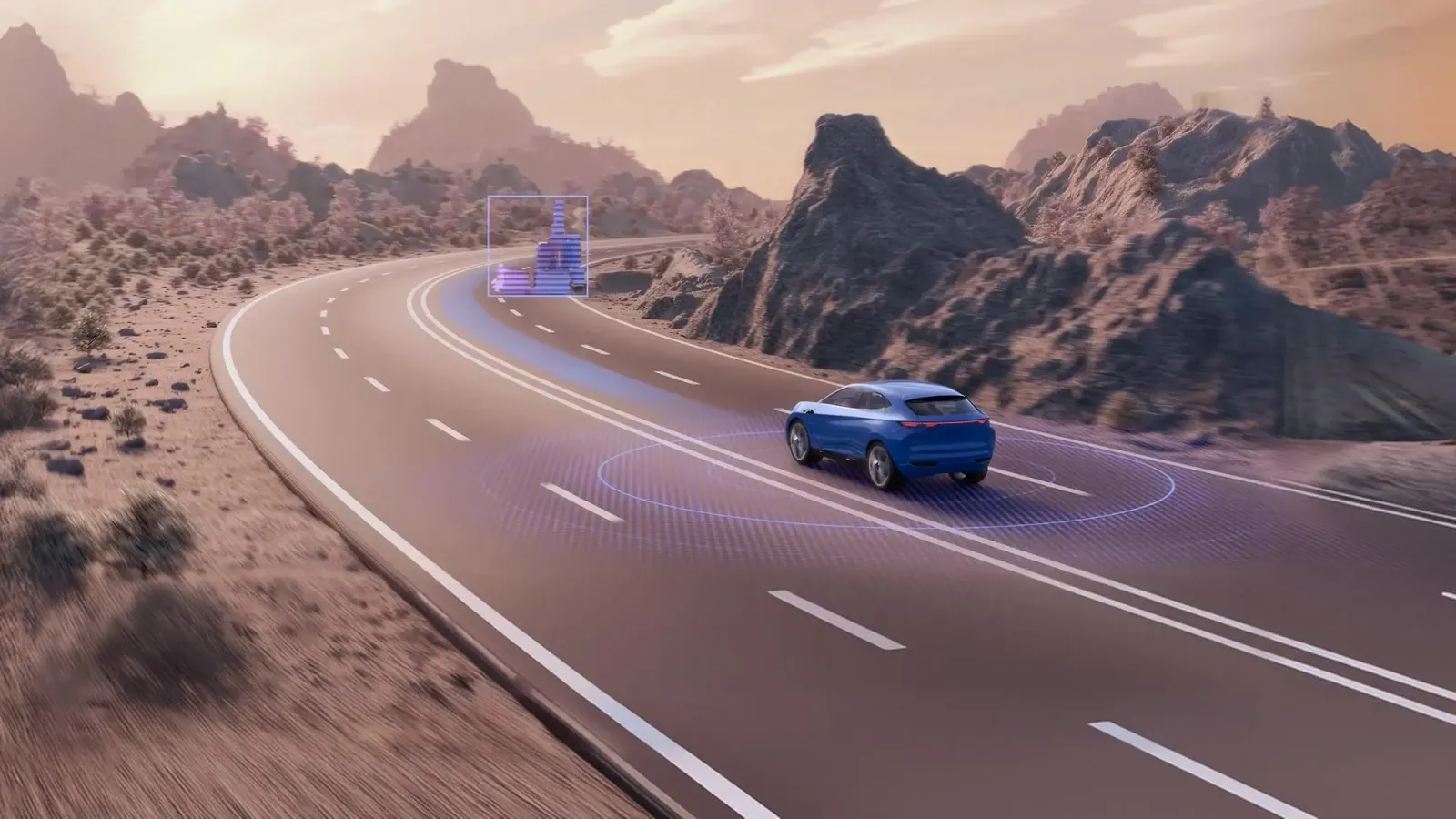
Stellantis, the parent company of Jeep, Chrysler, Dodge, Ram, Fiat, Peugeot, and others, will use Intel's Mobileye technology to power Level 2 hands-free driving assist features. Beginning in 2027, it will deploy Mobileye’s EyeQ system-on-a-chip and its Road Experience Management (REM) program to generate a global 3D map from data gathered by Mobileye-equipped vehicles.
Stellantis is moving from demo to deployment for “Level 2 hands-free” driving assist. Starting in 2027, the automaker will use Intel’s Mobileye technology across its vehicle brands, pairing Mobileye’s EyeQ system-on-a-chip with a data crowdsourcing program called the Road Experience Management, or REM. The goal is not full autonomy. It is a tighter loop between what drivers do on real roads and what the car is able to interpret later, powered by continually updated map intelligence.
Here’s the key detail that matters to anyone running product, compliance, or budgets: Mobileye says the technology will enable “hands-free, eyes-on driving and intelligent lane keeping on unmarked roads in designated areas and conditions.” That phrase is doing real work. Level 2 features are typically designed around the idea that the driver remains responsible, with the system handling certain aspects of steering and driving support while the driver watches the road. So the promise is capability with boundaries, not a legal or safety permission slip to disengage.
To understand why Stellantis is doing this now, zoom out to how modern driver-assistance works. Level 2 systems live or die on map awareness and lane interpretation. Real-world roads do not behave like the clean lines in training datasets. They have faded markings, changing road geometry, construction detours, and rural stretches where lines are missing. Mobileye is effectively betting that “unmarked roads” are solvable if the system can build and refresh a global 3D map using real-time inputs collected from vehicles that already have Mobileye equipment.
That brings us to REM, the crowdsourcing element of this deal. The Road Experience Management program uses real-time data from Mobileye-equipped vehicles to build out a global 3D map. In plain terms, the more vehicles participating, the more the system can learn what roads look like in the real world, then translate that into steering and lane-keeping behavior within designated areas and conditions. The REM loop is especially important for automakers operating many brands and different model lines. When the same underlying perception and mapping stack can feed multiple vehicle programs, it can reduce the fragmentation risk that comes from treating each model as its own mapping universe.
There is also a regulatory and liability backdrop that makes this kind of approach strategically sensitive. “Hands-free” is a loaded term in the public conversation, but for executives the operative question is how the feature is defined, tested, monitored, and described. The source frames the capabilities in the language of “eyes-on driving,” and that is a signal that the system is meant to keep the driver engaged. That framing is likely part of how Stellantis and Mobileye think about deploying features at scale without crossing the line into higher automation claims that regulators, insurers, and customers would challenge more aggressively.
Economically, the timing matters too. Stellantis announced that it will begin using EyeQ and REM starting in 2027. That runway is long enough to integrate hardware, validate the feature set, and align software updates with the evolving map data pipeline. It is also long enough for competitive dynamics to intensify. Other automakers are racing to improve driver-assistance experiences, but mapping intelligence and real-world data are stubborn bottlenecks. A chip like EyeQ is not just a component purchase; it is the compute foundation for the perception tasks that rely on accurate, up-to-date spatial context.
For decision-makers inside Stellantis, the stakes extend beyond a single feature release. Stellantis is the parent company of multiple major brands, including Jeep, Chrysler, Dodge, Ram, Fiat, Peugeot, and others. A standardized technical platform can improve reuse across product lines, but it also creates governance questions: who owns the mapping data strategy, how quickly can updates roll out, and how will performance be monitored as new data streams in? When REM builds a global 3D map from participating vehicles, the system becomes a living data product, which changes the nature of ongoing operations from one-time validation to continuous learning and maintenance.
And for peers across the auto industry, this is a competitive signal. Stellantis is not simply “adding” hands-free features. It is tying those features to an external mapping and data architecture built from Mobileye-equipped vehicles. That can raise the bar for competitors trying to claim robust lane keeping on unmarked roads. The second-order implication for boards and executives is straightforward: driver-assist capability is increasingly a partnership and data-network story, not just an internal engineering story. Whoever controls the best combination of compute, real-world data collection, and mapping refresh cycles is more likely to deliver consistent outcomes in the messy places drivers actually drive.
This story's Key Insights and Take-aways are locked.
Create a free account to unlock Executive Actions for one credit.
Register to UnlockAlways free for Executives Club members. Join the Club
More in Technology

Google quietly links your phone number to every Android account on your SIM
Adding a SIM now ties your phone number to all Google accounts - and future accounts inherit it. Here's the security and privacy stakes.

Hijacker AI 'Skynet mode' runs 100,000 attack steps against exposed models
Symantec caught a criminal AI agent that borrows other models, steals data, and mines crypto; the only relief is no confirmed victims yet.

Nvidia's AI-financier shift faces its first big test as neoclouds stumble
A rout in neocloud stocks is forcing investors to weigh Nvidia's hidden exposure as both supplier and lender to the AI buildout.