

Subaru's Solterra gains 61 miles, but the XT costs $4,400 more
Subaru’s EV update fixes the old range problem and adds a faster XT trim, but buyers now have to decide how much speed is worth against a slightly higher price and a small range hit.
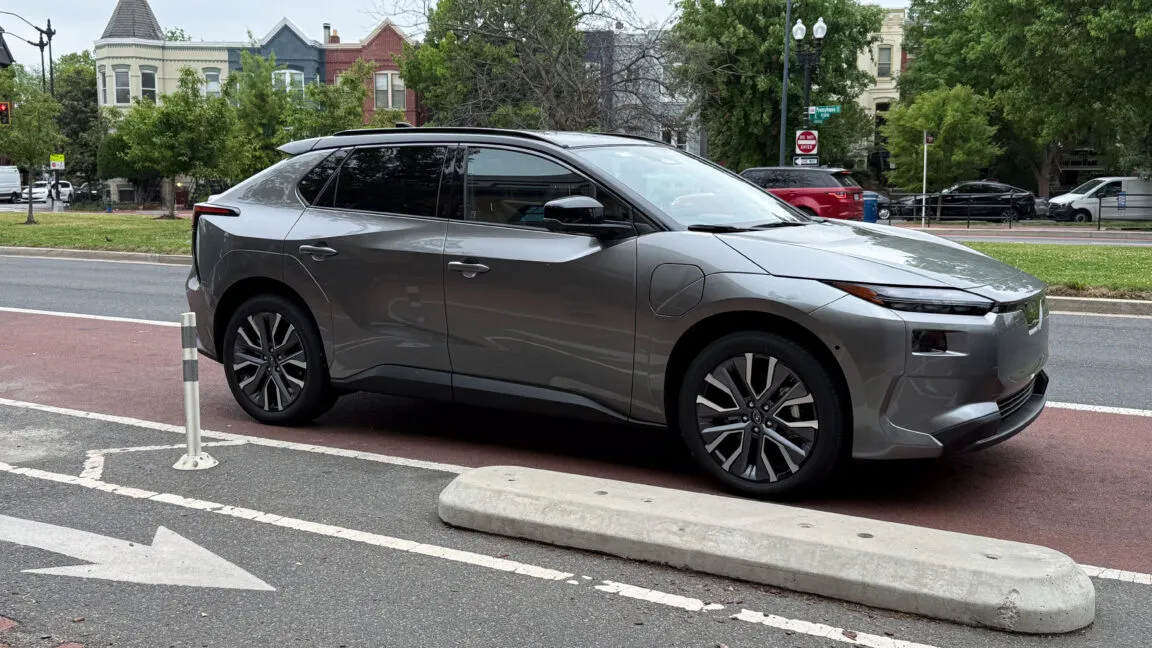
Subaru has updated the Solterra, lifting EPA range from 227 miles to 288 miles while adding a more powerful XT version alongside the standard trim. For EV buyers, investors, and auto executives, the move shows how quickly a middling electric vehicle can become more competitive when range, charging, and pricing are recalibrated together.
Subaru’s updated Solterra now promises 288 miles of EPA range, up from 227 miles, and that is the headline number that changes the conversation around the car. The battery only grew a little, from 74.7 kWh with less than 2 kWh added, but the result is a much bigger leap in usable range. In EV land, that matters because range is still one of the fastest ways to win or lose shoppers, especially against polished rivals like the Hyundai Ioniq 5 that made the original Solterra look like an also-ran.
The bigger twist is that Subaru did not chase range by softening performance. The standard Solterra now gets a slight horsepower bump to 233 hp from a pair of identical front and rear motors, while the new Solterra XT nearly doubles the front motor’s output. The XT’s front motor now makes 223 hp, paired with a 117 hp rear motor, for a combined 338 hp. The tradeoff is modest but real: EPA range drops to 278 miles, and the cheapest XT starts at $42,895, versus $38,495 for the base Solterra. So Subaru is no longer just trying to make the car acceptable. It is trying to make it matter.
That is a meaningful shift for a model that, until now, had the reputation of being easy to recognize as a Subaru from the outside but much less distinctive once you climbed in. The original Solterra looked fine and carried the badge, but its interior was pure Toyota, and the vehicle was widely seen as inefficient and slow to charge. For 2024, that made it a hard sell next to EVs that were not only faster and farther-ranging, but also felt more modern in the ways shoppers notice immediately. Subaru’s new version, which Ars revisited after a week behind the wheel, is the company’s attempt to answer that criticism without abandoning the basic formula.
That formula still includes the awkward reality of Subaru’s current EV lineup. The Solterra remains on sale even as Subaru has introduced two new electric vehicles, the Uncharted and the Trailseeker. Neither is a truly in-house Subaru design, either, since both use Toyota’s e-TNGA platform. The Solterra sits in the middle of that trio. It is bigger than the Uncharted and less off-road focused than the Trailseeker, which makes it the middle child of Subaru’s electric push: familiar, slightly compromised, and now freshly updated. The timing matters because the company is clearly trying to build a fuller EV range, not just launch one token crossover and call it a day.
The midlife update also shows how EV competition has evolved. Early electric crossovers had to prove they could exist at all. Now they have to justify their price, range, power, and charging behavior in a market where buyers have more options and better reference points. The original Solterra struggled because it asked shoppers to pay for a Subaru nameplate without delivering the range or charging speed people expected from newer EVs. By lifting range to 288 miles and adding the XT’s 338 hp option, Subaru is trying to close two of the biggest gaps at once. That is less about gimmicks and more about survival in a segment where small numbers can decide whether a model feels relevant or forgettable.
There is also a brand message buried in the sheet metal. Subaru has long sold itself as the practical, outdoorsy choice, and the Solterra was supposed to translate that identity into an electric age. But the review’s dry joke title says plenty: the car still does not exactly feel agricultural, which is another way of saying Subaru has not yet made an EV that fully channels the brand’s usual dirt-under-the-nails personality. The new Solterra does, however, look a lot more competitive on paper. It gets more range, a more muscular top trim, and a new face that is hard not to read as a bit Transformer-adjacent. The illuminated logo is a small detail, but in a market where visual identity is part of the pitch, small details stack up.
For executives watching the auto sector, the Solterra update is a useful case study in how legacy brands try to repair an EV’s first impression without starting over. Subaru did not reinvent the platform. It improved the numbers enough to change the value equation, then added a pricier, quicker XT to widen the appeal. That is the sort of move boards and product teams should notice: if the base model is no longer embarrassing, and the premium trim creates a second path to margin, the car has a better shot at becoming more than a compliance exercise. For rivals, the lesson is even simpler. In EVs, a model can go from underwhelming to respectable fast, but only if the update is concrete enough to be felt by the shopper, not just admired by the spreadsheet.
This story's Key Insights and Take-aways are locked.
Create a free account to unlock Executive Actions for one credit.
Register to UnlockAlways free for Executives Club members. Join the Club
More in Technology

OpenAI says 10,000 agents cracked a 90-year math problem in 88 hours
The company's claim is audacious, but one mathematician is pushing back. Here's what it means for AI-driven discovery.

Meta still serves child sexual abuse ads on Instagram in India - BBC report
A new report following the BBC Eye investigation says the ads are still there - what it signals for every platform with a self-serve ad engine.

White House yanks 'Build the Wall' game after Tetris Company copyright warning
The administration's arcade game vanished in hours - and the takedown playbook every brand can learn from.