
Sugar molecule becomes first detected in interstellar space, reshaping theories of life’s origins
The first-ever detection of a sugar molecule in interstellar space adds a new, measurable piece to the pre-life puzzle.

Scientists detected a sugar molecule in interstellar space for the first time, a discovery reported as the first of its kind. For decision-makers, it changes how researchers model the supply chain of chemistry that could seed life on Earth.
Scientists have detected a sugar molecule in interstellar space for the first time. That simple sentence is the headline, and it matters because it turns an idea that was mostly “chemistry in theory” into chemistry that actually shows up between the stars.
Why does that jump off the page? Because sugars are not just biology’s sweet garnish. They are key structural building blocks in life’s chemistry. The New York Times reports that this discovery provides “tantalizing new clues” into how life may have arisen on Earth. In other words, the finding strengthens the argument that some of the raw ingredients for life did not have to be invented entirely on Earth. They might already have been out in the universe, traveling and waiting.
To understand why executives, investors, and boards should care, you have to appreciate how science like this gets funded and verified. Astronomy and astrochemistry projects depend on expensive instruments, careful observing schedules, and data analysis pipelines that are slow by design. When a detection like this lands, it is not just a new fact for researchers. It is a new target for replication, new constraints for models, and often a new reason to extend missions or prioritize follow-on experiments.
Interstellar chemistry is notoriously complicated. Space is cold, sparse, and full of radiation. Molecules form and survive under conditions that look nothing like a lab bench. So getting a “first detection” is more than a novelty. It is a calibration point for the chemical pathways scientists use in their models. Once the universe reliably produces molecules as complex as a sugar, the next question becomes: under what conditions, via which reactions, and how common are these molecules? Those answers drive where future telescope time goes and which modeling teams get the funding they need to keep pushing.
There is also an interesting second-order effect for companies and institutions involved in related technology. Instrumentation for space observations is an arms race of sensitivity and precision. When the scientific payoff shifts, procurement priorities can shift too. A breakthrough detection can increase demand for specific sensor capabilities, data processing tools, spectroscopy analysis software, and mission support services. Even if no one is selling “interstellar sugar” as a product, the ecosystem around measuring it often sees indirect momentum.
On the policy and governance side, this kind of discovery sits in a familiar lane: public research institutions and internationally coordinated observatories. While the source does not describe regulatory actions, it does highlight the stakes: researchers are building evidence that life’s origins may have depended on chemistry delivered from space. That idea can influence how agencies justify long-term funding for deep-space missions, because it frames these missions as more than beauty shots. They are increasingly treated as evidence-gathering for fundamental questions about habitability and origins.
The strategic implication for decision-makers is that “pre-life chemistry” is becoming more concrete. For years, origin-of-life debates have bounced between Earth-only pathways and scenarios that allow external delivery of organics. This sugar detection does not settle the entire question of how life started, but it changes the probability landscape for at least one critical variable: whether sugars, or sugar-like chemistry, can exist outside Earth’s environment. That, in turn, means teams studying early Earth chemistry, molecular evolution, astrobiology, and habitability will have to revisit parts of their models.
For boards and investors tracking the deep science pipeline, the key point is not wonder. It is direction. A first detection in interstellar space creates a new benchmark for scientific credibility. It invites replication with other instruments and pushes competitors in the research ecosystem to propose better observations, tighter analyses, and faster confirmation. The winners in this space are the groups that can translate an observational milestone into a durable research program, where follow-on studies build on the detection rather than chasing the next headline.
This story's Key Insights and Take-aways are locked.
Create a free account to unlock Executive Actions for one credit.
Register to UnlockAlways free for Executives Club members. Join the Club
More in Science
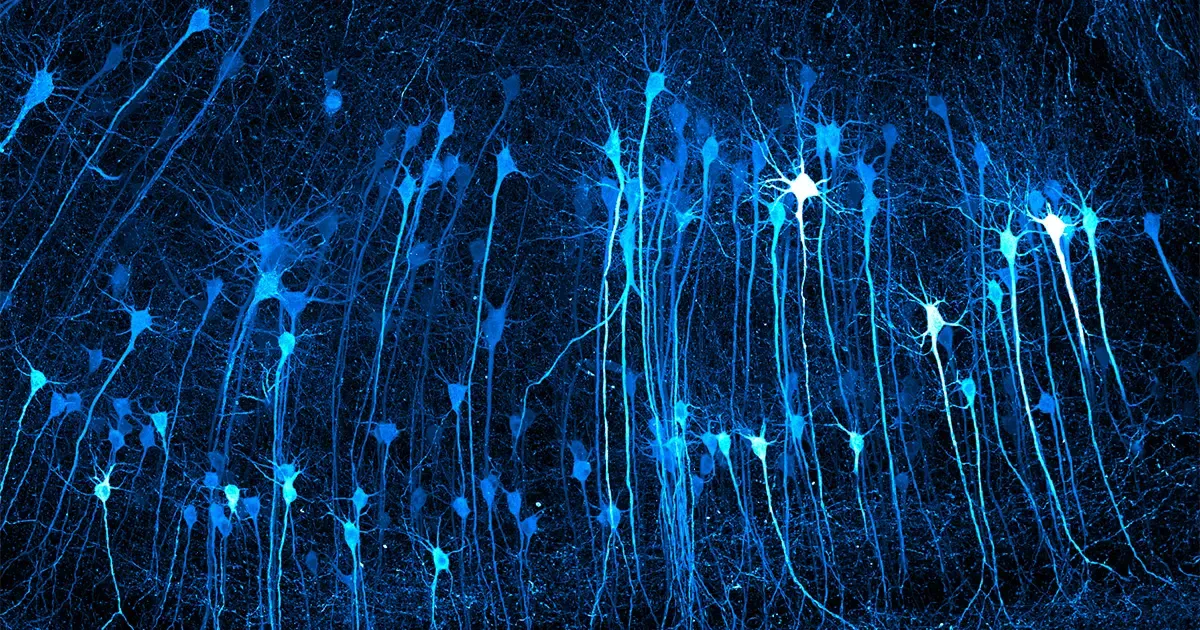
2026 Nikon Small World Winners Reveal the Hidden Machinery of Everyday Life
A mycologist's frozen Edinburgh garden became the backdrop for vivid views inside cells, a reminder of what advanced imaging now makes visible to researchers and the industries built on biology.

Study: 1 in 4 depression cases may be a body-clock problem, not a chemical one
A 10,000-person study finds standard antidepressants often fail these patients, but melatonin and morning sunlight may hit the real root cause.

Start-Up Says A.I. Designed a Virus to Attack One Patient's Superbug
If the claim holds up, personalized phage therapy could become a new frontline weapon against antibiotic resistance - but proof is far from final.