
Sunway’s $581M bid targets a Prime Singapore site, led by Jeffrey Cheah
Malaysian billionaire Jeffrey Cheah’s Sunway escalates Singapore real-estate plays with a top bid that signals capital confidence in the island’s high-end market.
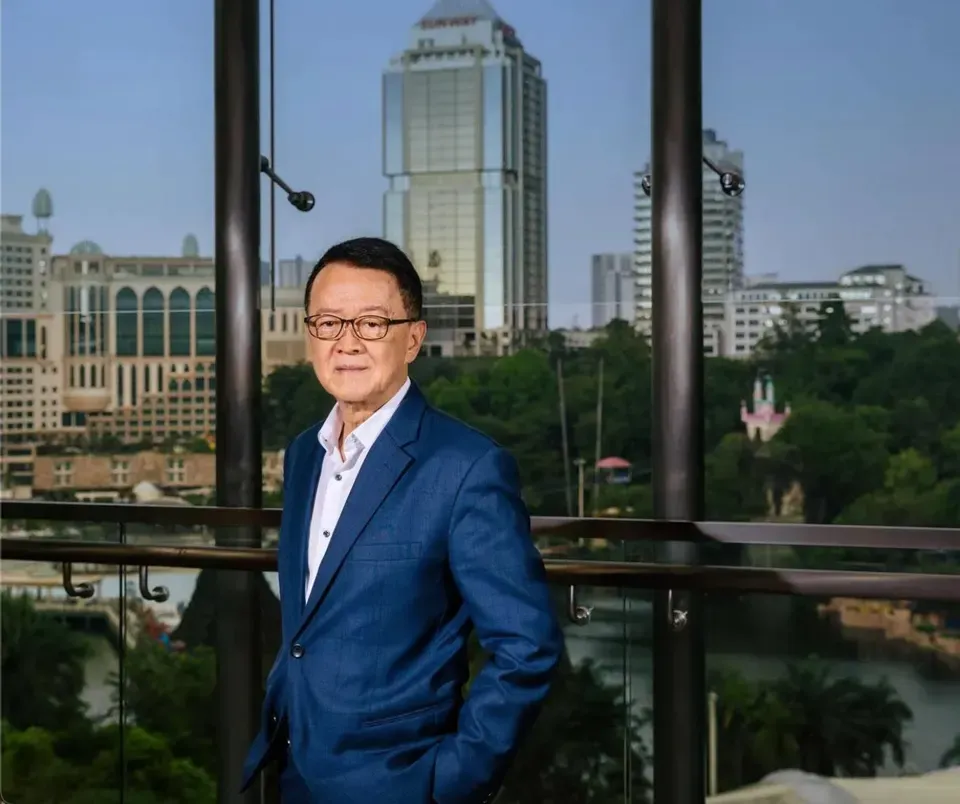
Jeffrey Cheah’s Sunway MCL is making a bid of $581 million for a prime Singapore site, with a partner offer topping the table. For decision-makers, the move is a live signal about who is willing to pay up in one of the world’s strictest, most expensive land markets.
Jeffrey Cheah’s Sunway MCL is stepping deeper into Singapore, and it’s doing it with real money: the company’s partner offer is reported as the top bid of $581 million for a prime Singapore site. This is not a “small test” investment. It is a public, high-stakes signal that Cheah and his team see opportunity in a market where every square foot already has a premium price tag.
Why does this matter right now? Because $581 million is the kind of number that forces a comparison across the entire Singapore real-estate and development pipeline: pricing power, redevelopment potential, and how aggressively capital is rotating into the island’s most constrained asset class, prime land. When a billionaire-led group escalates to that level, it tends to tighten the psychological ceiling for competitors. If Sunway is willing to chase this value, other bidders have to reassess whether “high” is still high enough.
To understand the strategy behind a move like this, it helps to remember what Singapore real estate is, structurally, to investors. The market is famous for being expensive, partly because land is scarce and partly because the rules around ownership and development are designed to manage demand. For developers and large investors, that scarcity means the best opportunities are not plentiful. Instead, the best opportunities are the ones that clear the regulatory and execution hurdles. A top bid like $581 million suggests Sunway believes the project economics can survive the constraints that typically come with Singapore’s land market.
Cheah’s role adds another layer. The source frames the story around Malaysian billionaire Jeffrey Cheah’s Sunway, and the headline emphasizes that Sunway is “stepping up investments in Singapore.” In practical terms, that means this is part of a broader pattern, not a one-off curiosity. For executives watching capital allocation, that matters because consistent investment behavior can indicate a longer time horizon and a tolerance for complex deals. In real estate, patience can be a competitive advantage, especially when the best sites are acquired through bidding processes and partnerships rather than simple purchases.
Partnership dynamics are also a quiet but important sub-plot. The source states that the “partner offer” is the top bid. In deals like this, partnerships often do more than share risk. They can help align capital sources, combine development capability with land acquisition strength, and make the bidding case stronger. From a governance perspective, board members should care about how these partner structures affect decision-making and downside protection. Even if the bid is “only” one line in a headline, the structure underneath it can determine who bears which risks if costs rise or if approvals take longer than expected.
Regulatory background is the other non-negotiable piece. Singapore’s real-estate market does not operate like a frictionless commodity market. Development timing, allowable uses, eligibility considerations, and planning constraints can shift the feasibility of a project. When a bidder commits to a prime site at this scale, it implicitly reflects a view that the company can navigate those rules with enough confidence to justify the price. For competitors, that creates a question: are others underestimating how quickly approvals can move, or are they simply unwilling to underwrite the same level of uncertainty?
There is also a second-order signaling effect for the broader market. High-profile acquisitions by major players can reprice expectations across the ecosystem. Landowners and sellers see a ceiling that may be moving upward. Joint venture partners may demand different terms because they know capital is available and bids are competitive. Lenders, too, take cues from where equity players are willing to place risk. In expensive markets, that signaling matters because fewer deals clear the bar, which means each successful bid influences future pricing, even for assets that seem unrelated.
For executives at other firms considering Singapore projects, the stakes are straightforward: the market is telling you something about where demand and conviction are landing. If Sunway’s $581 million top bid is accepted, it can become a benchmark that reshapes how bidders justify valuations for prime land, how boards frame returns under strict constraints, and how quickly companies decide whether to participate in future tender opportunities. The headline may be about one site, but the decision you should be thinking about is whether you are positioned to compete when the next opportunity shows up, in a market where prime land does not wait for anyone.
This story's Key Insights and Take-aways are locked.
Create a free account to unlock Executive Actions for one credit.
Register to UnlockAlways free for Executives Club members. Join the Club
More in Business

Accenture’s $4.18bn play fails as AI fears spark a 20% worst-ever stock plunge
On Thursday, Accenture hit its biggest one-day drop on record after forecasting worries that AI could hollow out consulting.

SpaceX stock jumps 3% after it overtakes Amazon’s market cap
CNBC says SpaceX’s shares surge following its IPO Friday, forcing investors to reprice what “space” and “AI” are worth.

SpaceX’s first options day breaks U.S. records after a $85B IPO win
Big IPO, bigger options debut: what it means for investors, risk teams, and anyone benchmarking market appetite.