
Super Mario Galaxy Movie hits $1B in 2026, slower than its predecessor in 26 days
Nintendo and Illumination’s sequel crosses the billion mark after 10 weekends, totaling $2.30B across both films.
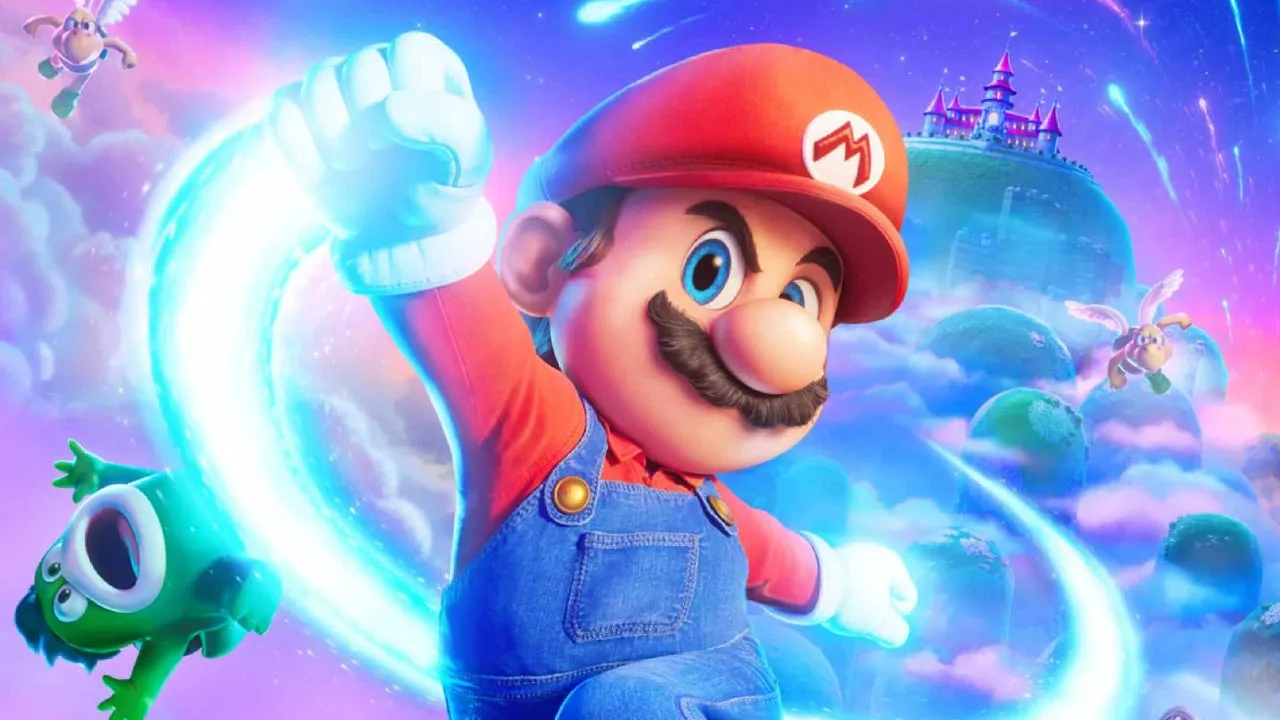
Nintendo and Illumination’s animated sequel, The Super Mario Galaxy Movie, has crossed $1 billion at the global box office in 2026. The milestone matters for decision-makers because it confirms a durable, cinema-scale strategy for game IP while revealing the pacing differences versus the 26-day run of The Super Mario Bros. Movie.
The Super Mario Galaxy Movie has officially crossed $1 billion at the global box office in 2026, but it took a very specific kind of time to get there. Nintendo and Illumination’s Mario movie sequel needed 10 weekends to pass the milestone. That is slower than its predecessor, The Super Mario Bros. Movie, which reached $1 billion in just 26 days. The result is still historic enough to stand out: The Super Mario Galaxy Movie is the first and only movie to cross the box office billion mark in 2026.
Those numbers are the headline story, but the bigger plot is what happens when you zoom out. With both animated adaptations finding “tremendous success” in theaters, the two Super Mario films have now accumulated a total of more than $2.30 billion. That puts them at number nine in the list of top 10 animated franchises worldwide, behind Despicable Me ($5.64 billion), Shrek ($3.98 billion), and Toy Story ($3.28 billion). For executives watching media value chains, the subtext is straightforward: Nintendo is not dabbling in Hollywood. It is building franchise equity that can compound across sequels, release windows, and audience cohorts.
Now for the part that matters when you are making capital allocation decisions. The pacing difference between 10 weekends and 26 days suggests something about demand shape, not just demand size. The Super Mario Bros. Movie hit $1 billion faster, then that momentum likely set the baseline expectations. The Super Mario Galaxy Movie still crossed $1 billion, but at “much a slower pace than its predecessor,” which means it likely relied more on sustained theater draw rather than an explosive early sprint.
Context helps. The Super Mario Galaxy Movie premiered in theaters April 1, 2026. The source notes a mixed critical response that “did little to stop” the launch. It opened with $34 million on the day of its Wednesday release alone. It then accumulated $428.5 million domestically and $571.5 million internationally. That split is worth attention: the domestic and international numbers together explain how the film can still reach the global billion even if early momentum is not identical to the first movie.
The most obvious comparison in the source is the first Mario film’s box office run. The Super Mario Bros. Movie ended with $574.9 million domestically and $785.8 million internationally, bringing its total to about $1.36 billion. In other words, The Super Mario Galaxy Movie joining the billion club in 2026 is not happening in a vacuum. It is happening as part of an ongoing conversion of Nintendo characters into mainstream movie economics.
Why should decision-makers care beyond bragging rights? Because the source is explicit about what comes next in Nintendo’s film calendar. Nintendo set an April 2028 date for its next animated movie earlier this year. In April 2027, fans will return to theaters for Nintendo’s live-action The Legend of Zelda movie. If your board is asking whether game-based entertainment can reliably translate to cinema-scale revenue, these release dates are the answer in scheduling form: Nintendo has decided it will keep the pipeline moving, not pause to see if the market cools off.
There is also a franchise-ranking angle that is easy to miss if you focus only on one movie. The source frames Mario’s position as “number nine” among top animated franchises worldwide. It also points out that franchises on the list can feature as many as six total films. That detail is a reminder that the real prize is long-run continuation. A billion-dollar crossing is a strong signal of audience reach, but building a multi-film franchise is what turns entertainment into an asset class.
Finally, there is a credibility check for how the industry is likely thinking about these projects. IGN called The Super Mario Galaxy Movie “okay” in its 6/10 review. The source also includes IGN’s assessment that the film “ditches an engaging story in favor of a pipe-bursting amount of Easter eggs,” adding that it “is not an all-together bad thing.” Whether you care about reviews or not, the business takeaway is that brand familiarity plus spectacle can overpower middling critical narratives, at least in the short term.
Strategically, this means Nintendo is stacking evidence. Two animated Super Mario films are now at more than $2.30 billion total, one has already crossed $1 billion in 2026, and the company has future animated and live-action releases scheduled for 2027 and 2028. For peers in studios, networks, gaming, and investor circles, the stake is simple: the model is proving it can survive mixed reviews and still deliver billion-level outcomes. If your organization is weighing whether to greenlight or fund the next wave of IP-to-film adaptations, the Mario pipeline is currently acting like a live case study, with the scoreboard updated in real time.
This story's Key Insights and Take-aways are locked.
Create a free account to unlock Executive Actions for one credit.
Register to UnlockAlways free for Executives Club members. Join the Club
More in Entertainment

Christopher Nolan’s “The Odyssey” posts his biggest Tuesday haul, surpassing “The Dark Knight’s” record
The film’s Tuesday breakout reframes Nolan’s box-office ceiling and forces competitors to rethink timing, budgets, and release strategy.

Kacey Musgraves cancels Aug. 20, 29, Sept. 2 Middle of Nowhere shows
Ticketmaster emails are telling fans refunds are coming, while the tour still starts Aug. 21 in Chicago.

Billie Joe Armstrong launches Epiphone Les Paul Junior and Marshall 1959BJA signature gear
Two limited releases turn decades of Green Day’s tone into branded hardware, including Marshall’s first artist amp in 14 years.