
Taiwan keeps chasing drones, but the real Ukraine lesson is the system around them
Foreign Affairs argues Taiwan’s defense focus misses the surrounding ecosystem that decides whether drones actually matter.
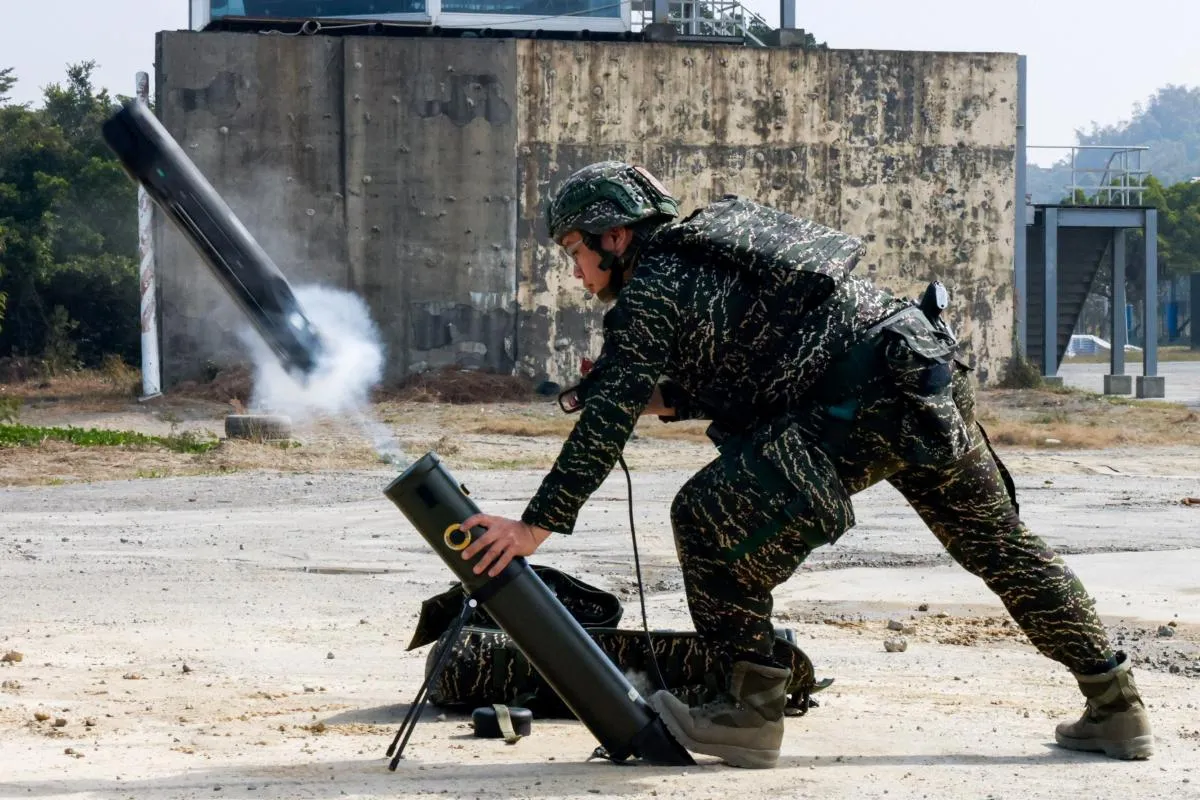
Foreign Affairs frames the Ukraine war as a lesson for Taiwan’s security planning, warning that drone effectiveness depends less on the drones themselves and more on everything around them. For decision-makers, that means procurement and strategy cannot be isolated from the communications, targeting, logistics, and organizational choices that turn technology into outcomes.
Foreign Affairs’ core warning is blunt: it is not the drones. It is everything around them. In the Ukraine war, the publication argues, the drones are only one piece of a much larger machine. That broader machine includes how forces find targets, share information, coordinate action, and sustain operations. Without those enablers, drones become expensive hardware sitting in the wrong place at the wrong time.
For Taiwan, the implication is similarly blunt. If Taiwan’s planning and spending focus mainly on acquiring drones, it risks repeating a classic technology trap: assuming the tool is the strategy. Foreign Affairs says the missing piece is the system that makes drones usable at scale in real conditions, not just impressive in demonstrations. The “Ukraine lesson” is that drones do not win by themselves; they win when they are embedded in an operational context that can rapidly translate sensing and messaging into coordinated action.
This distinction matters because modern drone warfare is not simply a matter of platform selection. Drones need eyes and ears, plus the ability to act on what they see. That means integration across units and across time. A drone strike has to connect to the chain that identifies targets, validates them, routes the data, and then aligns effects with intent. Foreign Affairs’ framing essentially asks readers to think in systems rather than silos: how will information move, who will receive it, and how quickly will the force adjust when conditions change?
There is also a second-order incentive problem that hits boards and executives. Drone procurement can be easy to measure. You can count units. You can show progress. But the operational “everything around them” is harder. It lives in software processes, training rhythms, maintenance and supply reliability, and command and control behaviors. Those are not always cleanly legible to external stakeholders who want quarterly progress reports. If leadership teams optimize for what can be tracked, they can accidentally underinvest in the parts that are hardest to quantify but most determinative in combat.
Regulatory and governance dynamics add another layer. Defense technology is usually constrained by procurement rules, interoperability standards, and export or supply limitations. Those constraints often shape what countries can buy quickly and what they can integrate smoothly. Even when drones are obtainable, integration can be slowed by approval chains, contracting structures, and compliance requirements that delay data flows or limit how systems connect. Foreign Affairs points toward a practical reality: drones require surrounding infrastructure to function, and infrastructure does not appear overnight just because a new platform does.
Ukraine also highlights how operational learning changes over time. When forces see what works and what fails, they adjust tactics, routing, and coordination. That means organizations need a fast feedback loop. The “everything around them” is not static. It evolves as commanders learn. If Taiwan wants to apply the Ukraine lesson, the goal is not just to buy drone capabilities. The goal is to build an organization that can repeatedly reconfigure its ecosystem, so drones stay effective as adversary behavior changes.
Capital allocation is where this becomes real for decision-makers. If leadership treats drones as the main line item, it may crowd out the investments that make them operationally valuable. That can lead to a mismatch: lots of platforms, but insufficient capacity for the networks, training, and logistics that convert aerial presence into decisive effects. Foreign Affairs’ framing suggests that the “system around drones” is the scarce resource. It is the constraint that determines whether technology creates battlefield leverage or just adds complexity.
For peers thinking about security strategy, the stakes are straightforward. If the lesson is true that drones do not decide outcomes alone, then planning that overweights platforms and underweights integration will misallocate time and money at the worst moment. Taiwan’s challenge, as Foreign Affairs presents it, is to align procurement with operational design. The strategic question is not whether drones exist. It is whether the wider machine around them is ready to use them in anger, at speed, and at scale.
This story's Key Insights and Take-aways are locked.
Create a free account to unlock Executive Actions for one credit.
Register to UnlockAlways free for Executives Club members. Join the Club
More in Politics

Glacial collapse, not rain, killed 180 in Nepal's Himalayan flood
The Himalaya's extreme geography hid the true cause of Nepal's catastrophic flood, a glacial collapse that turned a geological battleground into a mass-casualty zone.
Iran’s Esmail Baghaei says Oman talks start shipping via Hormuz, not US talks yet
Temporary route plans with Oman aim to restart commerce while Tehran says Washington dialogue is not on the table.

Standards watchdog opens probe into Reform UK deputy leader Richard Tice over interests
The parliamentary standards commissioner says it began an investigation on 28 July into a possible undeclared interest.