

Tegan Thomas says measuring black holes' spin needs space, not Earth-based shortcuts
A new arXiv paper explains why we cannot measure black hole spin directly yet, and what could change soon.

Tegan Thomas of the University of Virginia and colleagues published an arXiv preprint on measuring the “ultimate spin” of black holes. The work lays out both the constraint today and the pathway to a new tool in the next few years.
Black holes may look like cosmic villains that only “suck in everything,” including light. But astronomers know the truth: black holes spin, and they can spin extremely fast. The problem is not that scientists disagree on whether spin exists. The problem is measurement. A new arXiv paper led by Tegan Thomas of the University of Virginia and her colleagues says we currently cannot determine how fast black holes are actually spinning. And that matters, because the speed of that spin is tied to how a black hole affects its immediate surroundings and the galaxies around it.
So the punchline is both simple and frustrating: the data we need to answer “how fast” is not something we can reliably extract right now. The paper’s good news is that a new tool could make spin measurements possible in the next few years. That is the timeline the field is anchoring on, and it is why the spin question feels like a waiting game with high stakes. In other words, this is not just trivia for astrophysicists. It is a missing measurement that blocks a fuller understanding of how black holes shape the environments they live in.
To understand why that creates urgency, it helps to remember what black hole spin does to the nearby universe. When a black hole spins, it influences the physics close to the event horizon and the structure of the surrounding region. Those effects then ripple outward, shaping how the black hole interacts with material nearby and, by extension, how the surrounding galaxy evolves. The paper frames spin rate as a key variable for understanding “their immediate vicinity and the galaxies that surround them.” If you cannot measure the variable, you cannot confidently connect causes to observed behavior.
This is also a lesson in how space science really works. Some measurements are possible from Earth because they rely on light reaching telescopes in ways instruments can capture. But the closer you want to get to the “ultimate” property, the more likely you are to hit a ceiling set by resolution limits, interference, or missing observational access. The source is explicit on the bottom line: we currently can't determine how fast black holes are actually spinning. That statement is doing heavy lifting. It means the current methods, with current observational constraints, do not deliver a direct spin rate that scientists can trust enough to call it measured.
And yet the paper’s outlook is not bleak. It suggests a path forward using a “new tool” that could allow researchers to measure black hole spin, hopefully in the next few years. The choice of wording here matters. It is not “a future theory” or “another modeling tweak.” It is a tool, which implies the field expects progress to come from observational capability, not just better equations. For decision-makers tracking science and technology roadmaps, that distinction is important: tools tend to concentrate budgets, timelines, and partnerships. If the community believes a new capability will unlock spin measurement, funding and mission planning will likely align to support that work.
There is also a strategic second-order effect for anyone funding or governing research: spin measurements are the kind of breakthrough that can re-shape what counts as “known.” When a field moves from “we know spin exists” to “we can measure the spin speed,” it can rewrite models and change what observations are considered supportive. Even without new numbers in this paper, the implication is clear: the next few years could turn an unknown into a quantified variable. That shift tends to cascade through analysis pipelines, simulation priorities, and the interpretation of data already collected.
In practical governance terms, this is the difference between curiosity-driven study and an evidence-driven measurement campaign. Black hole spin rate becomes an input that models and interpretations need. When the measurement finally arrives, researchers will be able to test competing ideas about how black holes influence their surroundings with better fidelity. And for executives and boards overseeing scientific programs, the takeaway is about timing and dependencies. You cannot force nature to cooperate, but you can position organizations to be ready when a measurement bottleneck breaks.
Bottom line: the paper by Tegan Thomas and colleagues says the bad news first, we currently can't determine how fast black holes are actually spinning. Then it offers the reason to stay engaged, a new tool could make those measurements possible in the next few years. That combination of constraint today and a plausible unlock soon is exactly the kind of turning point that changes agendas, not just publications.
This story's Key Insights and Take-aways are locked.
Create a free account to unlock Executive Actions for one credit.
Register to UnlockAlways free for Executives Club members. Join the Club
More in Science
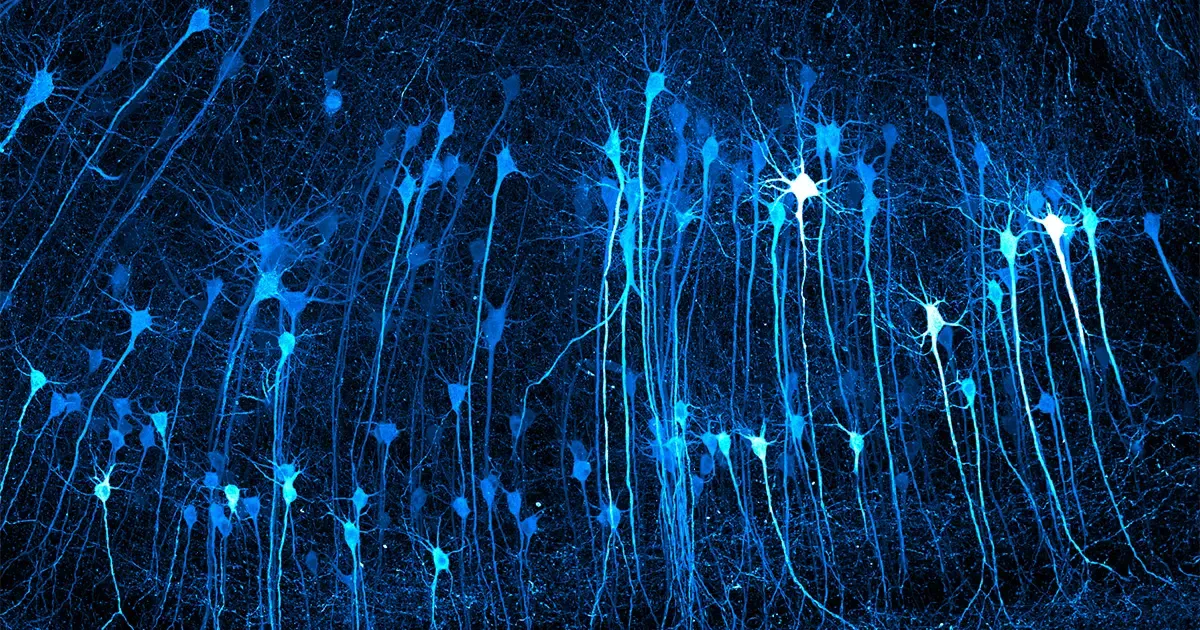
2026 Nikon Small World Winners Reveal the Hidden Machinery of Everyday Life
A mycologist's frozen Edinburgh garden became the backdrop for vivid views inside cells, a reminder of what advanced imaging now makes visible to researchers and the industries built on biology.

Study: 1 in 4 depression cases may be a body-clock problem, not a chemical one
A 10,000-person study finds standard antidepressants often fail these patients, but melatonin and morning sunlight may hit the real root cause.
Start-Up Says A.I. Designed a Virus to Attack One Patient's Superbug
If the claim holds up, personalized phage therapy could become a new frontline weapon against antibiotic resistance - but proof is far from final.