
Tesla Cybercab bans kids under 13, even with parents - stricter than its Y robotaxis
The next-gen robotaxi's first public rule is an adult-only age floor, and it rewrites the near-term family-use case for autonomous transit.
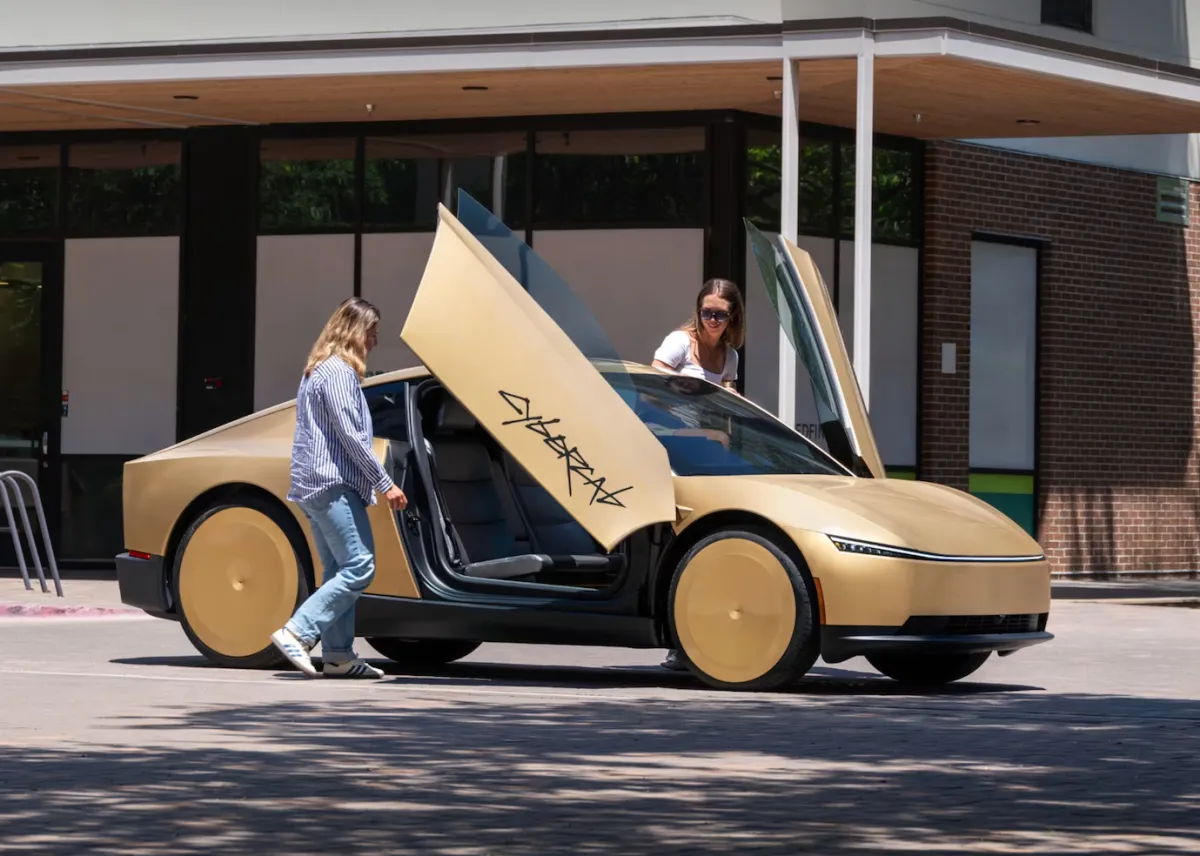
Tesla has stated that no children under 13 can ride in its Cybercab, even with a parent, and the restriction is stricter than the policy on the Model Y SUVs it currently uses as robotaxis. For executives across transportation, this signals how Tesla is calibrating safety risk while it prepares to scale a purpose-built autonomous vehicle.
Tesla just drew a distinct line for its Cybercab robotaxi: no children under 13 can ride, and a parent is not a workaround. TechCrunch confirmed the policy directly from the company, and it says that based on the information available, the rule is more restrictive than the policy on the Model Y SUVs Tesla already operates as robotaxis. In other words, the vehicle marketed as the future of autonomous mobility is, at launch, an adult-only product.
That contrast matters because the Model Y is not a purpose-built robotaxi; it is the current vehicle Tesla uses in limited driverless testing and can also be driven manually. The Cybercab, by definition, is built to remove the human from the loop. So by setting a stricter age floor on its newer, more autonomous platform, Tesla is signaling that the line between what it will test on consumers and what it will deploy across fleets is not uniform. For operators and CEOs, this is a product and liability posture, not a footnote.
That posture lands with an equally blunt market consequence: family passengers are being cut out of the first Cybercab trips. Ride-hail demand disproportionately includes parents and children who need daily transport to school, sports, and appointments. A restrictive rule for under-13s doesn't just block one passenger in a group; it likely removes the household's whole trip, because a parent or guardian needs to stay with the child. That compresses the addressable rides for a family of three or four down to a single-adult, kid-free scenario. For a company projecting fleetwide scale, that small line on a screenshot may quietly shrink the total rideable hours per day.
Child-safety regulation is a natural driver behind the policy. Vehicles must comply with child-restraint standards, and an autonomous vehicle without a human driver has no natural attendant to check that a booster seat is inserted, anchored, or occupied properly. Drivers can be trained; software cannot always anticipate. But Tesla chose 13 as the cutoff, which around the age when a shoulder-and-lap belt generally works without a booster and when a child can more safely follow instructions. It also limits liability to adult passengers, who are easier to monitor and whose injury ranges are more straightforward to protect against. Most governments have not yet issued a complete manual for robotaxi child rides, so Tesla is writing its own FAA return: be ready for parental none to fly.
What reads as a simple age check is thus a form of gate-by-accelerator-by-accelerator policy. Tesla has to convince regulators, insurers, and consumers that across the user base it can handle knows, and a strict departure at launch is the lowed-risk way to accumulate miles and data. If the service had allowed children and an accident occurred, the public and safety conversation would have been shattering. Instead, the Company delivers an adult-only fleet for the first wave, letting the outer layers of risk sit on ordinary car seats until it can validate the driverless hypothesis.
The signal ripples to the entire solve set: any company offering robotaxis, services around them, or last mile for the same class of family will be watching Tesla as a benchmark for how aggressive a product team can be in pushing a new AV to scale. A safer rule at launch often means regulators loosen a little, because the operator is already pulling in the most obviously vulnerable riders. But the consequent is a likely silent exclusion of households with young children from the fully -driverless value proposition, at least until the welfare of the technology is proven by a million grown-up riders.
So a management action for anyone in the autonomous-vehicle supply chain: read the number not as a product cap but as a governance input. The line marks time before parenthood can be added to autonomy, and the issue is not the of a serviceable number; it is the belief that you can introduce the convenience without the caveat. Whether you run a fleet, build parts, or bandwidth to invest in an AV platform, the question become the reverse: if Tesla chooses now to exclude the family, it is negotiating its own legal boundary at the edge of where the market will quickly accept rider-hard. That will change in time, and when it does, the same loosening will be the clearest guarantee that the robotaxi's next pilot is ready for the rest of the city.
This story's Key Insights and Take-aways are locked.
Create a free account to unlock Executive Actions for one credit.
Register to UnlockAlways free for Executives Club members. Join the Club
More in Technology

Google quietly links your phone number to every Android account on your SIM
Adding a SIM now ties your phone number to all Google accounts - and future accounts inherit it. Here's the security and privacy stakes.

Hijacker AI 'Skynet mode' runs 100,000 attack steps against exposed models
Symantec caught a criminal AI agent that borrows other models, steals data, and mines crypto; the only relief is no confirmed victims yet.

Nvidia's AI-financier shift faces its first big test as neoclouds stumble
A rout in neocloud stocks is forcing investors to weigh Nvidia's hidden exposure as both supplier and lender to the AI buildout.