
Tesla Q2 deliveries beat Wall Street, Europe rebounds as North America drags
A record quarter for Tesla deliveries signals improving demand momentum, with Europe offsetting ongoing North America weakness.
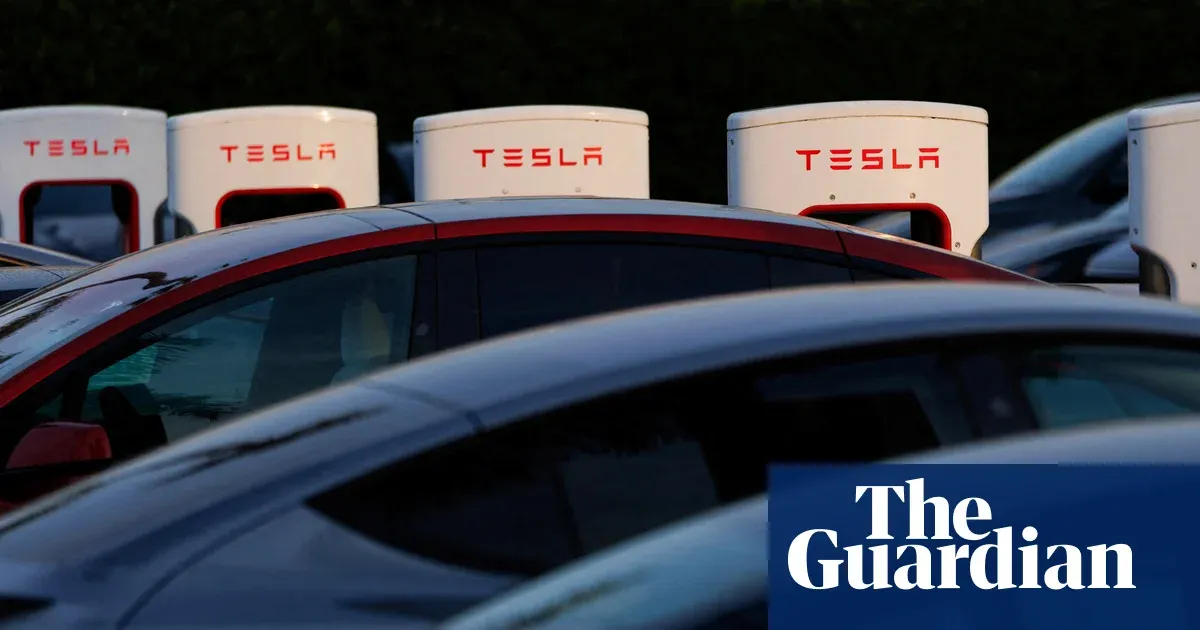
Tesla posted second-quarter deliveries that blew past Wall Street estimates on Thursday, setting a record for the period. The quarter’s mix points to Tesla’s auto business regaining momentum after two straight annual sales declines, strengthening the cash cushion behind autonomous driving and AI ambitions.
Tesla blew past Wall Street estimates for second-quarter deliveries on Thursday, and the market signal was loud: the company posted a record for the period. That is the headline, and it matters because deliveries are the one metric that turns “story” into cash flow. This time, the demand story also looks more balanced than it has recently.
The second key detail is the geography split. The Guardian reports that recovering demand in Europe outweighed persistent weakness in North America. In other words, Tesla did not simply ride a one-region bump. It is seeing improvement where competition is intense and incentives are common, while another major market still has friction. That is exactly the kind of information executives watch for, because it hints whether the reversal is structural or just a temporary tailwind.
Why this is a bigger deal than a single quarter of deliveries comes down to what comes next. The strong figures suggest Tesla’s mainstay auto business is regaining momentum after two straight annual sales declines. Tesla is still a car company at its core, but it has spent years positioning the business as the funding engine for something larger: autonomous driving and artificial intelligence. When auto demand softens for a sustained period, it tightens the leash on investment, hiring, and the rate at which moonshot products can be scaled. When deliveries improve, even modestly, it can widen the runway again.
This matters for decision-makers because Tesla’s valuation is framed around more than selling vehicles today. The Guardian ties Tesla’s roughly $1.6tn valuation to ambitions in autonomous driving and AI, describing its auto business as providing the spending cushion needed to pursue those initiatives. That framing is important for anyone tracking how public markets price risk. If investors believe the “funding cushion” is rebuilding, they can become more comfortable underwriting the long-term bets. If they believe the cushion is eroding, even great product narratives can struggle.
The timing also lands in a political and brand context. The original headline notes that “Musk backlash seems to cool,” which signals that Tesla has been absorbing reputational pressure alongside market demand swings. The Guardian’s key point is not a new controversy, but a cooling effect paired with delivery strength. For executives at other consumer and technology brands, the second-order lesson is that demand is not purely a function of product specs. Brand sentiment, executive visibility, and public narratives can influence conversion rates, but you still need operational proof in the numbers. Tesla’s quarter provides that operational proof, and it also helps explain why the stock-level conversation can shift quickly when deliveries clear expectations.
Under the hood, Europe is playing the role of stabilizer. The Guardian specifically says “recovering demand in Europe” offset “persistent weakness in North America.” That implies Tesla’s performance is sensitive to local market conditions, likely shaped by a mix of customer preference, competitive pricing, and regulatory or incentive environments. In Europe, incentives and policy frameworks for electric vehicles have historically provided a clearer demand runway than in markets where policy momentum can wobble. Meanwhile, North America has more moving parts, including state-level dynamics and pricing pressure across the competitive EV landscape. Executives should treat this regional divergence as an early warning system: a turnaround is fragile if only one region is improving.
There is also an investment logic embedded here. If Tesla’s auto business is regaining momentum after annual declines, then the company may be able to keep investing without forcing hard tradeoffs. That is not just about engineering budgets. It affects everything downstream: supply chain planning, service capacity, manufacturing utilization, and the ability to maintain product development cadence. All of those show up eventually in cost structure, margins, and the speed at which autonomous driving and AI features can be rolled out and refined.
Second-order implications for boards and senior managers are straightforward: when the core business stops shrinking, strategic flexibility improves. Tesla’s roughly $1.6tn valuation being linked to autonomous driving and AI ambitions means the company is under constant pressure to keep the promise and fund it. This quarter, by delivering a record period and beating Wall Street estimates, suggests Tesla has regained some momentum that can help sustain those longer-term bets.
The practical takeaway for other executives is the same whether you are an automaker, a software platform, or a hardware-heavy AI company: watch the cash engine, not just the product roadmap. Tesla’s Europe-driven rebound does not erase North America weakness, but it is enough to push a difficult narrative back toward “recovery.” If the trend holds beyond this quarter, it could give Tesla more breathing room to pursue autonomy and AI at the pace markets expect, and it will shape how investors reprice risk across the broader EV and tech-adjacent ecosystem.
This story's Key Insights and Take-aways are locked.
Create a free account to unlock Executive Actions for one credit.
Register to UnlockAlways free for Executives Club members. Join the Club
More in Technology

Nvidia's $89B data center quarter: the 9 companies cashing in
The AI buildout is minting fortunes beyond GPUs, and memory, cloud, and cooling suppliers are riding the same wave.

Google quietly links your phone number to every Android account on your SIM
Adding a SIM now ties your phone number to all Google accounts - and future accounts inherit it. Here's the security and privacy stakes.

Hijacker AI 'Skynet mode' runs 100,000 attack steps against exposed models
Symantec caught a criminal AI agent that borrows other models, steals data, and mines crypto; the only relief is no confirmed victims yet.