
Tesla's wheel-less Cybercab rolls into China as sales stall
The EV maker will debut its autonomous robotaxi in Beijing and Shanghai mid-September, hoping its tech wow-factor reignites demand in its second-largest market.
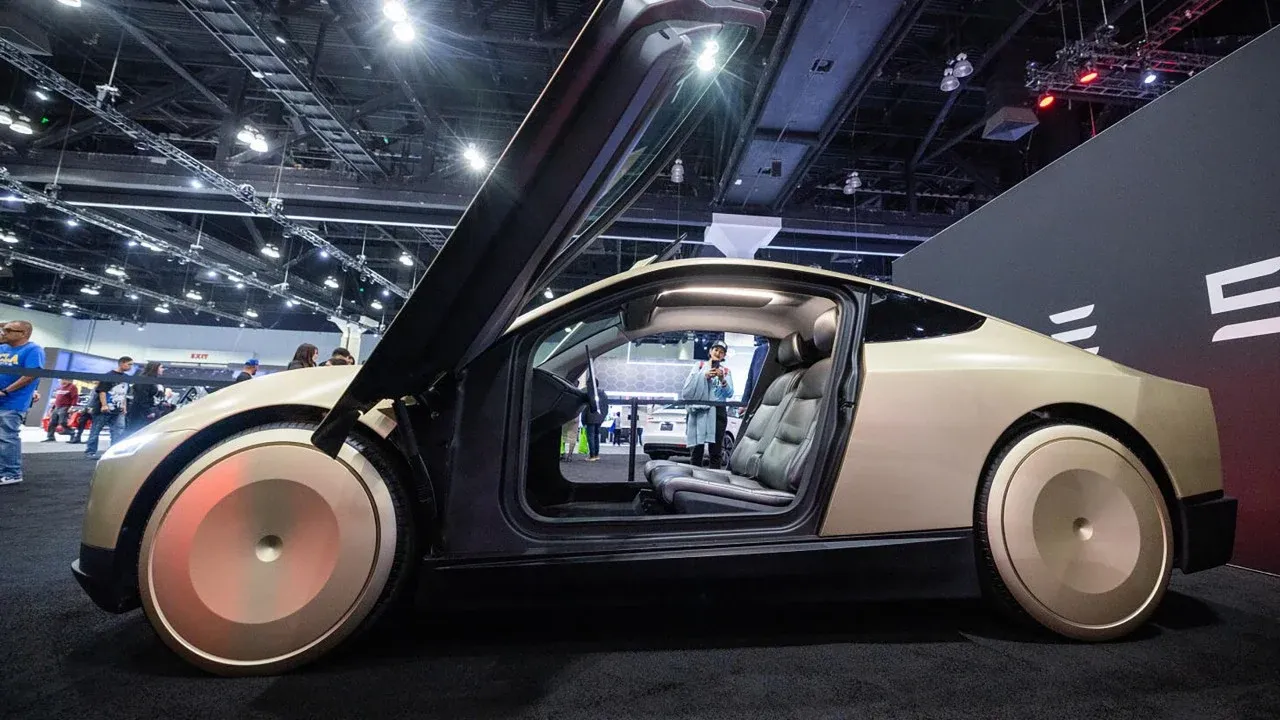
Tesla will exhibit its fully autonomous Cybercab robotaxi in Beijing and Shanghai starting mid-September, a bid to spark buzz in China amid weaker sales this year. The move underscores the company's reliance on its robotaxi bet to counter slowing demand in its second-largest market.
Tesla is bringing its Cybercab to China, and the timing is no accident. The American EV maker will exhibit the fully autonomous robotaxi in Beijing and Shanghai starting mid-September, a showcase of product design and technological sophistication designed to generate buzz in its second-largest market, where sales have been weaker this year. The Cybercab operates entirely without a steering wheel, pedals, or rear-view mirrors, making it a literal head-turner on the showroom floor - even if it is not yet for sale.
The move comes as Tesla's deliveries in China have slowed, a trend the company is hoping to reverse with a dose of futurism. By putting the Cybercab in front of Chinese consumers, Tesla is betting that the spectacle of a car with no cockpit will rekindle excitement around the brand, even as it faces mounting competition from domestic EV makers. China remains critical to Tesla's global volume, so a visible splash matters beyond mere optics.
The Cybercab represents Tesla's long-held bet on robotaxis as the next growth engine, one that founder and CEO Elon Musk has repeatedly touted as central to the company's future value. Unlike the Model 3 or Model Y, the Cybercab is not a conventional vehicle but a dedicated autonomous shuttle, designed from the ground up to operate without human intervention. Its debut in China, even as an exhibition, signals that Tesla is willing to push its autonomy narrative in a market that is both massive and fiercely contested.
China's regulatory environment for autonomous vehicles has been evolving, with several cities already permitting pilot programs for robotaxis from local players like Baidu's Apollo Go. Tesla's decision to exhibit the Cybercab in Beijing and Shanghai aligns with a market that is increasingly open to self-driving technology, though full deployment in China would require further regulatory approvals. The exhibition itself avoids that hurdle, allowing Tesla to test consumer appetite without committing to a launch timeline.
For Tesla, the Cybercab showcase is as much about brand rehabilitation as it is about technology. Weaker sales in China have raised questions about whether Tesla's lineup is losing its edge against cheaper, feature-rich alternatives from local brands. A futuristic vehicle that requires no steering wheel is a potent counter-narrative, one that positions Tesla as the innovator rather than the incumbent. The buzz generated by the Cybercab could spill over to existing models, potentially nudging showroom traffic and orders.
The exhibition also carries a strategic signal for the industry: Tesla is doubling down on autonomy as its differentiator, even as its core EV business faces headwinds. By displaying a vehicle that cannot legally drive on Chinese roads yet, Tesla is staking a claim to the future while managing the present. That may frustrate investors looking for near-term volume, but it reinforces the company's narrative that its value lies beyond conventional car sales.
For executives across the automotive and tech sectors, the Cybercab's China debut is a case study in using innovation as a marketing lever. When product sales stall, a visionary prototype can reignite public imagination and buy time for the next cycle. The key is whether Tesla can convert that buzz into actual demand, and whether rivals will feel pressured to accelerate their own autonomous vehicle showcases to keep pace.
Ultimately, Tesla's move highlights a growing reality: in the world's largest EV market, the battle is not just about price and range, but about the promise of what comes next. A steering-wheel-less robotaxi may not be ready for Chinese streets, but it is already turning heads - and that, for now, may be exactly what Tesla needs.
This story's Key Insights and Take-aways are locked.
Create a free account to unlock Executive Actions for one credit.
Register to UnlockAlways free for Executives Club members. Join the Club
More in Technology

Google quietly links your phone number to every Android account on your SIM
Adding a SIM now ties your phone number to all Google accounts - and future accounts inherit it. Here's the security and privacy stakes.

Hijacker AI 'Skynet mode' runs 100,000 attack steps against exposed models
Symantec caught a criminal AI agent that borrows other models, steals data, and mines crypto; the only relief is no confirmed victims yet.

Nvidia's AI-financier shift faces its first big test as neoclouds stumble
A rout in neocloud stocks is forcing investors to weigh Nvidia's hidden exposure as both supplier and lender to the AI buildout.