
Tesla starts building Optimus, but first customer deliveries wait until 2027
Bots are rolling off the Fremont line, but a year-long scale-up and unresolved hand design stand between Tesla and its 2027 delivery goal.
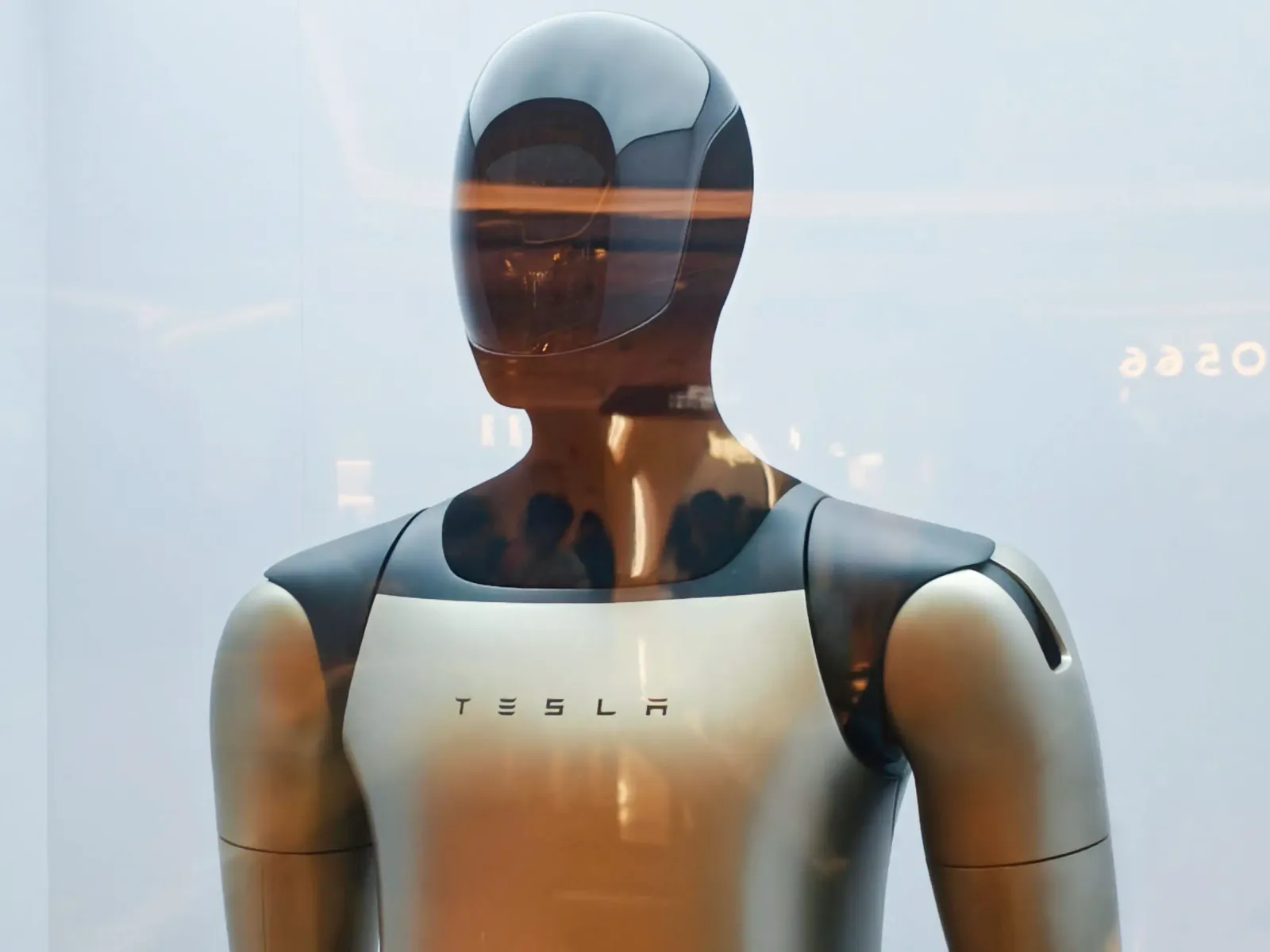
Elon Musk said Tesla has begun production of its Optimus humanoid robot in Fremont, California, and expects to deliver units to customers by the end of 2027. For decision-makers, the announcement signals Tesla's entry into commercial humanoid robotics, but Musk cautioned that scaling to 20,000 units a week will take at least a year and face early production bumps.
Elon Musk is moving Tesla's humanoid robot from prototype to production. Tesla said in its Q3 earnings report that it has begun manufacturing Optimus at its Fremont, California, factory, calling the first units "the first production-quality bots that we have manufactured." Musk said the current process is "suitable for a commercial product," and he expects customer deliveries to begin at the end of 2027. That timeline is a concrete milestone, but Musk was quick to warn that the road from first batch to mass shipments is not going to be smooth.
The scale-up math requires patience. Musk said on Tesla's Q3 earnings call that it will take at least a year to reach 20,000 Optimus units a week in Fremont, and he tempered expectations because Optimus is "such a radically new product." His words: early production will be "somewhat bumpy" because "there's like 10,000 things that have to go right." He also stressed that design tweaks are still needed to deliver a robot that is "safe and reliable and has long duration," adding, "It can't, like, wear out after a month." For customers, that means early units may be limited in volume, and specs could change before broad release.
One of the hardest engineering problems is the robot's hands. Musk said building robot hands is one of the big challenges, likely a reason the latest version of Optimus has not been unveiled. Tesla is also planning to install its next-generation AI5 chip in April, which Musk said will give Optimus more computing power and represent a "big step change in intelligence." To make those brains useful, Tesla is building an "Optimus Academy" where robots practice tasks and generate data to improve the AI models that control them. That combination of hardware constraints and AI training explains why Musk is leaving room in the 2027 delivery target.
The production shift comes at a cost to Tesla's legacy lineup. Tesla stopped producing the Model S and Model X at Fremont earlier this year to make room for an Optimus line designed to eventually produce a million robots a year. A second line under construction in Austin is planned to have an annual capacity of 10 million robots. While those numbers are aspirational capacity plans rather than near-term output, they signal that Tesla is treating Optimus as a manufacturing bet on the scale of its car business, not a side project.
Musk is not the only one chasing the humanoid market. Agility Robotics, which plans to go public, has already deployed its Digit robot across nine customer facilities. Figure AI has announced deployments in logistics and distribution centers this year. Sunday Robotics, 1X, and Weave Robotics are preparing to ship robots into homes this fall, putting them closer to residential customers than Tesla's current plan. Tesla's edge is its ability to build robots at automotive scale, but rivals are ahead on real-world deployments and are moving quickly to gather operational data.
Tesla is also playing a secrecy game. Musk said he expects to release a video of the latest Optimus within one or two months, and he previously said Tesla was keeping the robot under wraps to prevent competitors from copying its design. That strategy has its own tension: the longer Tesla stays quiet, the more room rivals have to establish proof points with customers and investors. With a 2027 delivery window, Tesla is betting that production know-how and its AI chip roadmap will matter more than being first to show its hand.
For executives tracking automation, the key point is that Tesla has moved from "if" to "when" on a humanoid robot, but the "when" comes with explicit caveats from its own CEO. The 20,000-unit-per-week target is a year-plus effort, and safety, reliability, and hand design remain open engineering problems. Anyone planning around humanoid labor should treat 2027 as a start date for early deployments, not a mature market, and should keep an eye on Tesla's video release and AI5 rollout as the next signals on whether Optimus can hit its commercial window.
This story's Key Insights and Take-aways are locked.
Create a free account to unlock Executive Actions for one credit.
Register to UnlockAlways free for Executives Club members. Join the Club
More in Business

A flaw in PHP just forced governments to pull their own sites offline
European agencies from Belgium to Germany took websites dark to patch a critical weakness in the language behind almost 70% of the web, and the blast radius extends far beyond government portals.

BioWare shuts down, Mass Effect 5 dead after $55B EA buyout
The legendary RPG studio's closure lands months after a $55 billion investment group buyout of EA, raising tough questions for gaming's biggest acquirers.
Musk barred from the room as Tesla, SpaceX boards weigh $3.5 trillion merger
The CEO of both companies is a 'conflicted party' watching independent directors negotiate a tie-up that would create a $3.5 trillion giant he would own about a third of.