

The US quietly redrew Earth’s rules: from 1776 to parks, farms, and whales
A fast tour of how US laws and industrial power reshaped global environments, and why regulators and investors should care now.
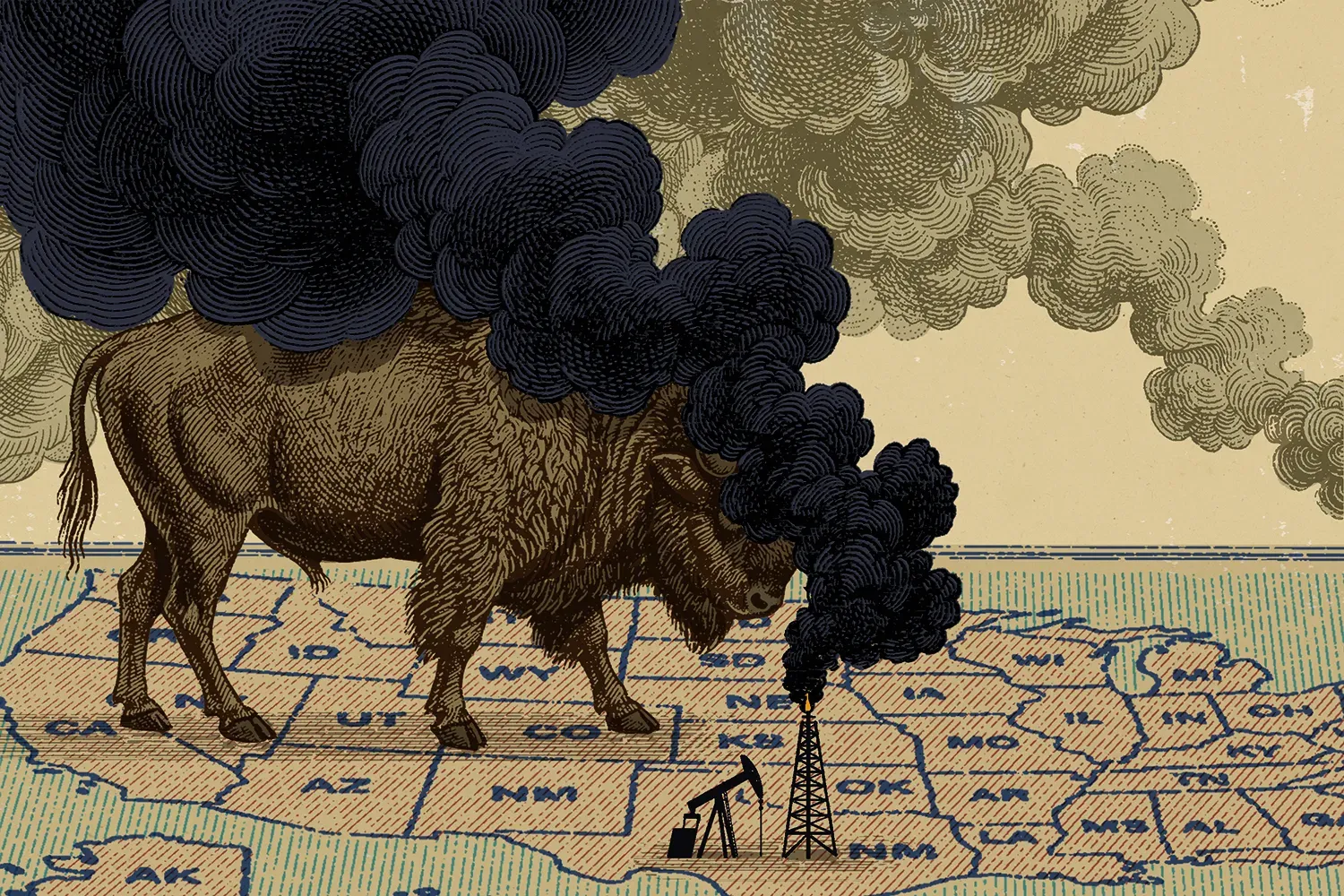
Foreign Policy traces how the United States remade the global environment from 1776 to today. For decision-makers, the implication is clear: environment policy is not just conservation, it is an engine that changes markets, risk, and enforcement across borders.
Foreign Policy frames a long arc that is easy to miss when you live in today’s debates about climate, pollution, and protected areas: the United States has been rewriting the world’s environmental rules since 1776. The country did not only build factories and cities. It also helped define how land gets used, how water gets managed, how species get protected, and how “public nature” gets governed through policy.
That matters because the environmental story is not confined to conservation agencies. It runs straight through industry. The headline categories in “Whales, Cars, Farms, and Parks” are not random. They map to the levers that shape entire economies: fisheries and wildlife policy, transportation and emissions, agricultural land management, and the creation of parks that decide what is off-limits or strictly managed. If you are a board member, a CFO, a founder building infrastructure, or an investor underwriting regulation-heavy growth, this is a warning disguised as history. Rules for whales, rules for cars, rules for farms, and rules for parks become templates for other governments and for future enforcement.
Start with the simplest idea: environment policy is power. Early on, as the US economy scaled, environmental impacts followed. The political question became how to govern use of land and resources, and how to balance private extraction with public outcomes. Over time, US governance increasingly used law and institutions to discipline behavior, whether the issue was capturing, harvesting, or developing natural areas. The “global” part of Foreign Policy’s framing is important. Once a large economy sets practical standards and administrative routines, other countries tend to mirror, adapt, or react to them, especially when trade and cross-border ecosystems make separation impossible.
Now layer in the incentives that make environmental rulemaking so durable. Industries do not just respond to regulations. They lobby to shape them, they design products around them, and they build compliance systems that can outlast the original statute. That creates a second-order effect executives should recognize: even when public attention moves on, regulatory architecture stays. Once you build permitting processes, enforcement agencies, standards, and data collection, the system becomes self-reinforcing. New risks then get folded into existing channels. That is one reason environmental governance often feels slower than the headlines. It is also why corporate planning has to treat environmental rules as long-horizon infrastructure.
Consider the “cars” angle. Transportation policy is where environmental aims collide with everyday economic life. Vehicle adoption, fuel standards, infrastructure investments, and enforcement schedules all determine which technologies win or lose. When a country like the US remakes its approach to vehicle emissions and related environmental impacts, that can reverberate beyond its borders through technology transfer, supply chains, and trade requirements. Even if your company is not producing vehicles, if you rely on transportation networks or sell into regulated markets, you inherit those standards through customers and procurement.
Then there is “farms.” Agriculture is an environment story because it controls large parts of land and directly affects soil, water, and habitat. Farm policy can incentivize different crop choices, land practices, fertilizer use, irrigation patterns, and conservation efforts. It can also determine who bears the cost when ecosystems change. When agricultural governance shifts, those changes ripple into commodity markets, rural development, and the risk models that underwrite insurance, lending, and supply contracts. Executives should watch for the compliance and cost mechanics, not just the moral headline.
Finally, “parks” and the broader conservation impulse. Protected areas are not only about scenery. They are governance instruments that specify access, development limits, and how human activity intersects with ecological protection. Once parks exist, they generate spillover pressures in nearby regions. People and businesses reorganize around boundaries, rules for tourism and land use tighten, and enforcement becomes a measurable operational factor. In corporate terms, park creation and expansion can alter land values, permitting complexity, and the feasibility of projects. For boards, that means environmental decisions are not “externalities.” They are business conditions.
Foreign Policy’s sweep from 1776 to today suggests a core takeaway that extends beyond any single statute: environmental transformation is a process with institutions, incentives, and feedback loops. The US did not simply protect nature at random moments. It built a framework for using and limiting resources, and it did so while industrializing. That combination is exactly why executives need to understand history. If you want to anticipate what happens next in your industry, you have to recognize how policy systems mature, how they get exported, and how second-order effects show up as compliance cost, market access risk, and operational redesign.
For peers making capital allocation and regulatory strategy decisions, the stake is straightforward: the environment is not a side topic. It is a governing layer that changes the rules of competition. “Whales, Cars, Farms, and Parks” is essentially a map of the categories where that governing layer takes shape. The longer the arc, the clearer the pattern: once the rules get written, they do not just regulate today’s behavior. They define tomorrow’s options.
This story's Key Insights and Take-aways are locked.
Create a free account to unlock Executive Actions for one credit.
Register to UnlockAlways free for Executives Club members. Join the Club
More in Politics

Kemi Badenoch says Andy Burnham’s Britain ambitions are “too small” after business rates cut
A business rates change for pubs and clubs triggers a sharper Conservative-versus-Labour fight over who is backing growth.

Trump pushes tariffs again after legal defeats, sparking GOP unease
Despite losing court fights, the administration moves forward, leaving Republicans to manage the political and market fallout.
Wilbur Ross warns Trump’s Iran exit is a midterms lose-lose: oil prices or “weak” withdrawal
The former commerce secretary tells Fortune the Strait of Hormuz is where voters decide whether “peace” is believable.