
Tony Douglas backs Riyadh Air’s future as Boeing locks 200 planes for China
Two carrier-and-manufacturer moves, backed by Saudi leadership and Trump’s China order, reshape capacity expectations for 2025.

Tony Douglas, CEO of Saudi Arabia’s flag carrier, told Al Arabiya English that Riyadh Air will have a successful future and set new standards. Donald Trump said Boeing will make its first major sale to China in nearly a decade via an order for 200 planes.
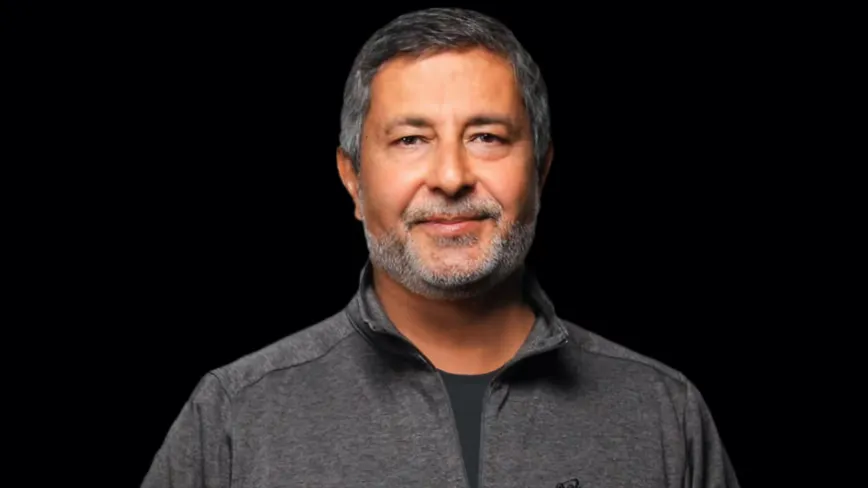
Riyadh Air has a high-stakes champion in Tony Douglas. In an interview with Al Arabiya English on Monday, Douglas, CEO of Saudi Arabia’s flag carrier, said Riyadh Air will have a successful future and set new standards in the business of air travel carriers. Translation: the airline is not being treated as a side project, it is being positioned as an industry benchmark, the kind of claim that influences how governments, airports, and business partners decide whether to bet early.
That message matters because airlines do not just compete on route maps. They compete on credibility with regulators, labor markets, financing partners, and the manufacturers that decide what gets delivered when. Riyadh Air is, by design, entering a market where capital and timing can make the difference between dominance and embarrassment. When the CEO of a major state-linked carrier openly frames the startup as a standards-setter, it signals intent to coordinate across the ecosystem, from fleet planning to operational execution. Even without additional details in the source, the stakes are clear: setting “new standards” creates expectations that will be measured publicly over time, and those expectations quickly become a board-level issue.
Now zoom out to the hardware side of the same planet-scale story. Aircraft manufacturer Boeing will make its first major sale to China in nearly a decade with an order for 200 planes, President Donald Trump told reporters Friday as he flew back from his summit with Beijing, according to Al Arabiya English. If you are on the executive team, that is not just an industrial headline. It is a supply chain and capacity signal that can ripple across airlines’ route strategies, fleet schedules, and pricing dynamics.
Orders of 200 planes do something specific in the aviation chess match. They push delivery planning and manufacturing throughput into the spotlight. Airlines generally structure expansion plans around when aircraft arrive, not just what they want. If Boeing is returning to major-scale sales in China after nearly a decade, it can affect how Chinese carriers and their international partners think about fleet replacement cycles and long-term utilization. It can also influence how Airbus and other OEMs respond in terms of offers, financing terms, and configuration choices. The big point for decision-makers is that an OEM’s regional comeback often changes negotiation leverage.
Pair these two developments and you get a cleaner picture of why aviation is feeling especially “boardroom loud” right now. Riyadh Air’s leadership rhetoric is about differentiation and standards. Boeing’s China order is about scale re-entering a key global market. Both are fundamentally about credibility under scrutiny. Regulators and political stakeholders tend to reward clarity, especially in sectors with heavy national interest and infrastructure dependence. So the CEOs who can align government relationships, procurement, and operational readiness tend to look less like promoters and more like operators.
There is also a timing angle that executives should pay attention to. Riyadh Air’s future positioning and Boeing’s China delivery pipeline both intersect with how the industry plans for near-term demand swings and longer-term capacity commitments. In practice, airline strategy is a balancing act between flexible growth and fleet commitments that take years to unwind. When Boeing lands a large order, the “what happens next” conversation quickly becomes delivery slots, service support, and financing structures. When a carrier leader publicly frames a new airline as standards-setting, investors and partners start asking whether the execution story matches the ambition.
What should peers in similar roles take from this? First, leadership messaging is not just PR. Douglas’s comments place Riyadh Air in a performance frame that partners and regulators will implicitly benchmark over time. Second, large OEM orders are not just market news. Trump’s reported claim about Boeing’s first major sale to China in nearly a decade, with an order for 200 planes, indicates that procurement and capacity decisions are being recalibrated with real numbers behind them. For executives, both stories are reminders that aviation strategy lives at the intersection of operations, politics, and industrial capacity, and that the next “standard” or “return” can be measured in deliveries, not slogans.
This story's Key Insights and Take-aways are locked.
Create a free account to unlock Executive Actions for one credit.
Register to UnlockAlways free for Executives Club members. Join the Club
More in Business

SK Hynix jumps 11% after seeking up to $29.4B in Nasdaq listing
The chip giant filed for a Nasdaq listing plan that could raise $29.4 billion, instantly reshaping investor expectations.
Micron revenue hits nearly $42B as AI memory lifts gross margins above 81%
Fiscal Q3 results crush estimates, prove AI memory is rewriting Micron's margins, and change the momentum math for the whole chip stack.

SpaceX sells $25B in debt under two weeks after IPO, despite $90B in orders
The satellite and rocket company’s quick $25 billion borrowing move signals how it plans to finance scale after going public.