
Toyota moves ahead as GM faces slower EV demand in U.S. forecast
A fresh U.S. sales outlook highlights the hybrid bet versus the all-electric wager that is landing slower than expected.
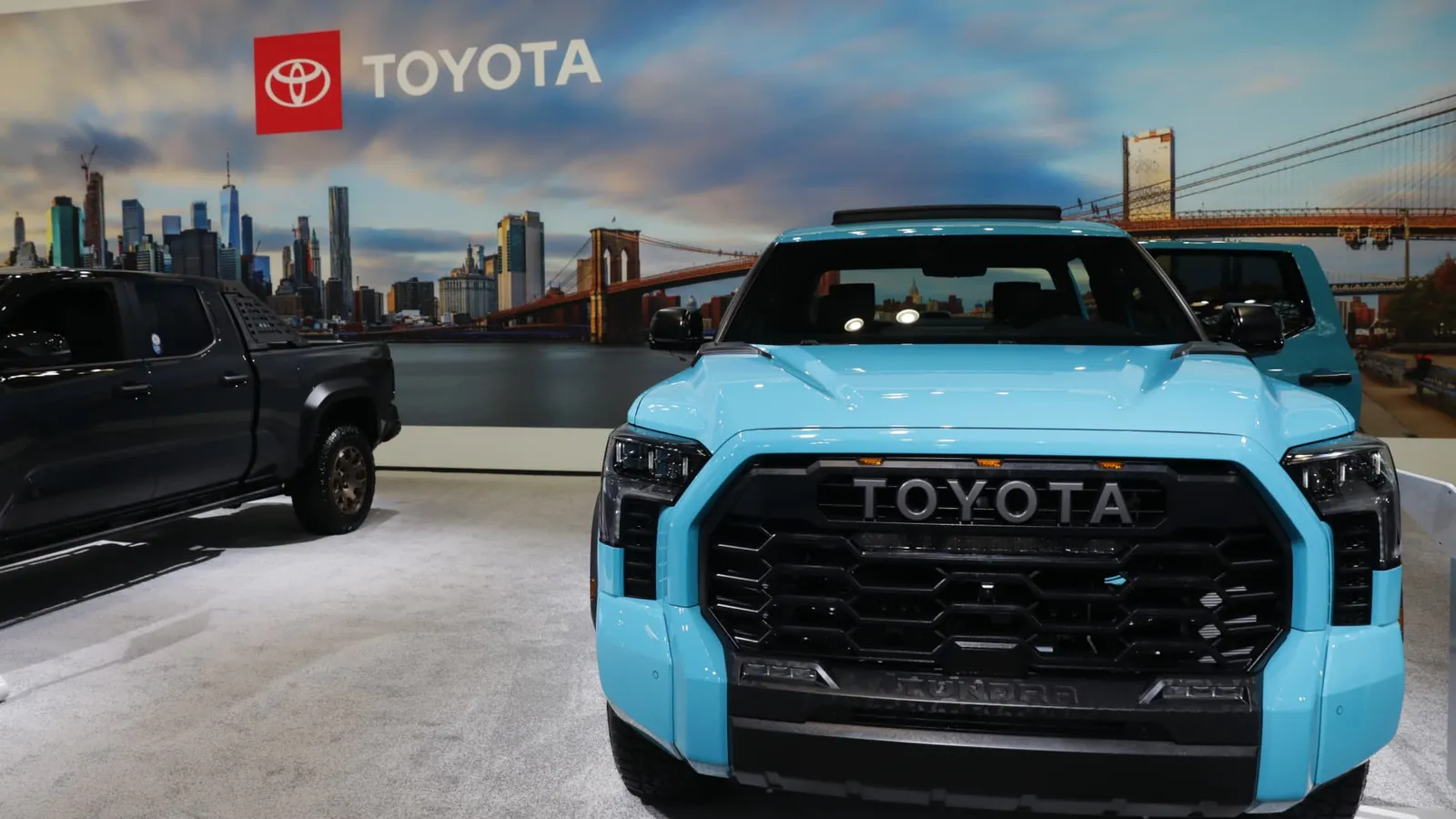
Toyota gained on General Motors in a new U.S. sales forecast, as the market reality of EV adoption lagged expectations. The consequence for decision-makers: product and capital planning will need to flex faster as consumer demand continues to diverge from aggressive electrification timelines.
Toyota gained ground on General Motors in a new U.S. sales forecast, a signal that the battle lines in North American autos are tightening around the powertrain strategy that consumers actually want. The headline stake is simple: Toyota has leaned into hybrid vehicles, while GM and other automakers have bet heavily on all-electric vehicles. In this forecast context, the EV adoption story matters because it is not just a marketing headline. It is a demand-and-margin story that can reshape production schedules, investment pacing, and even how boards measure management performance.
What makes this particularly consequential is the mismatch between expectations and real-world uptake. The source points to all-electric vehicles seeing lower-than-expected adoption from consumers. That means the gap is not hypothetical. It is showing up in the forward-looking view of U.S. sales, where companies typically try to line up factories, supply chains, incentives, and inventory levels. If EV demand comes in softer than planned, the downstream effects tend to be operationally loud: more discount pressure to clear stock, slower throughput ramp-ups, and potentially greater strain on the economics of platforms that were funded under a more optimistic electrification curve.
Toyota’s positioning is therefore not just “hybrids are popular.” It is that Toyota’s strategy is structured around a consumer adoption path that appears to be slower and more uneven than the all-electric push originally assumed by GM and others. Hybrids can capture buyers who want some electrification benefits without forcing a full behavior change all at once, especially for people who are still building charging routines, managing range anxiety, or waiting on clearer total cost of ownership. In a market where adoption timing is shifting, the “shape” of what the automakers sell can matter as much as the technology itself.
For GM, and for any automaker competing on an all-electric primary thesis, the risk is not simply market share in the abstract. It is forecasting discipline. Sales forecasts are the starting point for everything: procurement contracts, battery supply allocations, plant utilization, and how much working capital gets tied up in vehicles that might take longer to sell. A forecast that moves against an EV-heavy plan can force management teams to scramble, even if long-term technology conviction remains intact. And when the forecast turns, the board conversation often turns with it. It shifts from “Are we on track strategically?” to “Are we on track financially, quarter by quarter?”
Zoom out one step and you get the regulatory and policy backdrop that makes this so hard to execute in a vacuum. Governments have increasingly pushed electrification via emissions rules and climate-related policy frameworks. Automakers have responded by planning fleets and investing in battery and powertrain capabilities. But policy does not automatically create consumer adoption. If consumers take longer to buy EVs than regulators and automaker models assumed, companies have to decide whether to keep spending through the lag or re-balance where they deploy capital. In that scenario, Toyota’s hybrid-forward approach becomes more than a product lineup. It is a hedge against the timing risk between regulatory momentum and consumer readiness.
There is also an investor and competitor dynamic here. When Toyota gains on GM in a U.S. forecast, that is not just a bragging right. It is an information event that signals to the market that hybrid and EV demand are diverging in the near term. Executives overseeing strategy and capital allocation in rival firms will watch closely because it affects how future incentives, production expansions, and platform commitments might be valued. If the all-electric adoption curve keeps coming in below expectations, the companies that bet early and heavily may face a tougher path to protect margins, while hybrid-aligned players could see a smoother utilization story.
Ultimately, the strategic stakes are about speed and resilience. The source frames the key competitive tension as Toyota leaning into hybrids versus GM and others betting on all-electric vehicles, with EV adoption lower than expected. If that continues, decision-makers across the auto industry will need to build scenarios that plan for slower EV uptake and faster swings in consumer preference. In practical terms, boards and leadership teams should treat the U.S. forecast as a real-time stress test of both product mix and capital planning, not as a distant academic model.
And for anyone in adjacent sectors, this is a reminder that the electrification transition is not a switch flipping on schedule. It is an adoption process shaped by consumer behavior, charging realities, pricing power, and timing. The companies that manage that timing risk will look stronger in the kinds of forecasts that matter most to factory schedules, investor narratives, and the next quarter’s results.
This story's Key Insights and Take-aways are locked.
Create a free account to unlock Executive Actions for one credit.
Register to UnlockAlways free for Executives Club members. Join the Club
More in Business

SK Hynix jumps 11% after seeking up to $29.4B in Nasdaq listing
The chip giant filed for a Nasdaq listing plan that could raise $29.4 billion, instantly reshaping investor expectations.

Micron revenue hits nearly $42B as AI memory lifts gross margins above 81%
Fiscal Q3 results crush estimates, prove AI memory is rewriting Micron's margins, and change the momentum math for the whole chip stack.

SpaceX sells $25B in debt under two weeks after IPO, despite $90B in orders
The satellite and rocket company’s quick $25 billion borrowing move signals how it plans to finance scale after going public.