

Traffic jams make drivers switch lanes. Math says that instinct often backfires
A simple modeling result challenges the “I’ll just change lanes” reflex, with implications for safety, policy, and fleet costs.
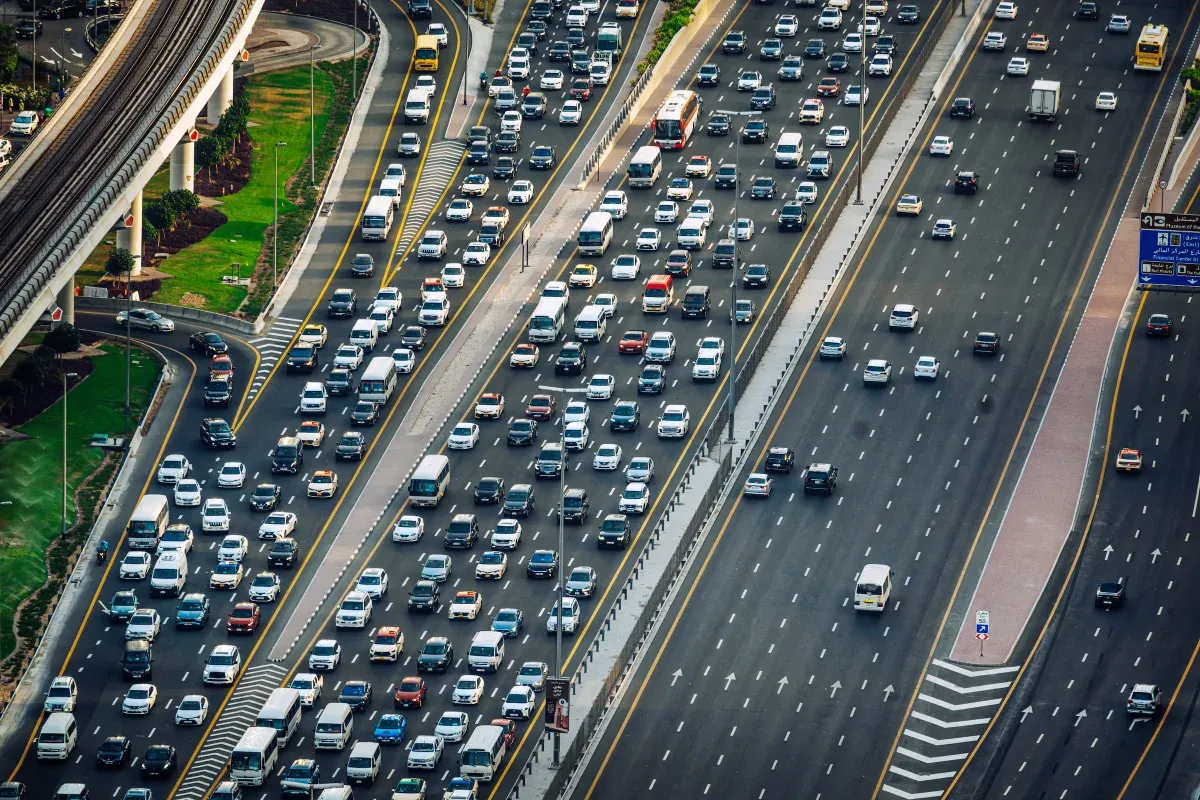
Drivers often respond to congestion by changing lanes, but traffic models summarized in Scientific American indicate this intuition is typically wrong. For decision-makers, the lesson is that interventions and design choices should assume lane-changing behavior will not reliably fix throughput problems.
When roads get crowded, many drivers do the same thing: they start changing lanes. The move feels logical, like a quick edit to the “mistake” of being in the wrong place in the traffic flow. But the core message from the math discussed in Scientific American is blunt. Mathematics suggests this intuition is typically wrong.
That means the most common individual “solution” to a traffic jam is often not a solution at all, at least when you look at the system as a system rather than a collection of personal decisions. Lane changes can create additional friction. They can also redistribute congestion instead of dissolving it. In other words, even if each driver thinks they are improving their own situation, the aggregate outcome can be worse, or at minimum not better.
To see why, it helps to remember what traffic engineering is really optimizing. The goal is not that every driver feels like they made a clever move. The goal is that the road network moves vehicles efficiently and safely under constraints: limited lane capacity, imperfect information, human reaction times, and the fact that lane changes require gaps that may not exist. A lane change is not free. It consumes time and space in the exact spot where traffic is already tight. When enough drivers do it at once, the “fix” becomes another source of delay.
This is where the math becomes interesting. Mathematical traffic models treat drivers as interacting agents, and they can show that certain behaviors that seem individually rational do not increase overall throughput. The reason is collective dynamics. If a jam causes one wave of lane changes, those lane changes can trigger more braking, more yielding, and more stop-and-go behavior, which then reduces the effective capacity of the roadway. The result is a feedback loop. Congestion pushes behavior. Behavior worsens congestion. That is the kind of pattern the math tends to spotlight.
There is also a policy angle, and it matters for people who allocate budgets, write rules, or oversee infrastructure. Many public strategies focus on reducing disruptive behavior during congestion. Lane changing is often viewed as something drivers “can choose,” which makes it politically tempting to address through signage, enforcement, or education. But if the underlying behavioral intuition is frequently wrong, then policy should focus on system-level outcomes, not just attempts to steer individual instincts. For example, interventions that assume lane changes will improve flow may misread how drivers actually interact at high density.
The regulatory background here is that traffic safety and traffic efficiency are historically entangled, even if the incentives feel separate. Safety efforts reduce risky maneuvers, and traffic management efforts increase mobility. When these goals collide, the best interventions tend to be those that change the structure of incentives and constraints. If lane changes during congestion tend to be counterproductive, then regulators and transportation agencies might need to emphasize designs and rules that reduce the number of “unnecessary” lane-change opportunities, or otherwise smooth the path that vehicles must follow to exit congestion.
For executives, fleets, and investors, the second-order implications show up in cost and operational risk. Congestion already increases fuel burn, driver hours, and vehicle wear. If a jam also triggers lane-changing patterns that do not actually recover time, then the incremental cost of those maneuvers is not just mechanical. It also increases variability: unpredictable speed changes, more frequent braking, and potentially higher incident exposure in busy corridors. Even if you are not running a rideshare or logistics company, the systems you depend on, from commuting patterns to delivery routes, are affected by how real drivers behave under stress.
So the strategic stake is simple: the “do what feels right” approach is not enough. Scientific American’s framing, grounded in mathematical modeling, pushes against a deeply intuitive reflex. When the road is crowded, changing lanes often does not rescue you from the jam in the way you expect. Instead, it can contribute to the same dynamics that created the slowdown. For decision-makers in mobility, infrastructure, regulation, and fleet operations, that is a reminder to prioritize solutions that improve network behavior, not just individual behavior.
In a world where transportation systems are increasingly influenced by analytics and automation, the lesson cuts both ways. If the goal is smoother flow, then models that reveal counterintuitive outcomes, like “lane changes typically backfire,” should inform everything from signage and lane control to routing algorithms and driver-assist logic. The jam is not just a place on a map. It is a dynamic system, and the math is telling you what happens when many people try the same instinct at once.
This story's Key Insights and Take-aways are locked.
Create a free account to unlock Executive Actions for one credit.
Register to UnlockAlways free for Executives Club members. Join the Club
More in Science
2026 Nikon Small World Winners Reveal the Hidden Machinery of Everyday Life
A mycologist's frozen Edinburgh garden became the backdrop for vivid views inside cells, a reminder of what advanced imaging now makes visible to researchers and the industries built on biology.

Study: 1 in 4 depression cases may be a body-clock problem, not a chemical one
A 10,000-person study finds standard antidepressants often fail these patients, but melatonin and morning sunlight may hit the real root cause.

Start-Up Says A.I. Designed a Virus to Attack One Patient's Superbug
If the claim holds up, personalized phage therapy could become a new frontline weapon against antibiotic resistance - but proof is far from final.