
Trump kept Venezuela’s Interior Minister Cabello at the table despite Ojeda killing charges
Chile alleges Cabello backed Tren de Aragua's kidnapping and murder of dissident Lt. Ronald Ojeda.
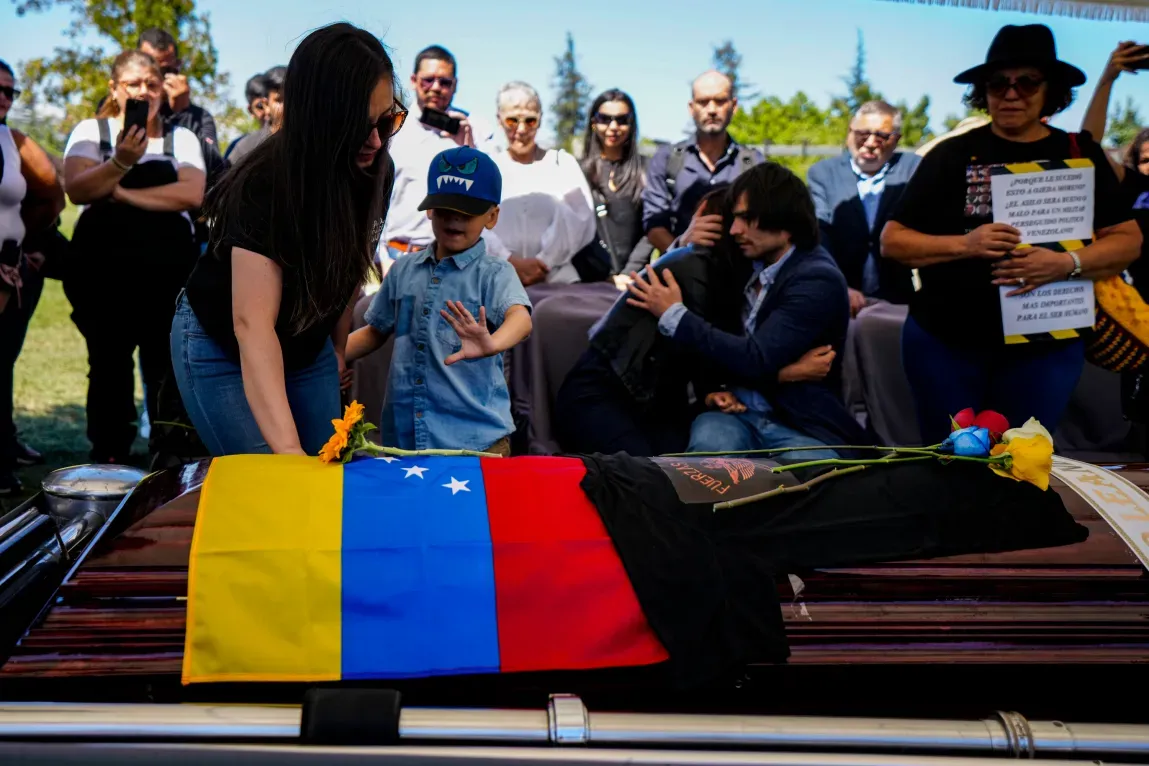
U.S. officials have been working directly with Venezuela Interior Minister Diosdado Cabello for months while Chile investigates his alleged role in the killing of exiled dissident Lt. Ronald Ojeda. The consequence for decision-makers is a rule-of-law and counterterrorism credibility test, with direct operational ties continuing even as prosecutions move forward.
In late 2024, a Venezuelan ex-convict, Rafael Enrique Gámez Salas, crossed into Mexico and U.S. Border Patrol initially treated him like “hundreds of thousands of other Venezuelan migrants.” Today, the 40-year-old sits in a federal jail in Los Angeles awaiting extradition to Chile, where prosecutors accuse him of being a boss of Tren de Aragua and of organizing a kidnapping that ended with the killing of an exiled Venezuelan dissident.
What raises the stakes is not just the alleged crime in Chile. Chilean authorities also believe the kidnapping and killing were carried out at the behest of Venezuela’s authoritarian government, and for the past six months the Trump administration has been working directly with the powerful Venezuelan official under investigation for allegedly ordering the crime: Interior Minister Diosdado Cabello. That tension sits at the center of the unfolding case, and it is why critics say the U.S. response is less about extracting accountability and more about maintaining leverage.
Here is the allegation, as Chilean prosecutors and U.S. charging materials describe it. In Chile, authorities investigate Cabello as the alleged mastermind behind the killing of former military officer Lt. Ronald Ojeda, who unsuccessfully attempted an uprising against Nicolás Maduro. Ojeda had been granted asylum in Chile. Prosecutors say Cabello became an investigative target based on testimony from captured suspects. They suspect Cabello paid Tren de Aragua’s top leadership, which then commissioned gang members in Chile led by Gámez to kidnap Ojeda. Chilean prosecutors believe Ojeda died while his captors were torturing him to get information about Venezuela’s political opposition.
The U.S. dimension makes this feel like a policy case study, not only a criminal case. The Trump administration has publicly treated Tren de Aragua as a terrorist-linked threat with hemispheric reach. After Trump returned to office last year, Secretary of State Marco Rubio and other officials asserted that the Chile killing showed Tren de Aragua’s ties to the highest levels of the Venezuelan government and the gang’s reach across the Americas. The president designated the gang as a terrorist group and said Maduro sent it to invade the United States, though some law enforcement officials say the administration exaggerated the threat to justify mass deportations.
But while the administration pushed the deportation and terrorism framing, critics say Cabello has remained insulated. The post-January period is key: the unlikely alliance with Cabello began in January, when U.S. special operations forces captured Venezuelan President Nicolás Maduro and brought him to New York to stand trial on drug trafficking charges. Critics called it a violation of Venezuelan sovereignty. The Trump administration said it was restoring law and order and began restructuring Venezuela’s ruined economy and exerting control over its massive oil industry. Yet, according to ProPublica, the administration left Cabello in place despite longtime U.S. accusations that he led the repression of political opponents and enriched himself through illicit partnerships with criminal groups.
Cabello’s continuing role also shows up in meetings. ProPublica reports that Cabello has had “a seat at the table” during visits to Caracas by senior U.S. officials, including Interior Secretary Doug Burgum, for negotiations involving issues such as Venezuela’s lucrative mining sector. Before Maduro’s capture, U.S. authorities charged Cabello and a top Tren de Aragua leader in the same drug trafficking indictment as Maduro and offered a $25 million reward for Cabello. In other words, Cabello is not a new character in U.S. legal thinking. The question is why his practical influence appears to continue even as the Ojeda allegations advance.
The case is also colliding with another high-sensitivity moment: the June 24 earthquakes that killed more than 3,600 people, injured more than 16,000, and left thousands missing. Cabello came under fire for the response. In an internationally televised confrontation, Cabello exchanged tense words with a U.S. search-and-rescue team en route to aid victims. Critics accused him of interfering with rescue operations and repeated calls for his arrest on pending U.S. charges. A State Department spokesperson downplayed the incident as “an unfortunate misunderstanding.” ProPublica adds that early this week Cabello participated in a meeting with Gen. Francis Donovan, head of U.S. Southern Command, to discuss relief operations.
That matters because disaster response is one of those “show me the incentives” arenas. If U.S. officials are talking, coordinating, and operating through Cabello while he is under scrutiny abroad, critics argue it signals that cooperation is being valued above confrontation. Todd Robinson, a retired senior U.S. diplomat and former ambassador in Caracas who was expelled in 2018 after criticizing human rights abuses, said Cabello’s continuing power raises questions about whether U.S. stated commitments to advancing rule of law are real or a cover for interests in exploiting Venezuela’s oil. Another retired diplomat, Brian Naranjo, suggested the administration appears to be more focused on appeasing corrupt actors than uprooting them.
Meanwhile, the legal process in Chile is moving. As Chile seeks the return of Gámez and prosecutors prepare to bring 20 suspects to trial, ProPublica reports the Trump administration has been silent about the alleged role of Cabello and the regime in Ojeda’s death. U.S. officials have aided Chilean counterparts with extradition, but they have not used the case to press Venezuelan authorities to oust, arrest, or hand over Cabello, according to current and former U.S. officials cited by ProPublica. When Rubio was asked in May whether the U.S. still considers Cabello a narcoterrorist, Rubio gave a brief answer: “The policy of the United States on that topic has not changed, and when it changes we will let you know.”
Cabello, for his part, has denied involvement. He could not be reached for comment, but ProPublica notes he has publicly denied allegations in the Ojeda killing. On his television show in 2024, he said: “Venezuela has nothing to do with this kidnapping. Nothing. Resolve your problems there, in Chile.” Gámez also denied any role in Ojeda’s death or being a member of Tren de Aragua, and he told ProPublica from a federal jail in Los Angeles that he has no connections to Cabello. ProPublica reports it found no information indicating he had been charged with a violent offense during the nearly two years he lived in the United States. He said he worked at a restaurant and as a deliveryman in Utah.
So what is the executive-level takeaway from a story that begins with a kidnapping and ends with extradition paperwork? It is that international enforcement and counterterror policy are being tested by on-the-ground realities: access, negotiations, and energy or mining interests. Even as prosecutors build cases and trial preparation accelerates in Chile, the U.S. continues to engage Cabello through official channels. For leaders in government-adjacent industries, investors, and board members tracking geopolitical risk, this is a familiar pattern: the “rule of law” narrative can lose to the “operational leverage” reality unless it is matched with consistent accountability moves.
This story's Key Insights and Take-aways are locked.
Create a free account to unlock Executive Actions for one credit.
Register to UnlockAlways free for Executives Club members. Join the Club
More in Politics
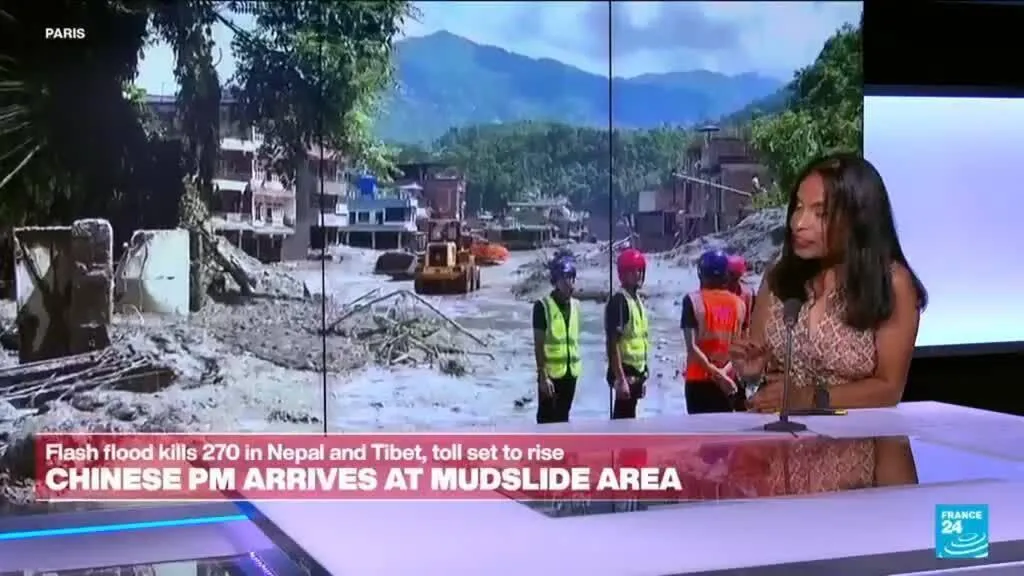
Glacial collapse, not rain, killed 180 in Nepal's Himalayan flood
The Himalaya's extreme geography hid the true cause of Nepal's catastrophic flood, a glacial collapse that turned a geological battleground into a mass-casualty zone.

Iran’s Esmail Baghaei says Oman talks start shipping via Hormuz, not US talks yet
Temporary route plans with Oman aim to restart commerce while Tehran says Washington dialogue is not on the table.

Standards watchdog opens probe into Reform UK deputy leader Richard Tice over interests
The parliamentary standards commissioner says it began an investigation on 28 July into a possible undeclared interest.