
Trump licenses Ukraine to produce Patriot interceptors, but the wait may break budgets
The US nod is a breakthrough for Kyiv. The constraint is time, and whether Ukraine can finance production until it works.
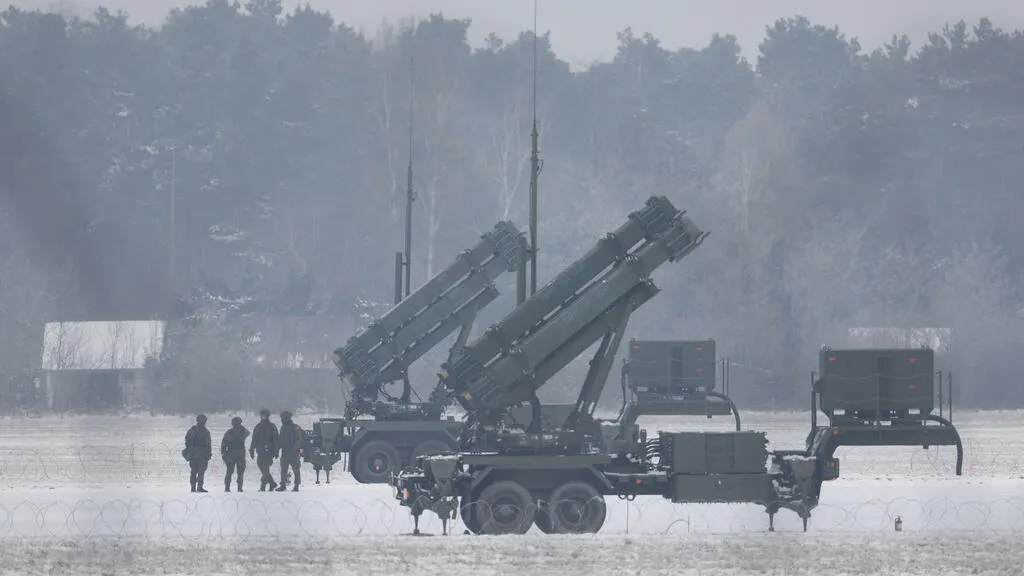
US President Donald Trump announced he will approve a license for Ukraine to produce its own Patriot missile interceptors. For decision-makers, the announcement could unlock a longer-term defense capacity, but experts warn it will not fix Ukraine's immediate air-defense needs.
US President Donald Trump’s surprise announcement that he will approve a license for Ukraine to produce its own Patriot missile interceptors is a potential breakthrough for Kyiv. The reason is straightforward: Patriot interceptors are not just a gadget you can conjure overnight. If Ukraine can legally and industrially make them, it shifts the country from relying solely on deliveries toward building a repeatable pipeline.
But the breakthrough has a catch, and the catch is time. Experts caution that licensing will not translate into an immediate fix. In other words, the approval matters, but it does not instantly refill magazines during the next air-defense cycle. That distinction is critical for anyone making budget calls, procurement plans, or manufacturing investments in wartime conditions.
To understand why “license” is such a loaded word, you have to look at how defense supply typically works. Air defense systems like Patriot depend on interceptors, components, and tightly controlled production processes. Even when a country has demand and technical capability, manufacturing can be slowed by export rules, licensing arrangements, and the practical realities of ramping production. A license can remove a legal bottleneck, but industrial bottlenecks still have to be cleared. Those include tooling, supplier qualification, workforce ramp, quality assurance, and the steady management of materials.
The second-order issue for Ukraine is that the strategic value of Patriot is not theoretical. Air defense operates under an immediate, continuous threat environment. So when experts say this will not be an immediate fix, they are effectively telling decision-makers to treat it as a horizon extension, not a short-term patch. That matters because wartime defense planning tends to run on timelines measured in weeks, not years. A long-term investment can be necessary, but only if near-term risk is managed with other measures in the meantime.
There is also a policy and leverage dimension hidden inside the announcement. For the US, approving a license signals a willingness to shift from a pure aid model toward one that supports local production. That can be politically and strategically consequential, because it changes what “support” looks like: fewer shipments might be required over time, and more responsibility, capacity, and industrial coordination would land on Ukrainian production lines. That can be attractive to Washington if it improves resilience and reduces future dependency, but it also raises questions about monitoring, compliance, and how production output aligns with operational needs.
For Ukraine, the licensing decision changes the procurement calculus. If production is feasible, the question becomes how to finance the build-up while continuing to operate under existing constraints. A country under pressure usually has to balance investment in durable capacity against the urgent need for supplies that can be deployed now. That balancing act is where budgets can fail. The announcement may open an industrial pathway, but if funds, materials, or manufacturing throughput are constrained, the “wait” can become a risk amplifier rather than a solution.
And then there is the market reality that defense procurement sits inside. Even without naming specific firms or figures beyond what the source provides, the basic pattern holds: once a licensed production effort is possible, it can reshape future contracting and bargaining power. Suppliers, regulators, and industrial partners begin to plan around new legal and production rights. That can create opportunities for firms involved in components and integration, but it can also create friction if timelines do not line up with operational urgency.
So the stake for leaders across the defense and national-security ecosystem is not just whether licensing is approved. It is whether the system can bridge the gap between policy change and battlefield timelines. Trump’s announcement signals a potential breakthrough for Kyiv, but experts’ caution that it will not be an immediate fix is a reminder that war does not pause for regulatory paperwork. The strategic prize is long-term autonomy in interceptor production. The operational challenge is surviving the interim.
For peers making similar decisions elsewhere, the lesson is uncomfortable but useful: approvals can unlock capacity, yet the hardest part is the transition period. Boards and executives should read this not as a finish line, but as the start of a schedule that has to be managed like a supply chain, not a press release.
This story's Key Insights and Take-aways are locked.
Create a free account to unlock Executive Actions for one credit.
Register to UnlockAlways free for Executives Club members. Join the Club
More in Politics

Glacial collapse, not rain, killed 180 in Nepal's Himalayan flood
The Himalaya's extreme geography hid the true cause of Nepal's catastrophic flood, a glacial collapse that turned a geological battleground into a mass-casualty zone.
Iran’s Esmail Baghaei says Oman talks start shipping via Hormuz, not US talks yet
Temporary route plans with Oman aim to restart commerce while Tehran says Washington dialogue is not on the table.

Standards watchdog opens probe into Reform UK deputy leader Richard Tice over interests
The parliamentary standards commissioner says it began an investigation on 28 July into a possible undeclared interest.