

Trump's 'biggest oil deal ever' has a 25-year legal problem
ProPublica obtained the 18-page pact that gives the US a 35% stake and $30 oil, but may break Venezuela's concession rules, and the chosen partner has faced money-laundering probes.
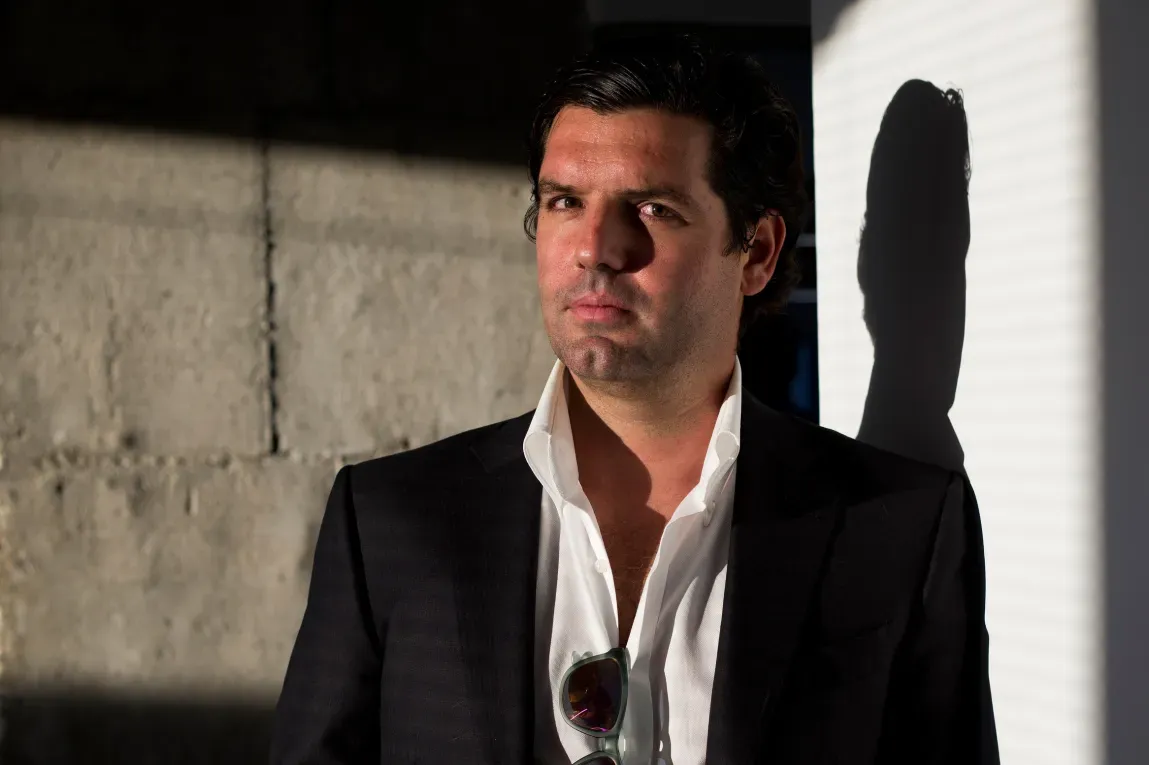
Alejandro Betancourt, CEO of North American Blue Energy Partners, signed a secret 18-page oil deal with the Trump administration that grants the US a 35% stake and discounted oil. The deal's terms may violate Venezuelan law and shield Betancourt's position, raising legal and political risks for any US or Venezuelan leader who inherits it.
The 18-page strategic partnership agreement that President Donald Trump called the "biggest oil deal in world history" contains a legal landmine: the underlying operating rights appear to exceed Venezuela's 25-year limit on oil concessions. ProPublica reviewed the full text, signed for the United States by Secretary of State Marco Rubio and Defense Secretary Pete Hegseth. The document, marked "sensitive," grants the U.S. sweeping access to Venezuela's oil reserves, but the fine print reveals carefully constructed terms that favor U.S. interests at every turn and cement the power of a small group handpicked by the Trump administration to govern and profit from the deal.
The 25-year problem directly contradicts Trump's public selling point. The president has said the deal will secure America's energy dominance for the next century, but the text indicates that U.S. purchasing rights expire in half that time, and the operating rights appear to run afoul of Venezuelan laws limiting oil concessions to 25 years. The agreement does ensure the United States a deep discount from fair-market value on 20% of NABEP's oil, as Trump has said, at a rate of $30 a barrel, or less than a third of what oil has sold for in recent months. But that fee does not account for the cost of getting Venezuela's oil out of the country; much of the raw crude is so thick it must be blended with 20% or more of lighter products to flow through pipelines, and the potentially significant cost of importing those blending materials is not included in the price.
The deal's central figure is Alejandro Betancourt, a 46-year-old Venezuelan energy baron who has faced money-laundering investigations in three countries. The Trump administration is taking a 35% stake in Betancourt's firm, North American Blue Energy Partners, by acquiring shares in a Barbados-registered parent company. The agreement provides little information about the owners and investors behind that parent company, who could receive enormous wealth from the arrangement. It also safeguards Betancourt's position as chief executive of NABEP and says the U.S. government will work with the parent company to appoint a powerful seven-member board to govern the venture for an initial 15-year term. People with knowledge of the negotiations said these terms were designed to prevent future U.S. and Venezuelan leaders from dismantling the enterprise.
Another name appears on the agreement that the Trump administration did not disclose as a party: Orlando Alvarado, who signed on behalf of the parent company alongside Betancourt, Hegseth and Rubio. Alvarado has held senior roles in multiple Betancourt businesses, including as chief financial officer of an energy firm that became embroiled in scandals a decade ago. According to the Miami Herald, federal prosecutors identified Alvarado as an unindicted co-conspirator in a scheme to embezzle money from Venezuela's national oil company. NABEP spokesperson Terry Wade said that "neither Mr. Betancourt nor Mr. Alvarado has ever been charged with any crime in any country, and any claims against them are baseless."
The role of the Venezuelan government and the potential benefits to its people are largely absent from the text. The agreement does not explicitly guarantee that Betancourt's company is obligated to pay the estimated $200 billion in royalties and tax payments to Venezuela that the White House has said would benefit the country. Venezuelan opposition leaders and U.S. congressional Democrats have criticized the agreement because of Betancourt's legal exposure. The White House, State Department, Pentagon and NABEP all defended the deal, with White House spokesperson Taylor Rogers saying it "marks a major step toward stabilizing Venezuela's economy after years of hyperinflation and almost no new investment, while more than doubling the United States' oil reserves." Wade emphasized that NABEP was chosen for its track record of expanding oil production in Venezuela and that blending costs would not meaningfully impact production economics.
The confidentiality clause in the document bars Betancourt's company from disclosing the "existence and terms" of the U.S. government agreement, which helps explain why the full text has been one of the most sought-after secrets in Washington. One person familiar with the deliberations said people close to the Trump administration seemed keen to partner with Betancourt's company because of the privacy and flexibility it offered, giving NABEP an advantage over other potential partners. The "sensitive" classification is commonly used to shield personnel information, law enforcement details and attorney-client privileged matters, but here it also keeps the public from seeing who stands to profit.
The deal is likely to face scrutiny in both the United States and Venezuela, especially if Democrats win one or both chambers in the midterm elections, according to former U.S. diplomats and congressional staff. "Question number one in a new U.S. Congress will be: Why Betancourt?" said former Ambassador James Story, who served as the top U.S. diplomat in Caracas from 2018 to 2023. "Why did he get this deal? And was he involved in criminality? It seems reasonable to have a congressional hearing about those questions." In public comments, Delcy Rodríguez, who won the backing of the Trump administration to serve as Venezuela's interim president, praised the accord as "historic" and asserted that Venezuela will retain sovereignty over its natural resources.
For executives and boards watching this deal, the lesson is that headline numbers can obscure structural risks. The U.S. gets a 35% stake and cheap oil on paper, but the legal basis for the operating rights is shaky, the cost of blending thick crude is unaccounted for, and the partner's past is under a microscope. The 15-year governance term and confidentiality clause are designed to lock in the current arrangement, but no contract can fully insulate it from a change in political winds in either country. The deal is likely to face scrutiny in both capitals, and the question of who benefits beyond the named parties remains unresolved.
This story's Key Insights and Take-aways are locked.
Create a free account to unlock Executive Actions for one credit.
Register to UnlockAlways free for Executives Club members. Join the Club
More in Business

BioWare shuts down, Mass Effect 5 dead after $55B EA buyout
The legendary RPG studio's closure lands months after a $55 billion investment group buyout of EA, raising tough questions for gaming's biggest acquirers.
Musk barred from the room as Tesla, SpaceX boards weigh $3.5 trillion merger
The CEO of both companies is a 'conflicted party' watching independent directors negotiate a tie-up that would create a $3.5 trillion giant he would own about a third of.

Elon Musk just showcased a flying car - and it wasn't at Tesla
The Tesla CEO's latest reveal came at SpaceX, not Tesla, signaling where vertical mobility is headed.