
Trump says US may cut Germany troops, with decision coming within weeks
A NATO and Iran-row escalation could reshape deterrence, signaling, and allied obligations in Europe.
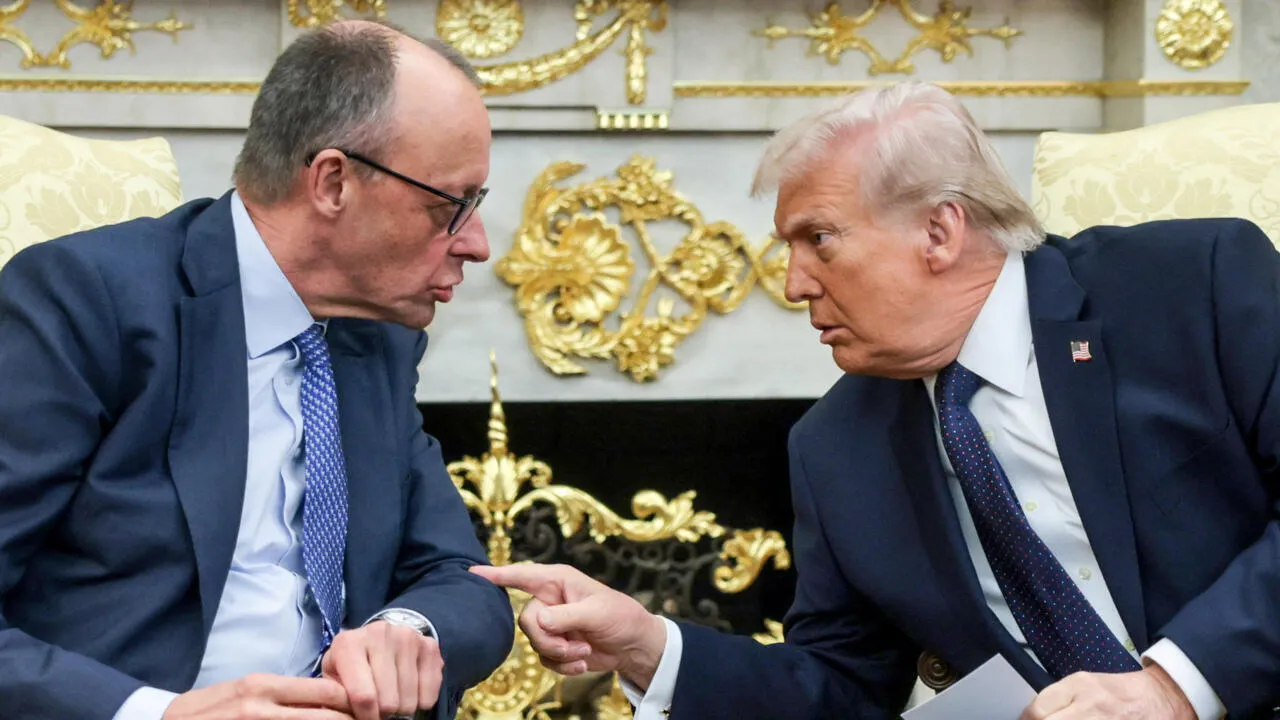
President Donald Trump said the United States is studying and reviewing the possible reduction of troops in Germany, with a determination coming over the next short period of time. The move lands amid a public dispute with German Chancellor Friedrich Merz over the Iran war and U.S. demands related to the Strait of Hormuz.
President Donald Trump said Wednesday that the United States is studying and reviewing the possible reduction of troops in Germany, with a determination to be made over the next short period of time. The fact pattern is straightforward but the consequences are not: this is another explicit signal that Washington is willing to attach force posture to allied political behavior.
The U.S. has already been downshifting in practice, even if the exact number is disputed. The Congressional Research Service said the United States had more than 35,000 troops in Germany in 2024, while German media said the figure is now nearer 50,000. Either way, the message from Trump is timing and leverage, not just accounting. He is using the possibility of a troop reduction to press allies during the Iran row, turning basing into a bargaining chip.
Why Germany is the current pressure point matters because NATO and deterrence are built on commitments, not vibes. Trump has made threats during both of his terms to slash U.S. troop numbers in Germany and other European allies, reflecting sustained criticism of the NATO alliance. Now the stated trigger is narrower and sharper. The source frames it as Washington looking to punish allies that have not backed the U.S.-Israeli war in Iran or contributed to a peacekeeping force in the crucial Strait of Hormuz.
That Strait of Hormuz detail is the operational heart of the issue. It is not just symbolism. Freedom of navigation there directly affects global energy routes and maritime risk premiums, which is why the topic shows up in diplomatic calls and public messaging. In the hours before Trump posted on Truth Social about troop numbers in Germany, U.S. Secretary of State Marco Rubio spoke by telephone with German Foreign Minister Johann Wadephul. Rubio and Wadephul discussed Iran and the importance of securing freedom of navigation in the Strait of Hormuz, State Department spokesman Tommy Pigott said. In other words, the military leverage is not happening in a vacuum. Diplomacy was scheduled right before the post, signaling the administration is trying to align message, negotiations, and enforcement.
This is also where the German political angle gets uncomfortable for everyone watching European capitals. Merz has become a target of Trump's ire after earlier this week Merz said that Iran is “humiliating” Washington at the negotiating table. Trump on Tuesday said Merz “thinks it's OK for Iran to have a Nuclear weapon. He doesn't know what he's talking about!” Those are big accusations in a negotiation that is already high-stakes. Merz, for his part, played down the row on Wednesday, insisting they were still on good terms. “From my point of view, the personal relationship between the American president and myself remains just as good as before,” Merz told a press conference in Berlin. He also said he expressed doubts about the U.S.-Israeli war on Iran from the start, adding that Germany and Europe are suffering “considerably from the consequences.”
The second-order effect for executives and boards is that this kind of dispute does not just change politics. It changes planning horizons. A troop reduction study implies uncertainty around costs, security arrangements, and infrastructure expectations that often show up in government procurement, defense contracting, and private-sector risk management. Even if the number ends up unchanged, the process itself pressures partners to prepare for scenarios where U.S. presence is less automatic. For companies tied to defense, logistics, energy supply chains, or compliance related to international security and sanctions regimes, volatility in security commitments can ripple into procurement timelines, insurance costs, and operational continuity assumptions.
It also signals Washington may be exploring other retaliatory measures against Western allies who have not helped against Iran. Last week a report said the United States was considering trying to suspend Spain from NATO, and that it could review its position on Britain's control of the Falkland Islands. Washington later reiterated its neutrality over the contested sovereignty of the Falkland Islands between Argentina and Britain, which fought a short but bloody war over the archipelago in 1982 that Britain won. Taken together, the pattern looks like conditional engagement: support the Iran effort as Washington defines it, or face consequences that could touch everything from alliance standing to territorial postures.
For decision-makers in NATO-adjacent policy shops, finance teams, and risk committees, the practical takeaway is simple. This is not only about military numbers. It is about how quickly alliance dynamics can turn into leverage tools, and how that leverage can be timed to diplomatic moments. The source makes clear that Trump linked Germany troops to the Iran war and the Strait of Hormuz contribution demands, and that determination is expected within a short period of time. In that environment, the worst place to be is surprised, because uncertainty itself becomes the bill everyone has to pay.
This story's Key Insights and Take-aways are locked.
Create a free account to unlock Executive Actions for one credit.
Register to UnlockAlways free for Executives Club members. Join the Club
More in Politics
House again forces Iran war powers vote after Republicans join Democrats a second time
Second rebuke repeats the same pattern: a cross-party bloc demands authorization, raising new friction for the president.
No 10 North blueprint targets up to 300 staff in 18 months
A think tank plan sketches a sizable No 10 workforce timeline, forcing ministers to confront staffing, cost, and control fast.

Burnham backs 20% cut to English pub business rates, not hotels or restaurants
From next April, some hospitality firms get a discount but hotels and restaurants are left out of the 20% break.