

Trump tells Mark Carney wildfire smoke is “poisoning” U.S. air, threatens tariffs
The clash over Canadian wildfire smoke is spilling into trade leverage and raising the temperature on U.S.-Canada relations.
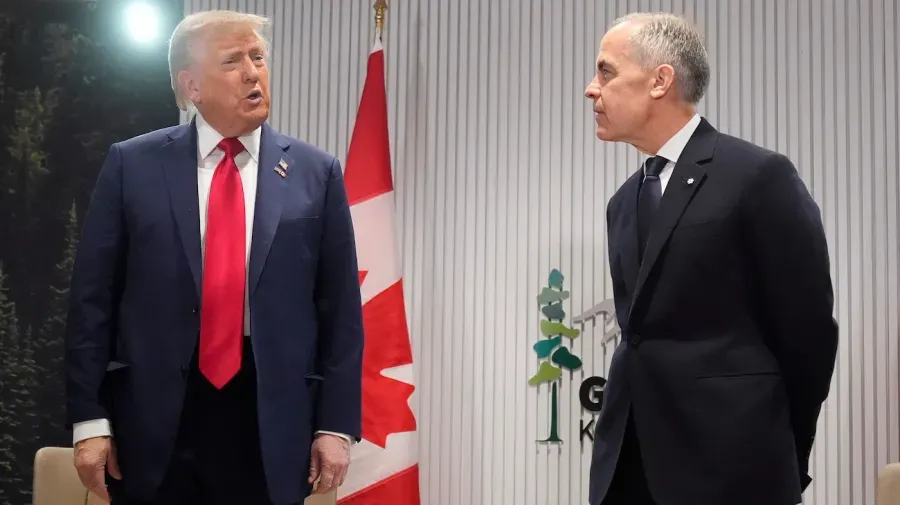
President Trump warned Canadian Prime Minister Mark Carney over wildfire smoke affecting more than a dozen U.S. states. Trump also signaled tariffs and used unusually harsh language, escalating pressure in already tense U.S.-Canada relations.
President Trump has put Canadian Prime Minister Mark Carney on notice over the wildfire smoke shrouding over a dozen U.S. states, and he is not treating it like a weather story. Trump said the smoke from Canada’s wildfires has been “poisoning” the air in the U.S., and he suggested that the issue could flow directly into trade leverage, including tariffs.
That matters because smoke is not just an environmental headline. When the U.S. President ties cross-border pollution to tariff pressure, it moves the conversation from emergency response to negotiating leverage, fast. In the immediate term, the U.S. public gets health risk. In the diplomatic and business term, U.S.-Canada relations already strained now have another accelerant.
To understand why this is a big deal for decision-makers, you have to recognize how quickly U.S. trade policy can turn a domestic disruption into a bargaining chip. Tariffs are one of the U.S. government’s most visible tools for applying pressure in disputes. Even when the dispute starts with something non-trade related, like a natural disaster or regulatory friction, tariff threats can create a shadow conversation across corporate procurement, cross-border logistics, and supply chain planning. Companies do not need a detailed tariff schedule to act. They only need a credible threat.
Wildfire smoke also has a way of turning “out there somewhere” into “right here now.” The source says the smoke shrouded over a dozen states. That scale is significant because it increases political visibility and complicates the optics of waiting for slow-moving processes. When multiple states are affected, federal authorities, state officials, and the public all feel the heat. That, in turn, raises the odds that the issue will be treated as a national urgency, which is exactly the kind of environment where presidents and legislatures start thinking about accountability, not just assistance.
Carney’s position adds another layer. As Canadian Prime Minister, Carney is the face of Canada’s executive response at the national level, but the underlying drivers of wildfire impacts can involve many layers: local land management, provincial responsibilities, emergency services, and national coordination. In cross-border disputes, however, those layers rarely translate neatly for foreign counterparts. When Trump puts a leader on notice, the message is less about micromanaging causes and more about signaling that consequences will be negotiated.
And Trump’s wording is doing real work here. Calling the smoke “poisoning” is inflammatory language for diplomacy, even by political standards. In negotiations, harsh characterization can be a way to define the frame early, before the other side has a chance to soften it. It can also be a signal to U.S. audiences that the administration is not going to treat Canada as a passive neighbor. Whether or not the underlying issue is entirely bilateral in cause, the politics are bilateral in effect.
So what happens next is not just about smoke drifting across borders. The second-order impact is that tariff threats can reorder priorities for boards and CFOs. If the U.S.-Canada relationship continues to worsen, companies with cross-border exposure can find that “routine” costs become less routine, especially in categories tied to traded goods. Even without a new tariff being implemented in the sourced material, the mere suggestion can shift planning assumptions. Procurement teams may build extra buffers. Treasury may revisit hedging and currency exposure. Risk officers may adjust scenario models for both regulatory and supply chain disruption.
Executives at firms that sell into either market should take note for a simple reason: trade disputes tend to outlive the original incident. Smoke will dissipate. Supply chains and contract terms can lag. Policy leverage can linger, turning temporary events into longer negotiations about accountability, compliance, and mutual responsibility.
For peers watching this, the strategic stake is clear. This is a reminder that natural disasters can become political bargaining chips, and tariff threats can arrive faster than operational fixes. If you are a board member or finance leader with Canada-related exposure, the question is not whether wildfire smoke is temporary. The question is whether the deteriorating relationship and tariff pressure become the new baseline for how cross-border disputes get managed, even after the air clears.
This story's Key Insights and Take-aways are locked.
Create a free account to unlock Executive Actions for one credit.
Register to UnlockAlways free for Executives Club members. Join the Club
More in Politics

LA County: DOJ's 20,000 'noncitizen' voter list is 'unreliable,' includes U.S.-born
Preliminary review by Los Angeles County election officials finds errors in the federal list, raising the stakes for voter roll integrity ahead of November.

Trump's $1.5B Pentagon chip investment lands in North Carolina
A $1.5 billion defense infusion for North Carolina chipmaking signals a new era of Pentagon-backed reshoring - here's what it means for the industry.

Nigeria confirms first Ebola case in Abuja, a woman just off a Uganda flight
Health Minister Muhammad Ali Pate says the patient flew in from Uganda, putting Africa's latest outbreak on Nigeria's doorstep.