
U.S. hospitals shift Filipino nurses to remote monitoring, but Philippines shortages may worsen
Remote ICU-style check-ins are helping American staffing gaps, while raising questions about what happens to nurse supply back home.
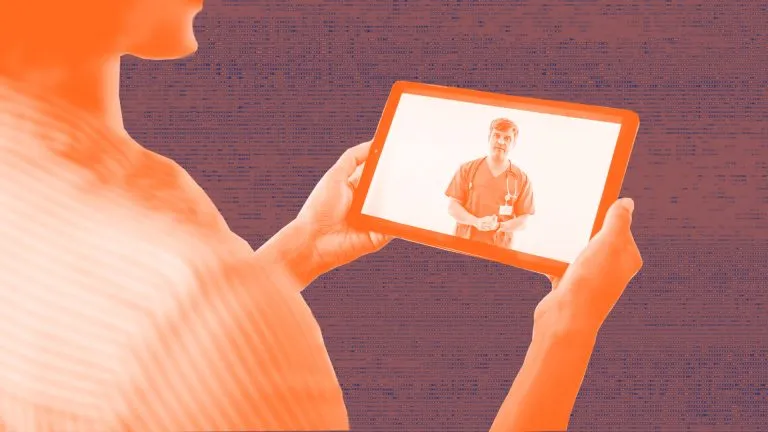
Filipino nurses are increasingly being hired by U.S. hospitals for remote roles where they monitor patients and help fill staffing gaps. For executives, the move can look like an efficiency win, but it may aggravate shortages in the Philippines.
When Chris worked as a nurse and healthcare administrator, his job combined direct clinical decisions with constant patient monitoring, including checking vital signs and deciding on appropriate treatments. In some shifts, he monitored up to 10 patients in intensive care settings through remote work. That kind of setup is becoming more common as U.S. hospitals look to outsource parts of care delivery to cover staffing gaps and reduce costs.
The immediate value is straightforward: if a hospital can keep more patients under clinical watch while adding capacity faster, it can reduce the strain that comes with shortages. The story behind that value is also straightforward and uncomfortable. The Rest of World reports that U.S. hospitals are increasingly hiring Filipino nurses for remote roles, both to fill staffing gaps and for cost savings. But the practice may also aggravate shortages in the Philippines, where the underlying nursing supply is already under pressure.
To understand why this remote-monitoring trend matters, you have to understand what remote nursing usually does in practice. Monitoring from a distance is not the same as hands-on bedside care, but it can still be clinically heavy. Vital signs are not just numbers on a screen. They are early warning signals, the kind that can require rapid escalation, careful interpretation, and quick decisions when something changes. The source description of Chris's work captures that mix: he did treatment planning as well as ongoing monitoring, sometimes at scale, which is exactly why hospitals are interested in translating certain monitoring tasks into remote workflows.
Hospitals have been under persistent operational pressure. Staffing shortages in healthcare are not merely a scheduling inconvenience. They can stretch staff beyond safe levels, delay responses, and increase burnout. When costs rise at the same time staffing gets harder, leaders tend to look for new sourcing models that improve coverage and predictability. Remote staffing can look like a clean answer because it expands the pool of available labor without forcing the same physical constraints. And cost savings are not a side benefit in this equation. The source explicitly notes that U.S. hospitals are using Filipino nurses in remote roles partly for cost reductions.
But the second-order effect in the Philippines is the part decision-makers cannot ignore. The nursing workforce is a national system, not an interchangeable supply drawer. If hospitals in the Philippines lose nurses or divert them into remote arrangements that remove them from local capacity, it can worsen the strain on the remaining workforce. In other words, a remote-monitoring model can shift shortages rather than solve them. The Rest of World framing is blunt: the practice may be aggravating shortages in the Philippines. Even if the U.S. side improves coverage in the short term, the origin point could see downstream impact on staffing, care delivery, and workload there.
There is also a regulatory and governance layer that executives should treat as risk, not paperwork. Remote care across borders tends to involve questions about licensure, scope of practice, and who is responsible for what when clinical monitoring is happening offsite. The source does not provide details on a specific regulator's ruling in this snippet, but it does make clear the operational reality: a nurse can monitor multiple intensive care patients remotely while contributing to treatment decisions. That kind of workflow can force institutions to tighten how they credential staff, define what decisions remote nurses can make, and ensure that escalation pathways work when technology fails or when the clinical situation changes faster than remote communication.
For boards and senior operators, this is the kind of trend that can create a tradeoff between immediate staffing relief and longer-term talent stability in the source country. If U.S. hospitals scale remote nursing without accounting for the Philippines impact, they may find that they are optimizing a local constraint at the expense of a broader supply chain that ultimately runs out. If, instead, leaders treat cross-border remote staffing as a coordinated workforce strategy with clear guardrails, they can potentially preserve quality while meeting staffing needs. Either way, the story of Chris monitoring up to 10 ICU patients remotely is not just a job description. It is a window into how healthcare labor markets are being restructured, and it carries a real stake for executives trying to balance capacity, cost, and accountability across borders.
This story's Key Insights and Take-aways are locked.
Create a free account to unlock Executive Actions for one credit.
Register to UnlockAlways free for Executives Club members. Join the Club
More in Technology

Google quietly links your phone number to every Android account on your SIM
Adding a SIM now ties your phone number to all Google accounts - and future accounts inherit it. Here's the security and privacy stakes.

Hijacker AI 'Skynet mode' runs 100,000 attack steps against exposed models
Symantec caught a criminal AI agent that borrows other models, steals data, and mines crypto; the only relief is no confirmed victims yet.

Nvidia's AI-financier shift faces its first big test as neoclouds stumble
A rout in neocloud stocks is forcing investors to weigh Nvidia's hidden exposure as both supplier and lender to the AI buildout.