
Uber tells London to line up for robotaxis with Wayve later this year
The ridehailing giant is taking first-passenger signups for co-branded Uber x Wayve driverless cars.
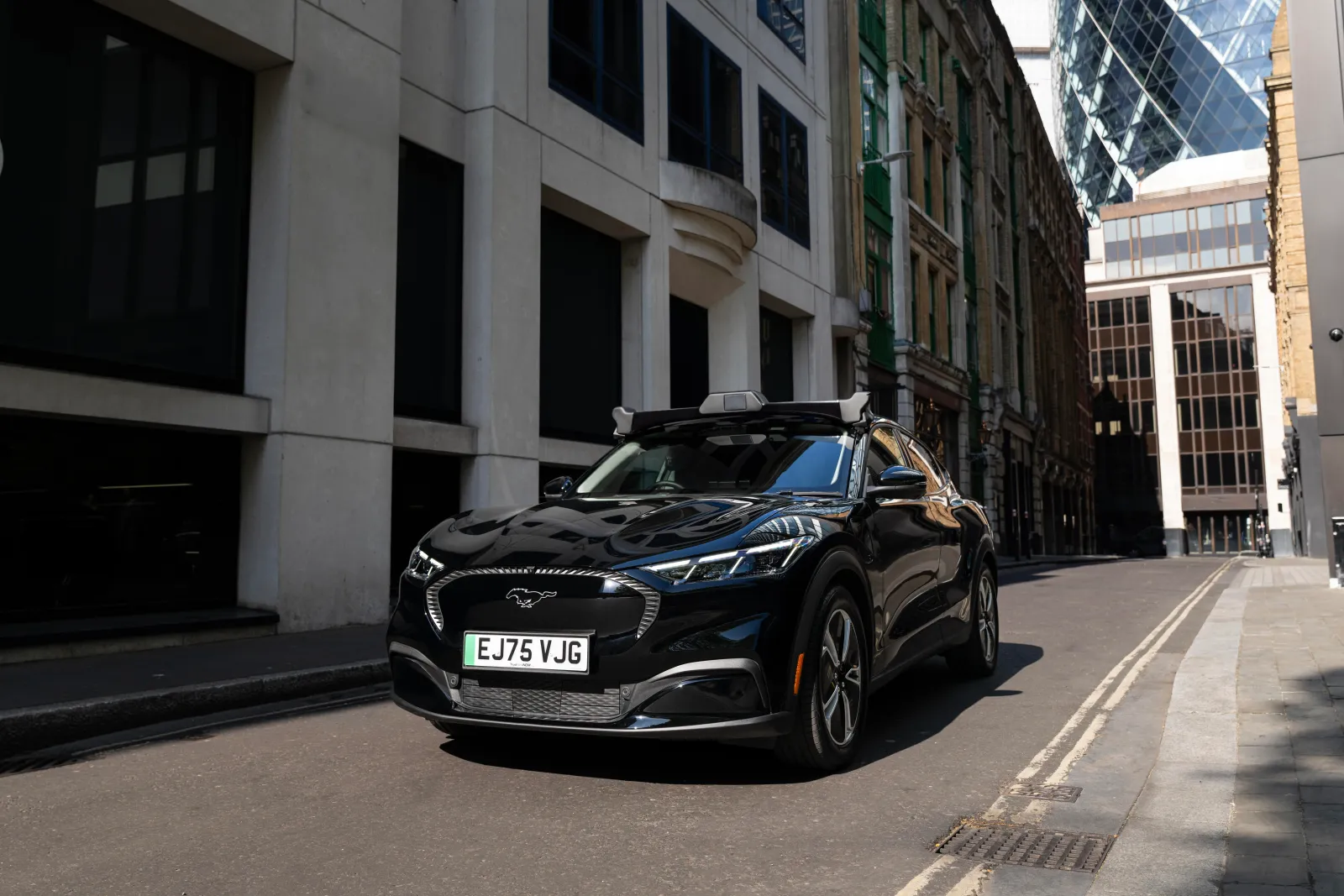
Uber is preparing robotaxis for London by opening an interest list for riders who want early access to co-branded Uber x Wayve autonomous vehicles. The move is a major test of whether driverless ridehailing can expand beyond the US and China into one of Uber's biggest markets.
Uber just turned London into the next arena for robotaxis. The company is opening an interest list in the Uber app for riders who want to be among the first to hail Wayve's autonomous vehicles in a co-branded Uber x Wayve service. Uber says the rollout would go live later this year, which means Londoners are being asked to raise their hands now, before driverless cars are even ready to start picking people up.
Here is the key operational detail: customers can sign up inside the Uber app settings by selecting “join interest …”. That matters because it tells you how Uber plans to measure demand. It is not just announcing technology. It is building a pipeline of early riders tied to a specific launch plan, using its existing app surface instead of waiting for passengers to find robotaxis on their own.
For Uber, London is not a random choice. It is one of the company's biggest markets, so putting robotaxis there is a milestone that tests the business case in a geography where Uber already has density, brand familiarity, and established rider habits. A robotaxi launch in a familiar Uber stronghold is different from a novelty demo in a place that has less consistent usage. If the service actually gets traction, Uber can start treating driverless ridehailing as something that scales like a mainstream product rather than a tech showcase.
The other big stake is whether driverless ridehailing beyond the “where it already works” zones has real appetite. The source frames this as an early test of demand outside the US and China, where robotaxis are already carrying passengers. That distinction is huge for decision-makers. In places where pilots have already converted into real rides, confidence can form. In new markets, confidence has to be earned all over again, from regulators to riders to local operators and infrastructure planners.
And regulation is the shadow running alongside every driverless headline. Robotaxis are not just a software problem, they are a permission problem. Even when a system can drive, governments and safety authorities typically need to clear the path for public operations, including how vehicles are supervised, how incidents are handled, and what happens if the technology hits the edge cases humans worry about. A London rollout later this year signals that Uber believes the runway is at least open enough to start collecting public interest and onboarding early riders, even before broader consumer awareness catches up.
There is also a partner dynamic baked into this announcement: Uber is moving with Wayve, and the service is explicitly co-branded as Uber x Wayve. That suggests Uber is not positioning this as a moonshot it builds alone in the dark. It is partnering to accelerate deployment, and it is letting the market see that relationship. For boards and executives, co-branding can reduce perceived execution risk, because it signals that a specialized autonomy company is doing the heavy lifting while Uber handles ridehailing distribution.
Zoom out and the second-order implications get sharper. If London proves there is rider appetite, the data point becomes transferable to other markets that have similar consumer density and high ride usage but different political and regulatory cultures. If it fails, Uber has at least confined the uncertainty to an interest list and a staged rollout plan rather than gambling on immediate, citywide demand.
There is also an internal learning angle. Uber is using its app settings to capture who opts in, which riders show enthusiasm early, and how quickly interest converts into actual rides once the service goes live later this year. That feedback loop will matter for pricing experiments, geographic expansion decisions, and operational choices like pickup zones and service hours. It also gives Uber a clearer picture of whether the “robotaxi market” is about early adopters who want novelty or about mainstream riders who want convenience.
For executives at other ridehailing, autonomy, and mobility companies, London is a live competitive signal. The question is not whether robotaxis exist. The question is whether driverless ridehailing can win mindshare and repeat usage in a major global market, beyond the US and China. Uber’s interest list is the first step in answering that question with real rider behavior, not just technical claims.
This story's Key Insights and Take-aways are locked.
Create a free account to unlock Executive Actions for one credit.
Register to UnlockAlways free for Executives Club members. Join the Club
More in Technology

OpenAI says 10,000 agents cracked a 90-year math problem in 88 hours
The company's claim is audacious, but one mathematician is pushing back. Here's what it means for AI-driven discovery.

Meta still serves child sexual abuse ads on Instagram in India - BBC report
A new report following the BBC Eye investigation says the ads are still there - what it signals for every platform with a self-serve ad engine.

White House yanks 'Build the Wall' game after Tetris Company copyright warning
The administration's arcade game vanished in hours - and the takedown playbook every brand can learn from.