
Ukraine pushes drone strikes on Russian oil facilities into a sixth gear
Kyiv’s attacks are forcing Russian energy closer to Ukraine’s control, with real consequences for markets and risk planning.
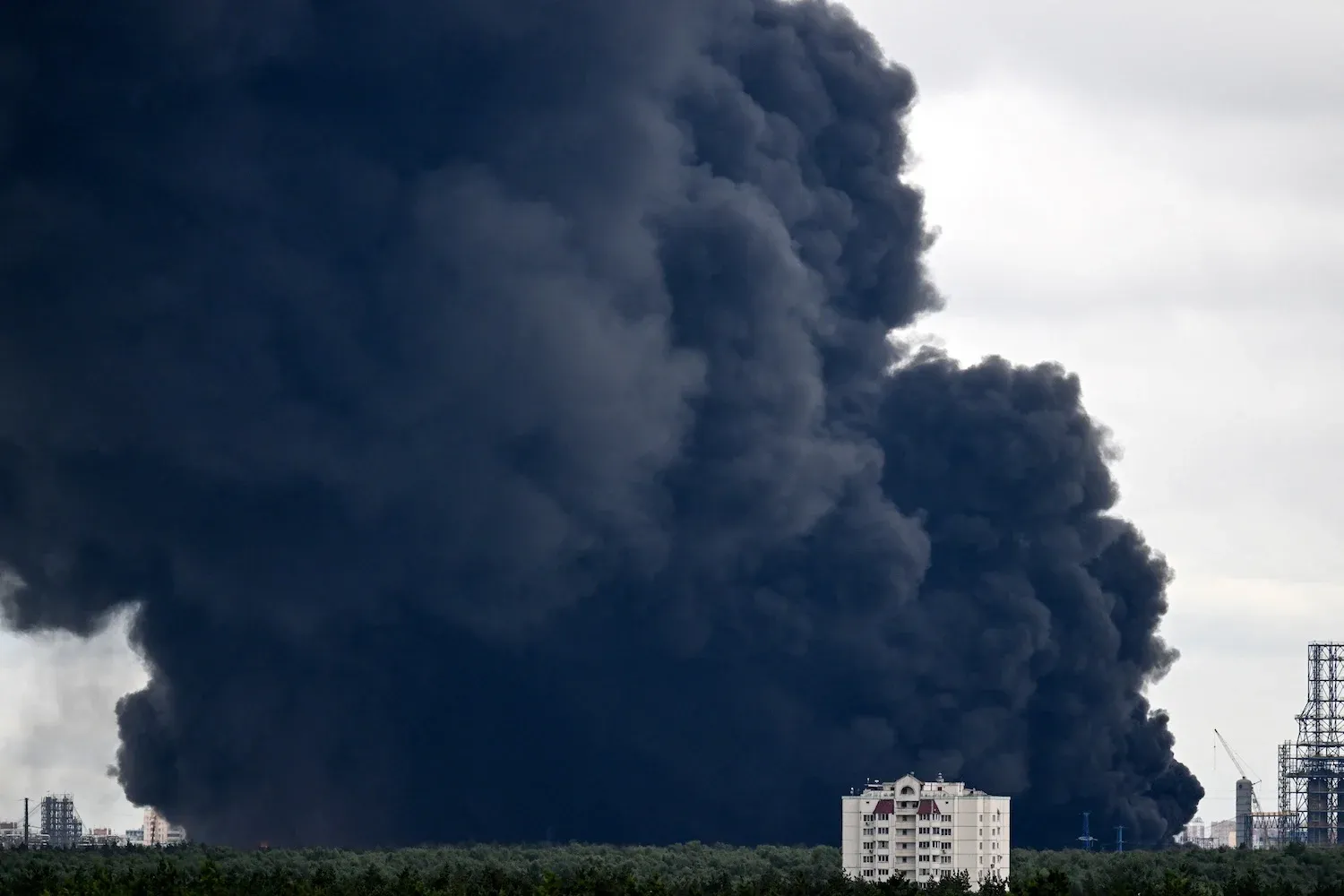
Kyiv’s drone offensive targeting Russian oil facilities has accelerated into what Foreign Policy describes as a “sixth gear.” The immediate effect is tighter leverage for Ukraine over parts of Russia’s oil infrastructure, raising volatility and planning pressure for decision-makers tied to energy supply.
Kyiv’s drone offensive against Russian oil facilities has found a sixth gear. That single escalation matters because it signals more than tactical success. It implies sustained pressure on energy infrastructure, which is where downtime becomes expensive, insurance gets pricier, and supply chains start behaving like they are bracing for impact.
Energy infrastructure is not just another battlefield target. Oil facilities are nodes in a system that has to run continuously, and they feed downstream production, shipping, refining, and industrial demand. When attacks concentrate on those nodes, the question for executives stops being “Did we see a strike?” and becomes “Can operators keep normal output, and what does it cost to recover?” The Foreign Policy framing of a “sixth gear” is essentially an alert that the tempo has increased, which tends to compress decision timelines for everyone holding exposure to energy volumes, logistics, and price risk.
For Ukraine, drones are a way to convert asymmetric capability into strategic leverage. Russia’s energy export position is a pillar of state revenue and of the broader economy, so putting pressure on oil facilities is a direct way to test how resilient Russia’s operating rhythm really is. If the offensive keeps intensifying, it does not only threaten specific sites. It can also force defenders to spend more on protection, spares, redundancy, and surveillance, all while output faces disruption.
For Russia, this kind of pressure tends to trigger a cascade of second-order problems that are often harder to quantify than the immediate physical damage. Operators may respond by rerouting production, changing staffing or operating procedures, and increasing maintenance cycles. Those adjustments can reduce efficiency, increase waste, and slow repairs, especially if attacks keep landing before systems fully stabilize. Even if facilities eventually restart, the recovery period itself becomes a strategic cost.
Markets hate uncertainty, and energy markets have a long memory for disruption. When headlines shift from isolated incidents to a pattern that looks like a sustained campaign, buyers and counterparties adapt quickly. Shipping routes, contract terms, inventory decisions, and hedging strategies all adjust in anticipation of volatility. That can turn operational problems in oil facilities into financial problems for companies far from the target, including refiners, trading houses, industrial importers, and investors underwriting energy-linked cash flows.
There is also a regulatory and compliance angle, even for executives who are not in the room with regulators day to day. Governments and financial institutions increasingly treat energy supply risk as a governance issue, not just a market variable. Sanctions regimes and related screening processes can tighten when physical disruption rises, because documentation, provenance checks, and transaction monitoring become more intensive under stressed conditions. The more instability looks systematic, the more stakeholders assume the compliance burden will rise, not fall.
What makes this particularly consequential is the implication in Foreign Policy’s phrasing: Russian energy is effectively moving closer to Ukraine’s control. In practical terms, that means the balance shifts. When one side can repeatedly disrupt critical energy infrastructure, the other side does not merely face tactical setbacks. It faces a strategic dilemma about how much protection and rerouting it can sustain without degrading performance. The tempo increase suggested by “sixth gear” raises the risk that the disruption stops being episodic and starts being structural.
Executives at energy-adjacent companies should treat this as a risk-management signal. Not because a single offensive changes global economics overnight, but because the cadence of attacks changes how scenarios should be modeled. If attacks continue to intensify, planning needs to assume longer recovery windows, higher operational costs, and persistent volatility. Boardrooms should focus on resilience: operational continuity plans, supply redundancy, contract protections, and the financial guardrails that keep the business running when the energy system behaves less predictably than contracts assumed.
In other words, this is not only about drones over oil facilities. It is about leverage, and leverage is what moves markets. A sustained campaign that raises uncertainty across supply and logistics forces every decision-maker with energy exposure to run a tighter version of the same question: how much volatility can we absorb, and what will we do when the schedule we planned for no longer matches reality?
This story's Key Insights and Take-aways are locked.
Create a free account to unlock Executive Actions for one credit.
Register to UnlockAlways free for Executives Club members. Join the Club
More in Politics

Glacial collapse, not rain, killed 180 in Nepal's Himalayan flood
The Himalaya's extreme geography hid the true cause of Nepal's catastrophic flood, a glacial collapse that turned a geological battleground into a mass-casualty zone.
Iran’s Esmail Baghaei says Oman talks start shipping via Hormuz, not US talks yet
Temporary route plans with Oman aim to restart commerce while Tehran says Washington dialogue is not on the table.

Standards watchdog opens probe into Reform UK deputy leader Richard Tice over interests
The parliamentary standards commissioner says it began an investigation on 28 July into a possible undeclared interest.