

Unlock geothermal power almost anywhere by drilling smarter, tapping Earth's heat nearly everywhere
A new approach could expand geothermal beyond lucky regions, changing how investors and regulators underwrite baseload clean power.
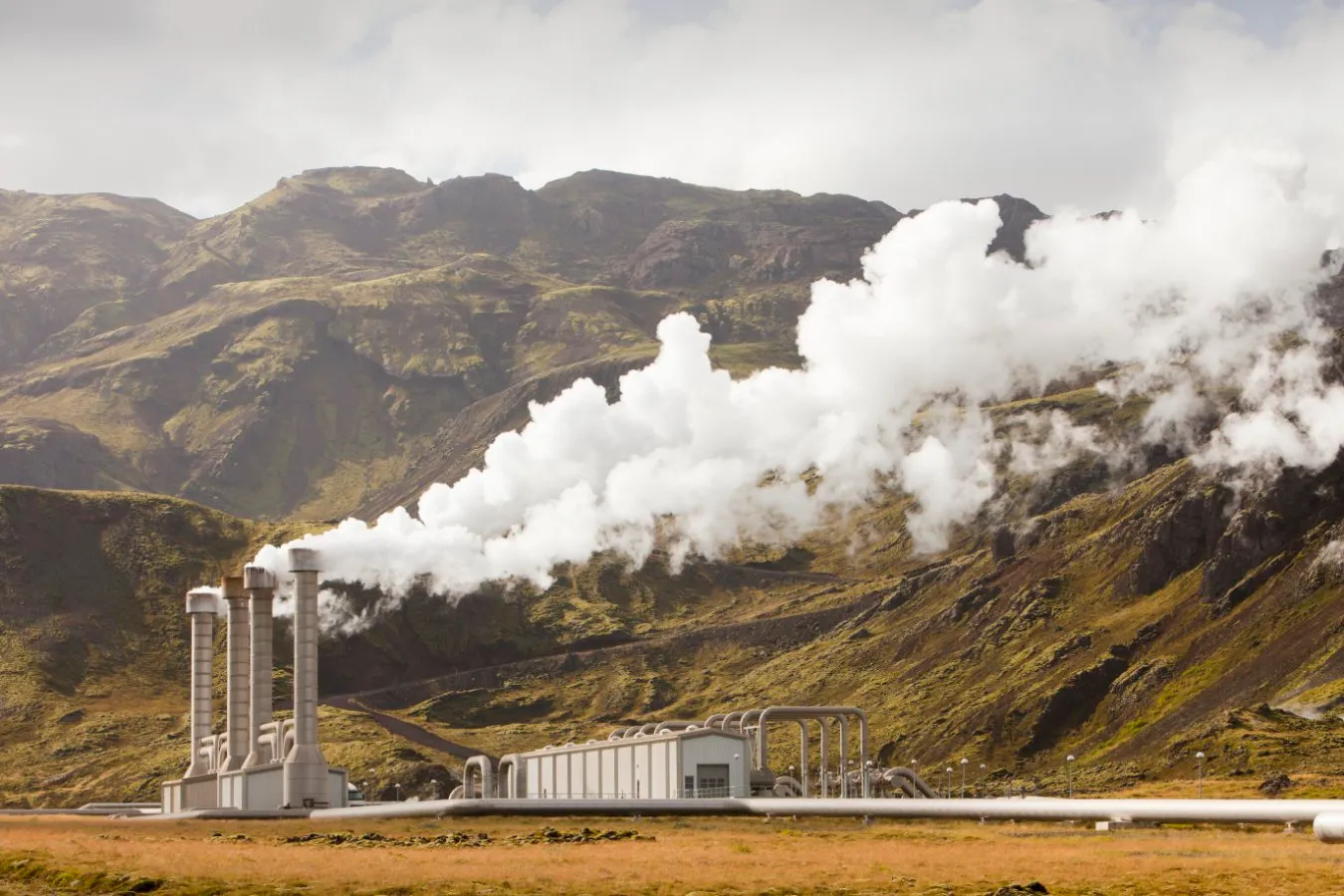
New Scientist reports a possible path to tap Earth's abundant heat in many locations, not just a handful of established geothermal hotspots. If it works at scale, it could broaden clean-energy procurement and shift capital planning for grid-scale baseload.
Earth has more than enough heat to power humanity many times over, but for decades geothermal has been stuck on the “only if you are lucky” model. Most locations do not have the right combination of underground heat, permeability, and drillable conditions close to the surface. That is why geothermal today is concentrated in a few regions that can reliably produce energy. The story highlighted by New Scientist is that this may be changing, with a way to tap geothermal almost anywhere we want.
That is the core promise, and it matters because the constraint has never been the existence of geothermal heat. It has been access and engineering. The source frames Earth’s heat as abundant and clean, but emphasizes that so far only a few places have been able to exploit it. Now the reported breakthrough approach aims to expand geothermal from “rare-resource geography” into a more widely available option, which would be a big shift for anyone underwriting baseload power, grid stability, or long-duration clean energy.
To understand why this is such a big deal for decision-makers, you have to look at how energy projects get financed. Investors and utilities do not just buy a theoretical fuel. They buy risk profiles: drilling risk, reservoir risk, production reliability, permitting timelines, and the probability that the plant performs once construction is done. In many geothermal regions, the resource is naturally favorable, which reduces uncertainty. If an approach genuinely makes geothermal viable nearly anywhere, it changes the resource assumption that sits under everything else. That can compress the planning horizon from “where can we find it” to “how quickly can we deploy it,” which is exactly how capacity grows in other infrastructure categories.
There is also a regulatory angle, even when the underlying energy is clean. Geothermal projects involve subsurface activities, and regulators typically treat them as technical and environmental permitting exercises with site-specific reviews. Local rules can govern groundwater protection, seismic risk monitoring, and well integrity standards. If geothermal becomes a generalizable capability rather than a location-specific advantage, regulatory bodies will face pressure to create clearer pathways for repeated deployment. Boards and executives should watch for how agencies handle consistency. Do they standardize permitting for similar techniques? Do they tighten or relax requirements based on new evidence? The market impact comes from that predictability. Standardization reduces transaction cost and can make project pipelines look less like one-off bets and more like repeatable programs.
From a capital markets perspective, “geothermal almost anywhere” is not just a cleaner narrative. It can reshape the competitive map. Many grids currently rely on a mix of dispatchable generation and intermittent renewables, with storage filling some of the gaps. Baseload clean power is a persistent need, especially where reliability standards require firm capacity. Geothermal has historically been a contender, but limited by geography. Expanding geothermal feasibility changes the option set for procurement and hedging strategies. It also affects how companies think about supply chain planning. Drilling expertise, well services, instrumentation, and monitoring systems become more central when deployment is not confined to a few regions.
The second-order implications for executives are about organizational decisions. If geothermal becomes more widely available, it raises the strategic question: do you build capability in-house, partner for projects, or acquire specialized teams? It also changes the diligence checklist. Instead of focusing primarily on where to drill, the diligence shifts toward how the “smarter drilling” or “unlocking” method works in different geology types, how repeatable the results are, and what the learning curve looks like over multiple projects.
Finally, there is the broader political economy. Clean energy timelines are often slowed by the friction between urgency and permitting reality. If a technique allows geothermal to be deployed more broadly, it can become a centerpiece of long-term plans. But it will not automatically remove friction. It will move the friction. Regulators, grid operators, land owners, and environmental stakeholders will still demand evidence, monitoring, and safeguards. The difference is that geothermal could go from being a niche resource to being a mainstream clean-energy lever.
In other words, the New Scientist framing is a potential unlock of geothermal energy almost anywhere we want, not a statement that the world instantly gets unlimited power without constraints. The stake is bigger than a science headline. It is whether executives and boards can expand baseload clean generation from “rare opportunity” to “scalable option,” and how quickly they can position for a future where geothermal is no longer limited to the few lucky places that already know how to extract it.
This story's Key Insights and Take-aways are locked.
Create a free account to unlock Executive Actions for one credit.
Register to UnlockAlways free for Executives Club members. Join the Club
More in Science

2026 Nikon Small World Winners Reveal the Hidden Machinery of Everyday Life
A mycologist's frozen Edinburgh garden became the backdrop for vivid views inside cells, a reminder of what advanced imaging now makes visible to researchers and the industries built on biology.

Study: 1 in 4 depression cases may be a body-clock problem, not a chemical one
A 10,000-person study finds standard antidepressants often fail these patients, but melatonin and morning sunlight may hit the real root cause.

Start-Up Says A.I. Designed a Virus to Attack One Patient's Superbug
If the claim holds up, personalized phage therapy could become a new frontline weapon against antibiotic resistance - but proof is far from final.