

US adds 25% tariffs on most Brazil imports starting this month
A new tariff push is back, after the Supreme Court killed the last round. Here is what changes for supply chains and budgets.
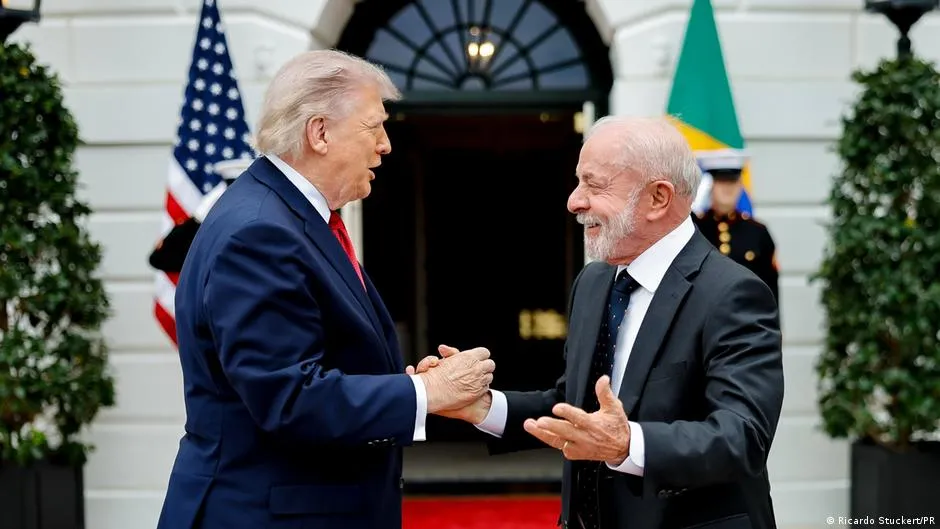
The US will impose a 25% tariff on most imports from Brazil starting later this month, launching the first move in the Trump administration's new tariff strategy. For decision-makers, it means near-term cost and planning uncertainty for companies exposed to Brazil supply and sales.
The US is moving immediately: a 25% tariff on most imports from Brazil starts later this month. This is not just another trade headline. It is the first action in the Trump administration's new tariff strategy, after the Supreme Court struck down its prior tariff impositions.
So the key question for executives is simple and urgent: if a legal challenge can knock out the last policy, what kind of policy is this one, and how fast does it become a real cost in your operating model? The source is clear that the tariff is scheduled to begin later this month, and it is broad, covering “most imports from Brazil.” That breadth matters because it reduces the chance of carve-outs that companies can rely on to keep costs stable.
To understand why this matters beyond the immediate number, you have to look at the regulation backdrop. The Supreme Court struck down the Trump administration's prior impositions, which tells you the previous approach was vulnerable. That vulnerability is exactly why “new tariff strategy” is more than political branding. It signals the administration is attempting to regain leverage while operating within the constraints that derailed the earlier measures.
For CFOs, procurement leaders, and anyone building forecasts, the operational reality is that tariffs are a tax-like input that can land in product costs, contract pricing, and inventory valuation, often faster than teams can renegotiate terms. Even when downstream demand holds up, tariff costs can show up in margins, and even when margins absorb some of the shock, working capital can tighten as companies reprice, re-source, or front-load inventory ahead of effective dates. The effective timing “starting later this month” is close enough that these are not hypothetical planning exercises.
For boards and CEOs, the second-order issue is not just cost. It is strategy under legal uncertainty. If a Supreme Court decision can unwind prior tariff moves, corporate planning has to incorporate both policy momentum and policy durability. That means risk teams should treat tariffs as scenario drivers that can change due to litigation, administrative adjustments, or additional legal reviews. In other words, this is a policy regime where “what is on paper” and “what is enforceable” can diverge, even though the US is clearly acting now.
Then there is the supply chain angle. “Most imports from Brazil” implies broad exposure across categories, depending on what your firm buys and sells. Companies with sourcing footprints that rely on Brazilian inputs or components may face a direct cost increase, while companies that sell into markets where Brazilian competition is present may face a different kind of pressure. Either way, the tariff can shift relative prices. That can reshape procurement preferences and supplier competitiveness, even if the underlying goods have not changed.
There is also a competitive and bargaining dimension. Tariffs are often used to alter negotiation positions, because they change the price of getting goods from a specific origin. That can lead suppliers to ask for adjustments, customers to renegotiate contracts, and intermediaries to re-evaluate routes. The fact that this is positioned as the first action in a new tariff strategy adds another layer: it can be read as a signal to trading partners and domestic stakeholders that the administration intends to continue pursuing tariff tools, even after the prior route was blocked by the Supreme Court.
Executives at companies with cross-border exposure are likely to feel this quickest through budgeting and contracting timelines. If tariffs begin later this month, the choices you make in the next few weeks can determine whether costs are absorbed, passed through, or mitigated through sourcing and pricing decisions. And for peers, the bigger takeaway is that this moment is not a one-off. It is the first step of a “new tariff strategy” after a high-profile legal setback, which means planning for durability, not just impact, becomes a board-level priority.
This story's Key Insights and Take-aways are locked.
Create a free account to unlock Executive Actions for one credit.
Register to UnlockAlways free for Executives Club members. Join the Club
More in Politics

Glacial collapse, not rain, killed 180 in Nepal's Himalayan flood
The Himalaya's extreme geography hid the true cause of Nepal's catastrophic flood, a glacial collapse that turned a geological battleground into a mass-casualty zone.

Iran’s Esmail Baghaei says Oman talks start shipping via Hormuz, not US talks yet
Temporary route plans with Oman aim to restart commerce while Tehran says Washington dialogue is not on the table.

Standards watchdog opens probe into Reform UK deputy leader Richard Tice over interests
The parliamentary standards commissioner says it began an investigation on 28 July into a possible undeclared interest.