

Valheim’s 1.0 lands September 9 after 5+ years in early access
Iron Gate is done waiting. Here is what the September 9 launch signals for studios, investors, and live-game planners.
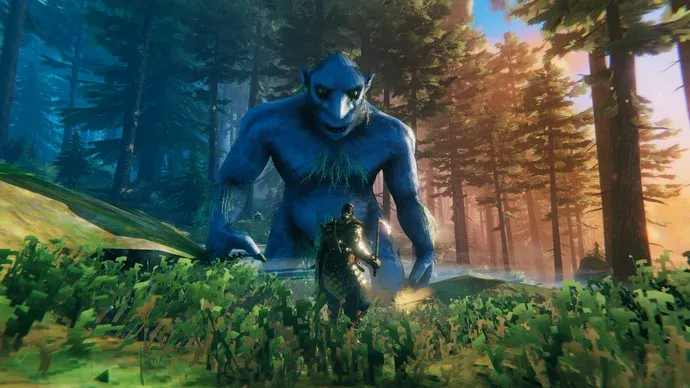
Developer Iron Gate has announced that Valheim will officially launch on 9th September, graduating from more than five years in early access. For decision-makers, the move is a real-world test of how quickly a long-running survival game can convert community momentum into a full release.
Valheim is finally climbing out of early access. Developer Iron Gate announced at the PC Gaming Show that the game will officially launch on 9th September, marking the end of over five years in early access since its first appearance in early 2021.
If you have been watching live games like a board watches quarterly reports, this is the kind of milestone that changes internal planning. Early access versions are iterative and noisy by design, but version 1.0 is where expectations harden: players get a “this is the final product” signal, marketing budgets get a clearer target, and distribution partners can justify more prominent placement. Valheim reaching that point on September 9 immediately reframes the game from a work-in-progress to a named launch with a defined date.
Valheim’s timeline matters because early access has become a standard route for ambitious games, especially in genres like Viking survival and crafting where world-building and systems tuning can take a long time. Typically, studios use early access to find the fun, not just to fill time. The trade is that you run on community feedback and incremental improvements while you are still proving out what retention and co-op play look like in the real world.
Iron Gate effectively used over five years of that feedback loop to get to the moment where a full release can be announced with a specific day on the calendar: September 9. That specificity is not a minor PR detail. It is operational. A version 1.0 launch usually triggers coordinated changes across matchmaking, progression pacing, content cadence, and how the studio communicates fixes. For executives, it also affects resourcing decisions. Teams that spend their days responding to player reports and balancing systems under early access norms often need a different operating rhythm once they are selling the idea of stability.
There is also a second-order implication for peers in the survival and crafting space. Long early access periods can be a credibility risk if players feel the game never truly “arrives.” But when a studio reaches 1.0 and announces a launch date, it can validate the early access approach as more than a monetization strategy. It tells investors and publishers that the game can convert long-term community energy into a conventional product event.
And while the source only covers the announcement and timeline, the market context is hard to ignore: live games have increasingly become portfolio assets, not one-off bets. When a title graduates to version 1.0, it can become easier to model. Decision-makers can treat it like a scheduled release with clearer forecasting assumptions rather than an indefinite evolution. That can influence how leadership allocates budgets across studios, how publishing teams prioritize promo slots, and how internal stakeholders justify headcount shifts.
For players, version 1.0 is often where the psychological contract changes. Early access players understand that things can break, rebalance, or shift. Full release changes the contract to “we are here now.” That can affect community sentiment quickly, which means the studio’s operational execution on or around September 9 becomes part of the product itself. For Iron Gate, the PC Gaming Show announcement is the front door, but the real test is the day-to-day experience that follows.
Strategically, the question for executives is not just “can Valheim ship 1.0?” The strategic stakes are whether the graduation builds durability. A September 9 launch can re-ignite attention, attract new players who were hesitant to buy while the game was unfinished, and create a fresh benchmark for how long-term community-built games perform when they stop being experimental. In other words: this is a milestone that can reshape how the industry thinks about early access, live operations, and the path from “in progress” to “final.”
This story's Key Insights and Take-aways are locked.
Create a free account to unlock Executive Actions for one credit.
Register to UnlockAlways free for Executives Club members. Join the Club
More in Entertainment

Christopher Nolan’s “The Odyssey” posts his biggest Tuesday haul, surpassing “The Dark Knight’s” record
The film’s Tuesday breakout reframes Nolan’s box-office ceiling and forces competitors to rethink timing, budgets, and release strategy.

Kacey Musgraves cancels Aug. 20, 29, Sept. 2 Middle of Nowhere shows
Ticketmaster emails are telling fans refunds are coming, while the tour still starts Aug. 21 in Chicago.

Billie Joe Armstrong launches Epiphone Les Paul Junior and Marshall 1959BJA signature gear
Two limited releases turn decades of Green Day’s tone into branded hardware, including Marshall’s first artist amp in 14 years.