
Venezuela's earthquake response keeps politics unstable, and the region notices
Foreign Policy argues disaster management is now a political accelerant, with spillover effects for governments and markets.
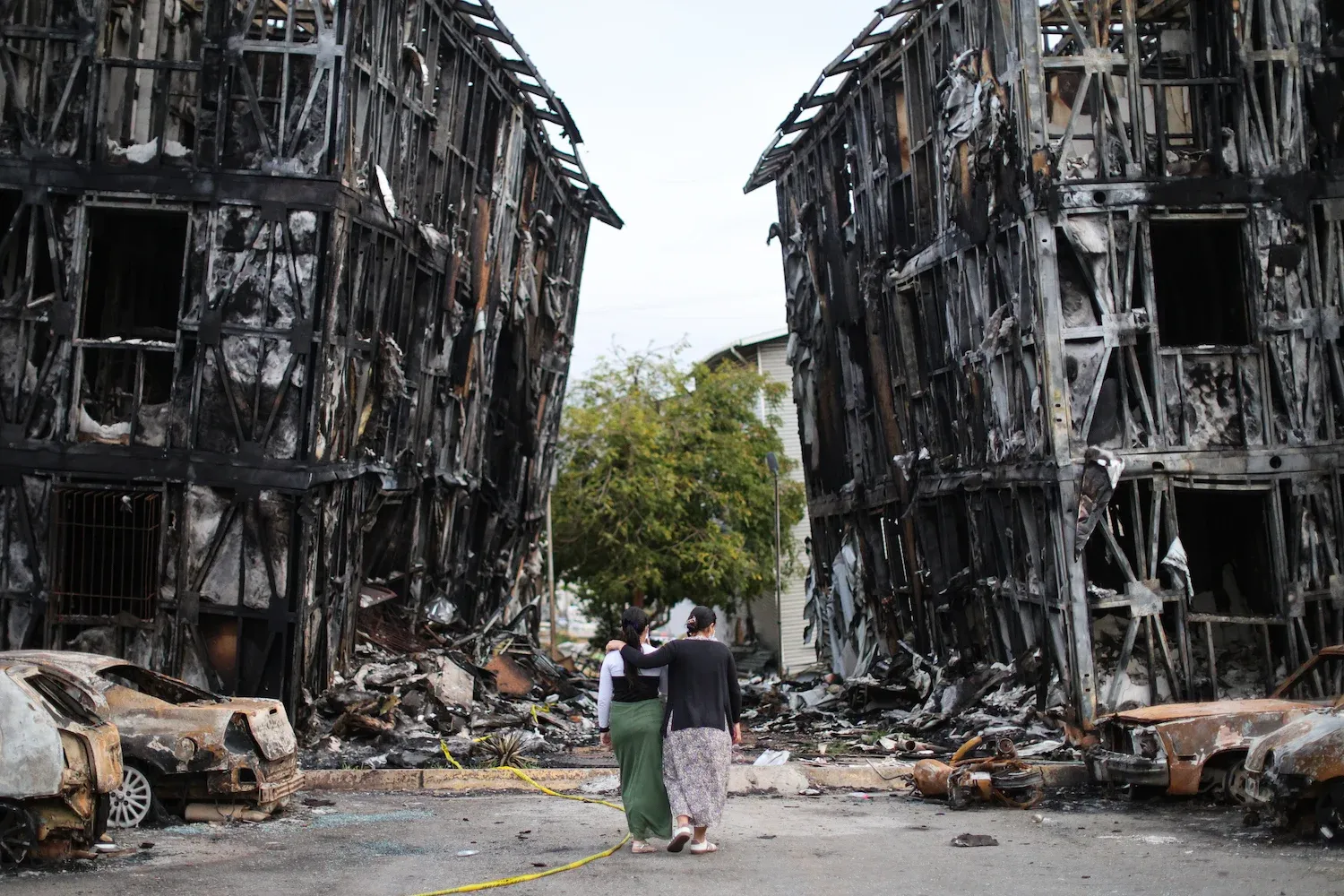
Foreign Policy frames Venezuela's earthquake response as bungled and politically destabilizing. The consequence is broader: natural disasters are accelerating political change across the region.
Foreign Policy’s core claim is stark: natural disasters have accelerated political change elsewhere in the region, and Venezuela’s earthquake response is a cautionary example of how disaster management can become political fuel. The headline is not about rubble. It is about what happens when governments fail to deliver in high-pressure moments, and how those failures become a catalyst for instability beyond the immediate crisis.
In other words, the political scorecard starts fast. When an earthquake hits, the public experience of competence or neglect gets locked in quickly. Foreign Policy’s framing connects that experience to a wider regional pattern: disasters are not just natural events anymore. They are accelerants that speed up political change. Venezuela is the stress test, and the region is the feedback loop.
To understand why this matters for executives and decision-makers, zoom out one level. In most countries, disaster response is a credibility machine. It shows whether institutions can coordinate, whether supply chains can move, whether public communications can reduce panic, and whether aid can arrive without getting swallowed by bureaucracy. When response is “bungled,” the failure is not purely operational. It becomes narrative. And narratives, in political systems under strain, can translate into pressure for leadership change, protest movements, or shifts in alliances.
That narrative effect tends to be faster than many traditional risk models assume. Disasters compress decision timelines. They force governments to spend political capital on logistics and communication at exactly the moment when households are focused on immediate survival. If citizens conclude the state is unreliable, the cost is paid in trust, and trust is a currency that runs out quickly. Foreign Policy’s summary points to the second-order outcome: those trust shocks do not stay contained. They spill into the broader political landscape across the region.
For regional boards and investors, the key is that natural disasters now have a political dimension that can show up in policy shifts. Even when the underlying economic fundamentals remain the same, political acceleration can lead to faster regulatory churn, budget reallocations, or changes in how the state interacts with markets. In jurisdictions where governance capacity is already under scrutiny, disaster response can function like a stress test that reveals weak links. Those revealed weaknesses can then drive decisions by political actors who are racing against legitimacy gaps.
There is also a communications and legitimacy component that often gets underestimated. Disaster response is where state messaging becomes real-world proof. If authorities appear disorganized, or if aid delivery looks delayed or uneven, social media and local networks can fill the vacuum. In that environment, political change can become self-reinforcing. Citizens demand change based on lived experience, while officials respond to pressure with actions that may be reactive rather than strategic. Foreign Policy’s framing suggests that this dynamic is not unique to Venezuela.
The regional implication is the part decision-makers should not ignore. Foreign Policy explicitly links “natural disasters” to “political change elsewhere in the region.” That means executives operating in or adjacent to the region should treat disasters as catalysts that can reshape the policy environment sooner than expected. That includes the operational environment, where emergency spending competes with other priorities, and the regulatory environment, where new rules, enforcement patterns, or administrative behaviors can follow quickly when governments try to stabilize public confidence.
So the stake is not just whether a response was effective in one country. The stake is the pattern. Venezuela’s bungled earthquake response, as described by Foreign Policy, fits a broader regional mechanism: when disasters strike, politics can move faster. For executives, that translates to a need for tighter scenario planning around political and regulatory volatility during crises. The question is not only “Can the government respond?” It is also “How quickly will the political system react to the credibility test, and what downstream changes will follow across the region?”
This story's Key Insights and Take-aways are locked.
Create a free account to unlock Executive Actions for one credit.
Register to UnlockAlways free for Executives Club members. Join the Club
More in Politics
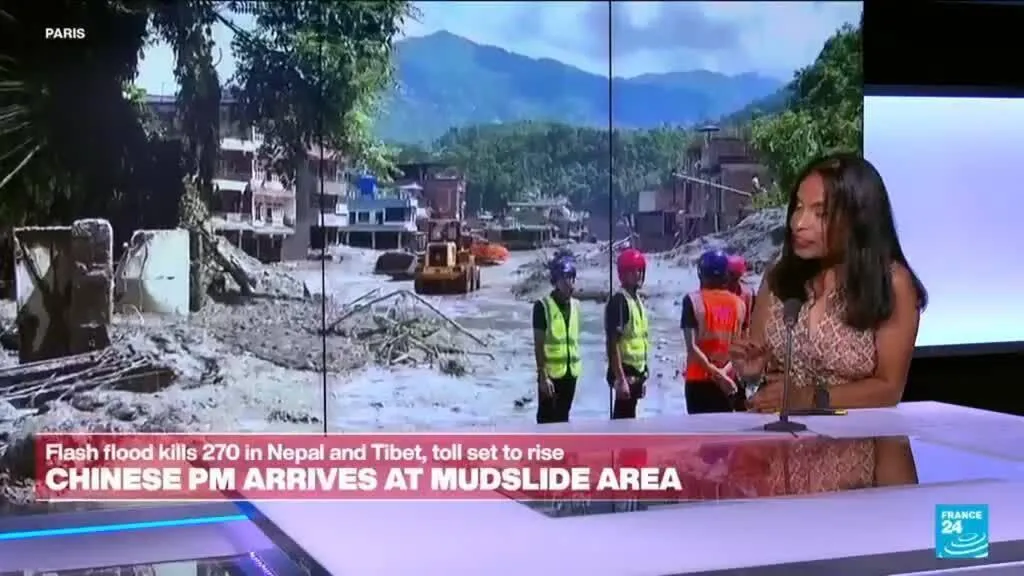
Glacial collapse, not rain, killed 180 in Nepal's Himalayan flood
The Himalaya's extreme geography hid the true cause of Nepal's catastrophic flood, a glacial collapse that turned a geological battleground into a mass-casualty zone.
Iran’s Esmail Baghaei says Oman talks start shipping via Hormuz, not US talks yet
Temporary route plans with Oman aim to restart commerce while Tehran says Washington dialogue is not on the table.

Standards watchdog opens probe into Reform UK deputy leader Richard Tice over interests
The parliamentary standards commissioner says it began an investigation on 28 July into a possible undeclared interest.