

Venezuelans used AI-built apps to locate missing people as relief lagged
Citizen developers in Venezuela turned AI into websites and apps for searches and coordination when government response stalled.
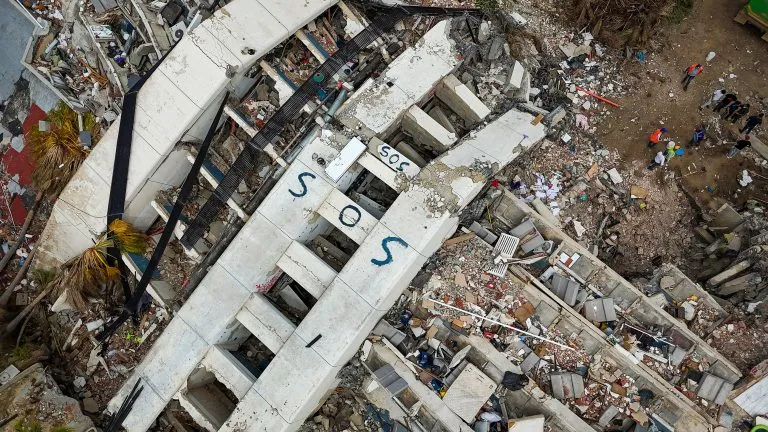
After twin earthquakes hit northern Venezuela last month, thousands of citizens and developers used AI to build websites and apps. The result was faster, citizen-led relief coordination for locating missing persons amid a slow interim government response.
After twin earthquakes struck northern Venezuela last month, thousands of people flooded social media, pleading for help locating friends and family. The interim government response was slow, leaving a high-stakes gap where accurate information could literally change whether someone gets found in time.
Into that vacuum, developers and citizens used AI to build websites and apps designed to track missing persons and coordinate relief efforts. The key detail is not “AI helped,” in the vague sense everyone says now. It was used to move critical functions online quickly, turning scattered pleas into structured tools people could actually use.
This is what citizen-led disaster response looks like when the system is overloaded. Social media posts can spread fast, but they are chaotic. Names are misspelled, locations are unclear, and updates get lost in the noise. AI-assisted tooling can help convert messy inputs into more usable formats, such as landing pages and simple interfaces that route information to the right places. In practical terms, that means less time hunting for a post from a cousin who can no longer remember an exact neighborhood, and more time connecting volunteers with families who need help.
The Venezuelan case also highlights a familiar incentive problem: during crises, the people with the best official mandate are not always the fastest at execution. The source notes that the interim government was slow to act. That delay does not just slow relief. It pushes more work onto civilians, which can be both empowering and risky. Citizen groups can innovate quickly, but they must also operate without the usual checks that reduce errors, protect privacy, and standardize reporting.
From a governance perspective, this is where the regulatory story becomes real, not academic. In normal times, governments and regulators worry about data integrity, fraud, and how sensitive personal information is handled. In disasters, the urgency is different. Missing persons efforts involve personally identifying details, location clues, and family contact information. When AI is used to build and deploy apps rapidly, decision-makers have to confront two questions quickly: Who is responsible for what those systems do with data, and how can safeguards exist without slowing down urgent deployment?
For boards and executives watching this unfold, the second-order implication is about operational control. When public services respond slowly, the ecosystem around them fills the gap. In this case, “the ecosystem” includes social platforms, volunteers, and AI-assisted builders. That is a competitive dynamic even though it is not a market. It changes expectations. If citizens see that AI-built tools can reduce search time and improve coordination, they will likely expect similar speed in future emergencies, whether or not official channels move quickly.
There is also a broader tech angle: disaster response often becomes an accidental product test for new interfaces. Websites and apps created in the aftermath of earthquakes can prove whether certain workflows are legible to non-technical users under stress. Even if the projects remain local and temporary, they demonstrate a repeatable pattern. AI helps with speed of creation. Volunteers and citizens provide the domain knowledge. Then the community iterates in real time based on what families actually need.
Finally, this story is a reminder for anyone building governance frameworks, not just for governments. If your organization touches crisis communications, humanitarian tech, civic data, or even customer support during disruptions, you will face a world where citizen developers can ship functional tools quickly. That changes the baseline. The question for decision-makers is whether official actors can collaborate effectively with these citizen-led systems, or whether they will lag behind and force the public to rely on unofficial channels that may vary in quality.
Venezuela’s earthquake aftermath shows how quickly a gap in response can become a test of resilience for entire communities. Citizens used AI to create the connective tissue of relief: tools to locate missing people and coordinate efforts, built fast when traditional response moved slower than the need. The strategic stakes for peers are clear. In the next crisis, speed and information structure will matter as much as resources, and the public may decide to build the tools themselves if the official timeline does not keep up.
This story's Key Insights and Take-aways are locked.
Create a free account to unlock Executive Actions for one credit.
Register to UnlockAlways free for Executives Club members. Join the Club
More in Technology

Google quietly links your phone number to every Android account on your SIM
Adding a SIM now ties your phone number to all Google accounts - and future accounts inherit it. Here's the security and privacy stakes.

Hijacker AI 'Skynet mode' runs 100,000 attack steps against exposed models
Symantec caught a criminal AI agent that borrows other models, steals data, and mines crypto; the only relief is no confirmed victims yet.

Nvidia's AI-financier shift faces its first big test as neoclouds stumble
A rout in neocloud stocks is forcing investors to weigh Nvidia's hidden exposure as both supplier and lender to the AI buildout.