
Verse Enterprises secures $54M Series B to bypass AI power queues
Bessemer led an oversubscribed round with Nvidia and GV investing as data centers race for electricity, not just chips.
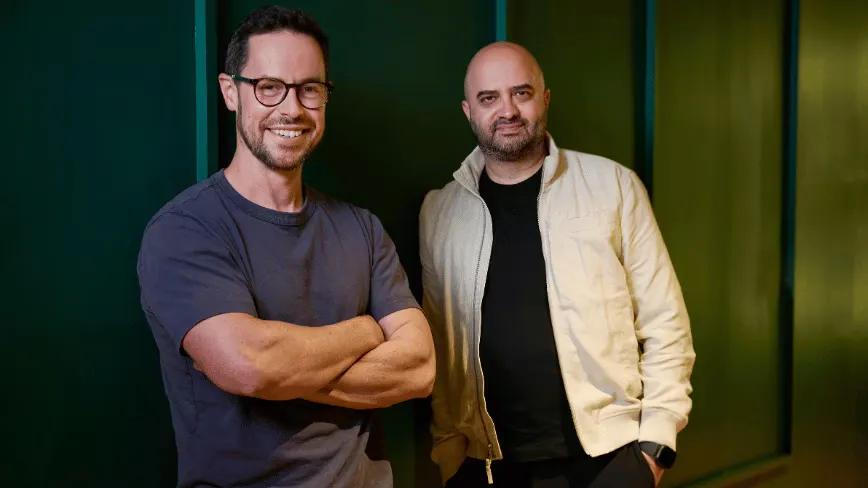
Verse Enterprises, a San Francisco startup, raised an oversubscribed $54M Series B led by Bessemer Venture Partners, with GV, Nvidia, and Norrsken VC participating. The funding targets the new bottleneck in AI deployment: securing power availability for data centers.
For years, the scarce resource in AI was assumed to be chips. The reality is simpler and more brutal: power. Verse Enterprises, the San Francisco startup focused on helping AI data centers move faster, raised an oversubscribed $54M Series B to unblock that bottleneck. The point of the round is not incremental. It is about escaping the “power queue” problem that slows AI build-outs even when compute is available.
Bessemer Venture Partners led the $54M Series B. GV, Nvidia, and Norrsken VC also took part. That investor lineup matters because it connects the dots between the factory that makes AI chips and the infrastructure that has to power them. When the financing comes with names like Nvidia and GV on the cap table, it signals that executives are treating electricity as a strategic constraint, not an operational afterthought.
This shift is a full-stack change. Chip supply was hard, and still can be, but power constraints are increasingly the longer pole in the tent for AI data center operators. In many regions, electricity is a permitting and infrastructure bottleneck as much as it is a technical one. Even if a company can buy the hardware tomorrow, it may not be able to plug it in quickly. So teams that deploy AI are forced into a painful sequencing problem: wait for the grid, then scale compute, and by the time you ramp, the competitive timeline has moved.
That is where Verse’s bet lands. The headline promise is “skip the power queue,” and the underlying logic is straightforward. If deployment timelines are throttled by power availability, then the winners are the ones who can convert demand into usable capacity faster. For data center operators, this is not just about capex. It is also about time to revenue, time to utilization, and how quickly they can lock in long-term customer demand before competitors seize the slot.
The funding also reflects how board-level thinking is changing. Investors are no longer only underwriting models and software. They are underwriting the infrastructure reality that determines whether training and inference can scale at all. When a round is oversubscribed, it usually means multiple parties see urgency and are willing to compete for exposure. In this case, Bessemer led, and GV, Nvidia, and Norrsken VC joined, turning the message into something executives can’t ignore: power constraints are boardroom-level risk.
There is also a regulatory and policy dimension, even when the story is told as a startup funding round. Electricity procurement and grid upgrades live in a world of approvals, planning cycles, and constraints that vary by geography. AI demand grows faster than local infrastructure cycles can comfortably absorb. That mismatch forces stakeholders to work within a system that can reward patience for some and punish speed for others. If Verse is built to reduce time lost to these bottlenecks, it is effectively compressing the planning timeline that otherwise gets stretched across months or more.
Now zoom out to the second-order implications for peers. In AI, the industry often talks about “supply” in terms of GPUs. But GPUs do not run on vibes. They run on electricity and cooling, which then run through permitting, interconnection, and facility build timelines. When capital flows toward solutions that address power, it suggests a broader capital allocation pattern: investors expect a larger share of value creation to come from unlocking physical constraints. For executives at AI infrastructure firms, the strategic question becomes: are you optimizing for compute availability, or are you optimizing for end-to-end throughput? Because end-to-end throughput is what customers pay for.
Verse’s $54M Series B is therefore not just another funding announcement. It is a signal of where momentum is collecting. The race to AI is now a race to power, and startups that help data centers jump the line can reshape competitive timelines. For decision-makers, that means infrastructure planning, partner selection, and funding priorities need to reflect the new bottleneck reality, not the old one.
This story's Key Insights and Take-aways are locked.
Create a free account to unlock Executive Actions for one credit.
Register to UnlockAlways free for Executives Club members. Join the Club
More in Technology

Nvidia's $89B data center quarter: the 9 companies cashing in
The AI buildout is minting fortunes beyond GPUs, and memory, cloud, and cooling suppliers are riding the same wave.

Google quietly links your phone number to every Android account on your SIM
Adding a SIM now ties your phone number to all Google accounts - and future accounts inherit it. Here's the security and privacy stakes.

Hijacker AI 'Skynet mode' runs 100,000 attack steps against exposed models
Symantec caught a criminal AI agent that borrows other models, steals data, and mines crypto; the only relief is no confirmed victims yet.