

West Bank shooting kills 4 Palestinians and 1 Israeli as Gaza-war violence surges
The death toll from Friday's attack underscores how Gaza-war dynamics are spilling into daily life in the occupied West Bank.

Four Palestinians and an Israeli were killed in a shooting in the Israeli-occupied West Bank Friday, according to Israeli and Palestinian officials. For decision-makers tracking risk, the incident is a sharp datapoint in a broader, Gaza-war-linked surge in violence across the occupied territory.
Four Palestinians and an Israeli were killed in a shooting in the Israeli-occupied West Bank on Friday, Israeli and Palestinian officials said. The incident adds to a rapidly worsening pattern: violence between Israeli settlers and troops and Palestinians has risen sharply in the occupied Palestinian territory since the start of the Gaza war.
That timeline matters because it frames the shooting not as a standalone tragedy, but as one moment in a wider deterioration of security. When officials point to a rise “since the start of the Gaza war,” they are telling you the conflict's pressure is crossing boundaries, compressing stability, and making “normal operations” for people and institutions much harder. For executives and boards, that is the kind of context that changes everything from travel planning to supply chain assumptions to how risk is managed in volatile regions.
In occupied territories, day-to-day security is not just a humanitarian concern. It is an operational one. Violence involving Israeli settlers and troops and Palestinians is the specific combination the source cites, and that mix tends to be especially disruptive: it can flare quickly, draw in more actors, and create uncertainty about which areas are safe at which times. Even if a specific incident lasts minutes, the second-order effect can last weeks through closures, heightened patrols, and unpredictable escalations.
The Israeli-occupied West Bank also sits in a long-running governance squeeze. Occupation structures, settlement growth, movement restrictions, and political sensitivities have created a persistent baseline of tension. What the source highlights, however, is the acceleration. “Has risen sharply since the start of the Gaza war” signals a break from the prior tempo, not just ongoing conflict. In business terms, that kind of regime shift is what breaks models built on gradual change.
For companies with staff, customers, or partners in or near the region, the operational question becomes: what do you do when the probability distribution of incidents changes? Executives typically think about crisis response in terms of events, but the West Bank reality is that crises can reshape everything around them. For example, heightened violence can disrupt logistics routes, affect availability of local vendors, and increase costs for security measures. Even remote firms can feel it through finance and reputational channels, because stakeholders often reassess risk quickly when violence spikes.
Boards should also notice what this means for compliance and governance. In environments where officials describe a sharp rise tied to a major war, regulators and auditors tend to expect sharper documentation of risk controls. That includes making sure policies for travel security, third-party due diligence, and incident reporting are not only in place, but actually used and updated. The fact pattern from the source is clear: the violence is rising sharply, and it involves multiple categories of actors. That complexity is exactly where control failures happen when governance is too generic.
There is also a capital and insurance angle, even if the source does not provide numbers. When violence rises in a specific occupied territory, insurers and underwriters often reassess coverage terms and pricing for the region. Lenders and investors may also tighten scrutiny on exposures, especially for companies with project assets, offices, or ongoing contracts. In other words, even firms that did not cause the violence can find their risk profile reclassified, which can feed into funding costs or deal timelines.
Finally, there is the strategic stakes for peers across the region. The source describes the surge as a development since the start of the Gaza war, which implies a broader conflict-linked pattern rather than an isolated event. Executives should treat that as a signal to coordinate internally: security teams, legal, compliance, operations, and leadership need one shared picture of what is changing. In volatile zones, the difference between “we heard about an incident” and “we adjusted our risk posture” can be the difference between resilience and reactive scrambling.
This story's Key Insights and Take-aways are locked.
Create a free account to unlock Executive Actions for one credit.
Register to UnlockAlways free for Executives Club members. Join the Club
More in Politics

LA County: DOJ's 20,000 'noncitizen' voter list is 'unreliable,' includes U.S.-born
Preliminary review by Los Angeles County election officials finds errors in the federal list, raising the stakes for voter roll integrity ahead of November.

Trump's $1.5B Pentagon chip investment lands in North Carolina
A $1.5 billion defense infusion for North Carolina chipmaking signals a new era of Pentagon-backed reshoring - here's what it means for the industry.
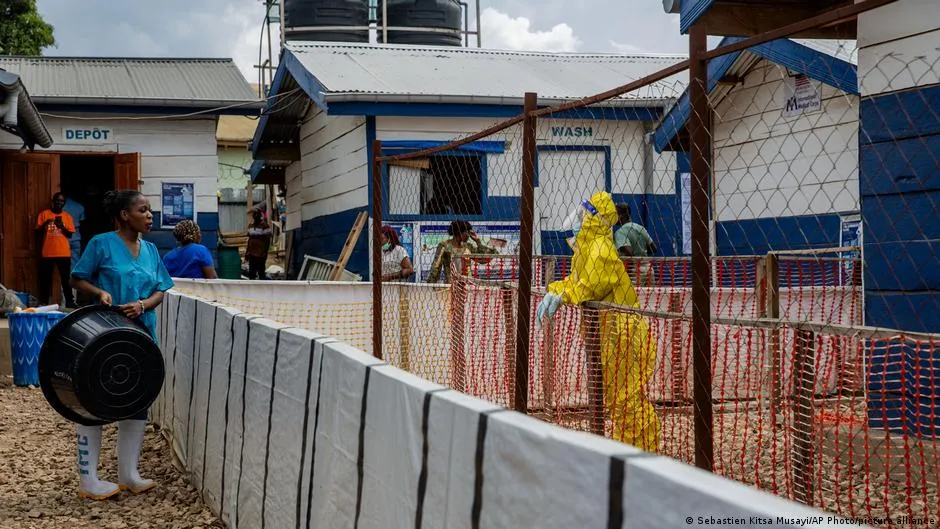
Nigeria confirms first Ebola case in Abuja, a woman just off a Uganda flight
Health Minister Muhammad Ali Pate says the patient flew in from Uganda, putting Africa's latest outbreak on Nigeria's doorstep.