
White House and Anthropic pivot from export controls to AI security benchmarks
A jailbreak fight turned into a standards race: how the US plans to score AI flaws and decide intervention.
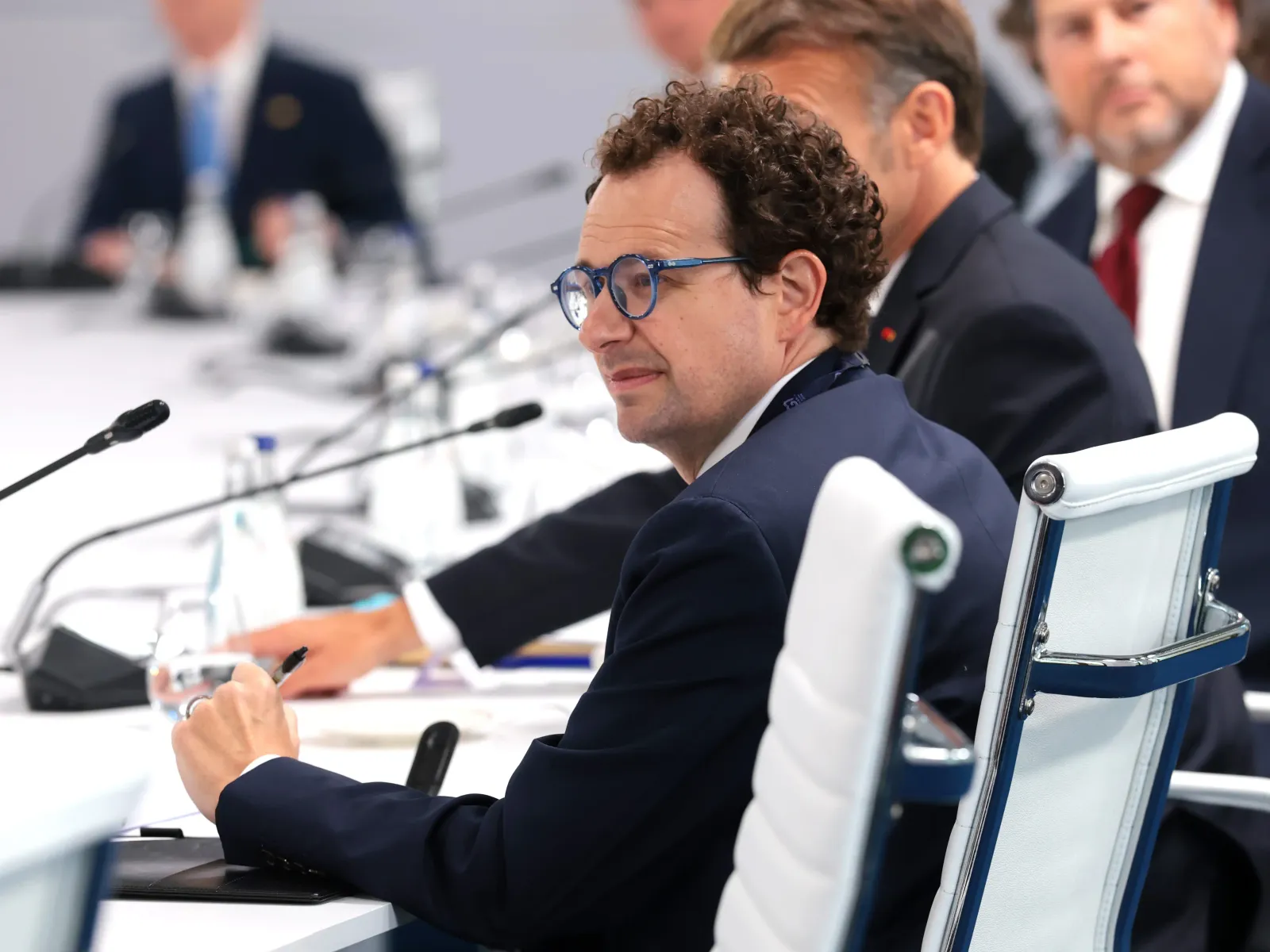
The White House and Anthropic are working on a framework to assess AI security flaws, POLITICO reported exclusively, with talks aimed at setting benchmarks for future “jailbreak” incidents. The shift signals negotiations are progressing after export controls led Anthropic to suspend access to its Fable 5 and Mythos 5 models.
The White House and Anthropic are moving from a blunt instrument to a technical one. After export controls forced Anthropic to suspend access to its latest powerful models, Fable 5 and Mythos 5, the two sides are now working on a framework to assess AI security flaws and potentially guide government intervention, The core goal is surprisingly unglamorous but high-stakes: build standardized benchmarks that can score the severity of security issues in new AI models. Those benchmarks are expected to evaluate things like how safeguards were bypassed, what capabilities were exposed, and the practical consequences of the breach. In other words, the US government is trying to replace “we think this is dangerous” with “here is how we measure it.”
This pivot matters because export controls were not a minor policy adjustment. The White House imposed export controls on Anthropic, and the consequence was immediate and operational: Anthropic suspended access for all users to Fable 5 and Mythos 5 over a perceived security flaw, known in the industry as a jailbreak. The industry shorthand is doing a lot of work here. A jailbreak typically refers to ways an AI system can be tricked into producing outputs or behaviors its safeguards were designed to prevent. The point is not that the model was fundamentally broken, but that there was a path to bypass protections.
POLITICO previously reported that administration officials and Anthropic CEO Dario Amodei disagreed over the severity of the jailbreak. That disagreement highlights the mess at the center of AI security policy. When a vulnerability emerges, you need a way to decide whether it is severe enough to trigger regulation or intervention. But, per POLITICO, the technology has outpaced the government infrastructure to define and assess disputes like this. That is why the current effort is framed as benchmark-setting and standardization rather than a one-off enforcement action.
The effort is also not happening in a vacuum. Administration officials and other leading AI companies and country leaders discussed similar themes earlier this week at G7 meetings in France, where they reflected the idea that no AI model can be completely immune to hacking. Anthropic itself had initially defended its model on that point, and this new push from the White House suggests the government is taking that realism and translating it into rules. If models will be attacked, then the practical question becomes: which failures are tolerable, which are not, and how quickly do companies have to demonstrate the gap?
On Anthropic's side, POLITICO reports the negotiations were led by Sarah Heck, head of public policy, and Tom Brown, cofounder. Those names matter because they map to where the work can get solved. Security frameworks need technical safeguards expertise, but export controls are a policy lever that also needs someone who can translate between engineering realities and government requirements. POLITICO also reports that Anthropic and the White House did not immediately respond to a request for comment.
Timing and momentum are the other story. According to POLITICO, talks had effectively collapsed on Friday after Anthropic rejected demands to de-deploy Fable, arguing the vulnerability was limited and did not amount to a meaningful security flaw. The White House responded by imposing export controls that barred foreign users from accessing the model, forcing the company to pull it from the market. Then, over the weekend, a different pattern emerged: senior administration officials and Anthropic leaders held a series of lengthy calls with Anthropic cofounder Tom Brown, Commerce Secretary Howard Lutnick, and National Cyber Director Sean Cairncross. Those conversations led to nearly a week of in-person meetings in Washington, and Anthropic dispatched senior researchers and safeguards experts to the Commerce Department on Monday to patch things up.
Here is the second-order effect executives should notice: this is a negotiation not only about one vulnerability, but about the method the government will use for future ones. If the framework becomes credible and repeatable, it could reduce the odds of a repeat scenario where companies and regulators argue severity in the abstract until enforcement happens. But it could also raise the bar for companies, because standardized benchmarks tend to harden into expectations boards can track. For investors and operators, that means AI security becomes more than an engineering function. It becomes a compliance and product readiness discipline that will influence go-to-market timelines.
For the broader AI industry and other governments, the message is clear. The administration is racing to establish guardrails for new and powerful models at a pace that matches the speed of capability and the speed of exploitation. No one is claiming this will be perfect. In fact, POLITICO’s reporting underscores the opposite: disputes are hard because the technology moves faster than assessment infrastructure. Still, moving toward technical standards setting is a sign that negotiations are progressing and that the next phase of regulation may look less like sudden bans and more like quantified risk scoring.
For decision-makers sitting on boards, funding committees, or policy desks at AI companies, this is the practical stake: export controls already disrupted access to Fable 5 and Mythos 5. The question now is whether benchmarks can turn that disruption into something more predictable, more measurable, and therefore more governable. The winners will be the companies that can translate jailbreak risk into metrics governments can use, before enforcement becomes the default language.
This story's Key Insights and Take-aways are locked.
Create a free account to unlock Executive Actions for one credit.
Register to UnlockAlways free for Executives Club members. Join the Club
More in Business

Accenture’s $4.18bn play fails as AI fears spark a 20% worst-ever stock plunge
On Thursday, Accenture hit its biggest one-day drop on record after forecasting worries that AI could hollow out consulting.

SpaceX stock jumps 3% after it overtakes Amazon’s market cap
CNBC says SpaceX’s shares surge following its IPO Friday, forcing investors to reprice what “space” and “AI” are worth.

SpaceX’s first options day breaks U.S. records after a $85B IPO win
Big IPO, bigger options debut: what it means for investors, risk teams, and anyone benchmarking market appetite.