

White House push could expedite cannabis rescheduling to Schedule III for research
It eases federal barriers for studies, but it will not magically create prescriptions or patient access overnight.
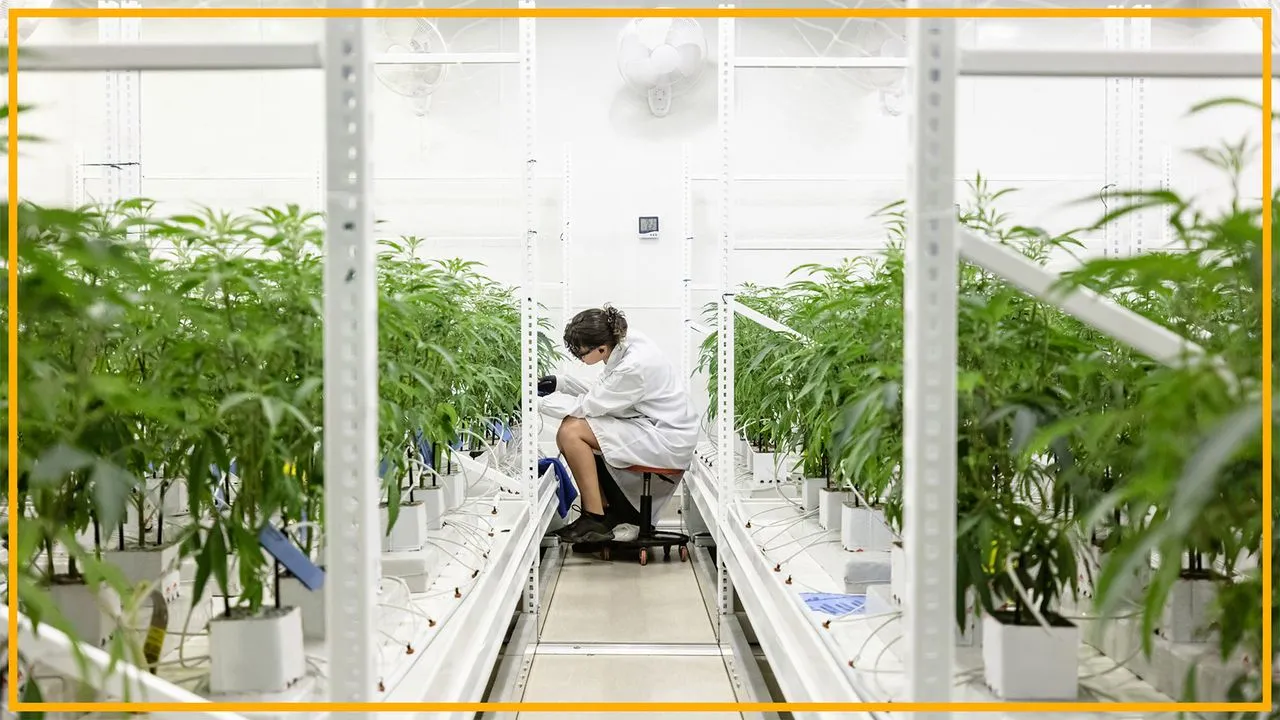
Live Science reports that a White House push aims to expedite cannabis rescheduling to Schedule III, a shift that would officially recognize medical use. Clinical researcher Raymond Palidora says it could unlock larger investment in cannabis research, but rescheduling alone will not solve patient-access or regulatory challenges.
A White House push is trying to speed up cannabis rescheduling, and if cannabis lands on Schedule III, the federal government would officially treat it as having accepted medical use. That matters because federal scheduling is the gatekeeper for how hard or easy it is for researchers to study cannabis and run large, rigorous clinical trials.
The move is not just a policy tweak for policy nerds. Under the Controlled Substances Act enacted in 1970, cannabis has been classified as Schedule I, a category tied to the highest level of federal restriction, including substances like heroin, MDMA, and LSD. Schedule I also comes with a specific definition: high potential for abuse and no currently accepted medical use. Schedule III, by contrast, is for drugs with accepted medical uses and fewer federal restrictions. In practical terms, Schedule III could make it easier to conduct cannabis research at the scale and speed needed to answer the question that has lingered for decades: which cannabis-based therapies actually work, for whom, and at what dose.
Zoom out for a second and you can see why this moment feels like a big deal. Cannabis currently exists in a complicated three-layer regulatory landscape that often leaves patients and clinicians navigating three different rulebooks at the same time. More than 6 million Americans are registered to use cannabis through state medical programs. Clinicians in those programs generally certify or recommend specific cannabis products to certain patients, rather than write traditional prescriptions. At the same time, the FDA has approved a handful of cannabis-derived and cannabinoid-based medications for specific conditions. None of that changes the federal reality: under federal law, cannabis remains Schedule I.
That separation is crucial for decision-makers. Federal drug scheduling, FDA drug approval, and state cannabis laws are separate legal and regulatory systems. Federal law classifies cannabis as Schedule I. Separately, the FDA evaluates and approves individual cannabinoid medications for specific medical conditions. Independently, states can authorize cannabis for medical or adult use under their own laws even though cannabis is illegal under federal law. Rescheduling would shift the federal scheduling layer, but it would not automatically rewire the other two layers.
Why investors, universities, and healthcare systems should care is the research friction Schedule I creates. For years, federal officials have recommended moving cannabis to Schedule III, including because Schedule III drugs are considered to have a lower potential for abuse and can be prescribed for accepted medical uses under federal law. The Live Science piece lays out how Schedule I research has come with hurdles beyond what many other controlled-substance studies face. Studies using cannabis often require additional federal, institutional, and local approvals. Researchers also need secure storage and handling, detailed record-keeping documenting how research materials are received, stored, and used, and Drug Enforcement Administration registration for the principal investigator conducting Schedule I research.
There is also a product gap. Federal restrictions have historically limited researchers' access to cannabis products that reflect what people regularly use, such as commercially available flower, vape products, and edible formulations. That single limitation can distort evidence. If studies are forced to use smaller, less representative supplies and formats, clinical trials can end up slower, more costly, and smaller in scale than trials involving less restricted drugs. Rescheduling to Schedule III would aim to reduce these barriers, which could open opportunities for more universities and healthcare systems to conduct clinical studies for medical cannabis.
Now for the part executives need to hear clearly: rescheduling will not automatically solve the clinical uncertainty, the access question, or the operational complexity of real-world cannabis markets. Live Science notes that rescheduling would not automatically make cannabis more accessible to patients, establish where cannabis is beneficial, determine optimal doses, or identify which patients benefit most. It would not automatically convert existing state cannabis programs into the conventional prescription model used for most Schedule III drugs. And it will not instantly resolve the complexities of state medical cannabis programs, which operate outside the traditional FDA-approved medication pathway.
The reason is that medical cannabis is an umbrella term covering hundreds of products that differ in cannabinoid content, formulation, dose, and route of administration. Most of those products are not FDA approved, so rescheduling alone would not automatically place them into the traditional prescription drug system or eliminate financial and access barriers patients face when trying to use them. In other words, rescheduling is the opportunity to build a stronger evidence base, not the evidence itself.
This is where the strategic stakes get real for boards and executives who track healthcare regulation, drug development pipelines, or research funding. The potential upside of Schedule III hinges on whether the new regulatory environment actually translates into larger, more rigorous clinical trials. The piece frames rescheduling value as being measured less by how quickly patients gain access and more by whether it creates a scientific foundation that guides responsible medical use. That foundation would be the basis for determining safety and effectiveness, evaluating benefits and risks across specific medical conditions, and refining dosing.
So the headline is true, but it is not a finish line. Policymakers may open the door to Schedule III, but researchers, clinicians, and regulatory agencies will decide whether this opening produces meaningful advances in cannabis science and medicine. For leaders watching the sector, the question is simple: will reduced federal friction turn into credible trials, stronger evidence, and clearer guidance, or will the industry remain stuck in fragmented data and uneven access?
This story's Key Insights and Take-aways are locked.
Create a free account to unlock Executive Actions for one credit.
Register to UnlockAlways free for Executives Club members. Join the Club
More in Science
2026 Nikon Small World Winners Reveal the Hidden Machinery of Everyday Life
A mycologist's frozen Edinburgh garden became the backdrop for vivid views inside cells, a reminder of what advanced imaging now makes visible to researchers and the industries built on biology.

Study: 1 in 4 depression cases may be a body-clock problem, not a chemical one
A 10,000-person study finds standard antidepressants often fail these patients, but melatonin and morning sunlight may hit the real root cause.

Start-Up Says A.I. Designed a Virus to Attack One Patient's Superbug
If the claim holds up, personalized phage therapy could become a new frontline weapon against antibiotic resistance - but proof is far from final.