
Wildfire smoke now a bigger prenatal threat than human pollution
Clean Air Act gains are being erased as wildfire smoke overtakes industrial emissions as the top prenatal air-pollution risk.
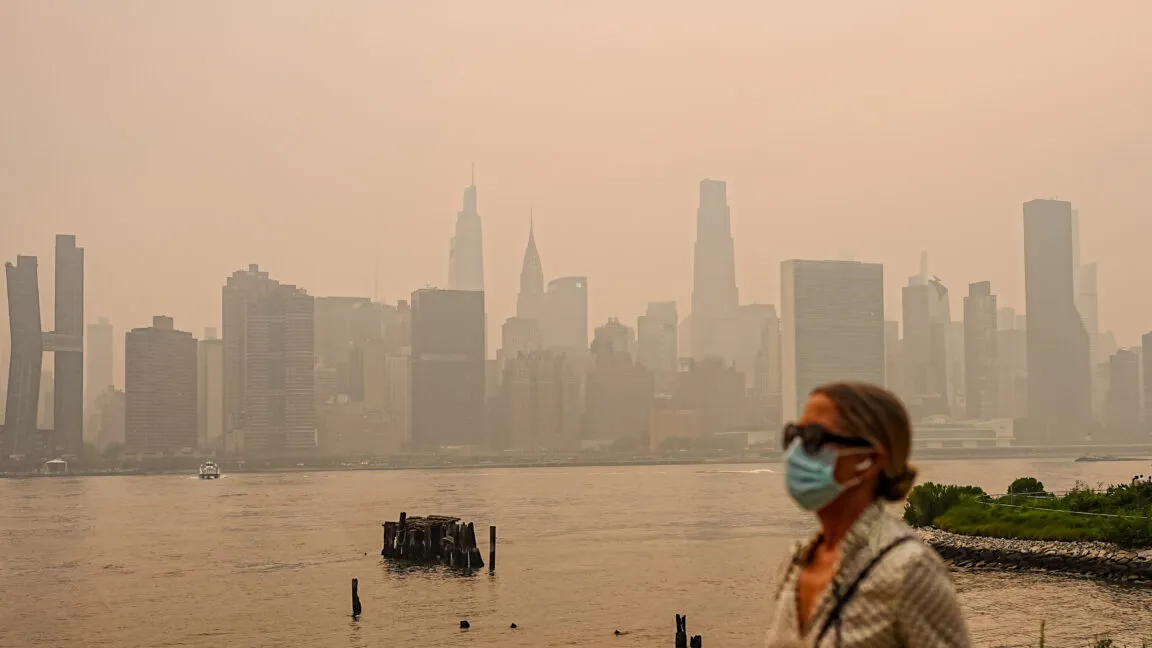
New research shows wildfire smoke has surpassed human-caused air pollution as the primary prenatal threat, erasing decades of Clean Air Act progress. For executives, this signals a new era of environmental health risk that demands strategic reassessment of operations, workforce policies, and regulatory engagement.
The numbers are stark: since the Clean Air Act was signed in 1970, combined emissions of six major air pollutants from vehicles and industry have dropped by nearly 80 percent. Yet that hard-won progress is being quietly erased by an unexpected source - wildfire smoke. A new analysis reveals that smoke from wildfires now poses a greater threat to prenatal health than pollution from human sources, a reversal that would have seemed unthinkable just a decade ago. For the executives and policymakers who have spent fifty years building a cleaner industrial base, the finding is a blunt warning: the gains are real, but they are no longer enough.
The shift is rooted in a feedback loop that touches every sector. The same fossil-fuel emissions that the Clean Air Act targeted have warmed the planet, creating hotter, drier conditions that make wildfires more intense and more frequent. Those fires then blanket communities in toxic smoke that is more harmful to developing fetuses than the industrial pollution the law was designed to curb. In other words, the very progress celebrated by environmental regulators is being undermined by the climate crisis those regulations failed to fully address. For a CEO, the implication is uncomfortable but clear: your company's emissions footprint is no longer just a compliance issue - it is a direct contributor to a health crisis that is now outpacing the regulatory framework designed to prevent it.
The science behind the finding is worth unpacking. Wildfire smoke is not simply urban smog relocated to the countryside. It contains a complex mixture of particulate matter, carbon monoxide, and volatile organic compounds, often at concentrations far higher than typical industrial emissions. When pregnant women are exposed, the consequences can include low birth weight, preterm birth, and developmental issues - outcomes that carry lifelong costs for individuals and measurable economic costs for employers and health systems. The source article notes that mounting evidence shows wildfire smoke is eclipsing air-quality gains, and that the smoke is more harmful than pollution from other sources. That is not a marginal finding; it is a fundamental reordering of the risk landscape.
For executives, the strategic implications are immediate and multi-layered. First, workforce health is now exposed to a risk that is geographically unpredictable and increasingly severe. A company with operations in the western United States, Canada, or Australia - regions already experiencing record fire seasons - must now treat wildfire smoke as a recurring operational hazard, not a rare event. That means revisiting everything from office ventilation systems to remote-work policies, and from health insurance coverage to crisis communication plans. The cost of inaction is not just reputational; it is a direct hit to productivity and healthcare expenses.
Second, the regulatory landscape is shifting beneath the feet of industries that have long operated under the assumption that the Clean Air Act's framework was stable. If wildfire smoke is now the dominant prenatal threat, regulators will face pressure to address it - not through traditional emissions caps, but through climate policy, land management, and building standards. Companies that have positioned themselves as environmental leaders on the basis of their Clean Air Act compliance may find that their credentials are now outdated. The new metric is not just what you emit, but how your operations and supply chains contribute to the conditions that fuel megafires.
Third, there is a capital-markets angle that boards cannot ignore. Investors are increasingly pricing climate risk into valuations, and the wildfire-smoke finding adds a new dimension to that calculus. A company with significant exposure to fire-prone regions - whether through physical assets, workforce, or supply chains - now carries a health-risk liability that is not captured in traditional financial statements. The source article does not speculate on market impacts, but the logic is inescapable: as the evidence mounts, insurers, lenders, and shareholders will begin to ask harder questions about how companies are managing this new class of risk.
The political dimension is equally fraught. The Clean Air Act was a bipartisan achievement, signed by a Republican president and expanded by subsequent administrations of both parties. Its success in cutting industrial emissions by 80 percent is one of the great environmental policy victories of the modern era. But the wildfire-smoke finding exposes the limits of that framework: it was designed to regulate point sources of pollution, not the diffuse, climate-driven consequences of a warming planet. For executives who have navigated environmental regulation for decades, the lesson is that the old playbook is no longer sufficient. The next wave of environmental risk will not come from a smokestack; it will come from a forest fire burning hundreds of miles away.
For peers in similar roles, the strategic takeaway is to move before the crisis forces your hand. That means conducting a wildfire-smoke risk assessment for your workforce and operations, engaging with policymakers on climate adaptation, and building resilience into your supply chain. The companies that thrive in the coming decades will be those that recognize that environmental health is no longer a compliance issue - it is a competitive one. The evidence is in the air, and it is getting harder to breathe.
This story's Key Insights and Take-aways are locked.
Create a free account to unlock Executive Actions for one credit.
Register to UnlockAlways free for Executives Club members. Join the Club
More in Science
2026 Nikon Small World Winners Reveal the Hidden Machinery of Everyday Life
A mycologist's frozen Edinburgh garden became the backdrop for vivid views inside cells, a reminder of what advanced imaging now makes visible to researchers and the industries built on biology.

Study: 1 in 4 depression cases may be a body-clock problem, not a chemical one
A 10,000-person study finds standard antidepressants often fail these patients, but melatonin and morning sunlight may hit the real root cause.

Start-Up Says A.I. Designed a Virus to Attack One Patient's Superbug
If the claim holds up, personalized phage therapy could become a new frontline weapon against antibiotic resistance - but proof is far from final.