
Wilmington man gets 10 years for $21,000 Pokémon card heist
A late-June guilty plea turns into a decade-long sentence, raising questions about how gaming collectibles are policed.

A 36-year-old man from Wilmington, North Carolina was sentenced to more than 10 years in prison after pleading guilty to a $21,000 Pokémon Trading Card Game-related heist from January. The case signals that collectibles tied to major games can trigger serious criminal exposure, not petty theft.
Pokémon Trading Card Game theft just stopped being a “kid stuff” story. A 36-year-old man from Wilmington, North Carolina, was sentenced this week to more than 10 years in prison after pleading guilty to a $21,000 Pokémon card heist from January.
The timeline matters because it shows the legal system moving quickly once a case is framed as a specific, documentable crime. The man pleaded guilty in late June, and by June 29 the sentencing was already locked in, with a punishment that tops 10 years in prison and can run up to 13 years. That is a hard landing for something that many people still mentally categorize as hobby theft.
To understand why this hit so hard, look at how the world around trading cards has changed. Pokémon cards are not just collectibles anymore. They are traded, appraised, and sometimes treated like financial assets by buyers who care about scarcity, grading, and resale value. In practical terms, that means a stolen card is not “a card,” it is a measurable item with a known market value. Once the value is clear, prosecutors have a straighter path to arguing that the conduct is deliberate theft tied to money, not mere misbehavior.
It also changes how investigations get built. A card heist connected to a major, standardized game like the Pokémon Trading Card Game leaves more traces than people assume. Even without inventing details, you can see the incentives: collectibles have demand, and stolen goods can be resold quickly. That creates urgency for law enforcement and gives room for cases to be packaged in a way courts understand, with clear dates, specific sums, and guilty pleas that streamline prosecution.
The guilty plea in late June is its own tell. Pleading guilty tends to happen when the facts are strong or the risk of trial is too high. In sentencing terms, it can still lead to heavy time if the judge views the crime as serious, especially when the reported heist amount is $21,000 and the sentence can reach 13 years. In other words, the plea did not function as a free pass. It was more like the defendant choosing a certain outcome rather than gambling on a different one.
For boards, operators, and executives in the “games as business” ecosystem, the second-order implication is about risk framing. When your product or community centers on collectibles, there are usually two parallel markets running at once: legitimate commerce and illicit behavior. The legitimate side brings growth and attention. The illicit side brings headlines, investigations, and tougher scrutiny. And when the criminal justice system imposes more than 10 years for a heist, it effectively tells the market that collectible crimes are moving into “long-form consequences,” not short-form headaches.
There is also a governance angle for companies that sit near these assets, whether through marketplaces, grading, or community platforms. Even when a business is not the target, it can become part of the enforcement conversation if stolen items are traced through sales channels, listings, or shipping patterns. That puts pressure on compliance thinking and investigation readiness. Executives do not need to assume every theft will be prosecuted at this level. But they should treat serious sentencing as a signal that law enforcement is willing to treat collectibles as real economic value with real consequences.
Finally, this case is a reminder that collectibles are not insulated by culture. Pokémon remains massively popular, but popularity cuts both ways. It attracts legitimate commerce and bad actors who see a crowded market. And once a court quantifies the loss at $21,000 and ultimately imposes over a decade, it is clear that the stakes escalate fast when theft intersects with a valuable, recognizable product category tied to a global brand.
This story's Key Insights and Take-aways are locked.
Create a free account to unlock Executive Actions for one credit.
Register to UnlockAlways free for Executives Club members. Join the Club
More in Entertainment

Extraction 3 starts filming on Netflix, with Chris Hemsworth and Idris Elba returning
The hit action franchise is back in production, turning Netflix’s blockbuster sequel plans into a live, measurable pipeline.
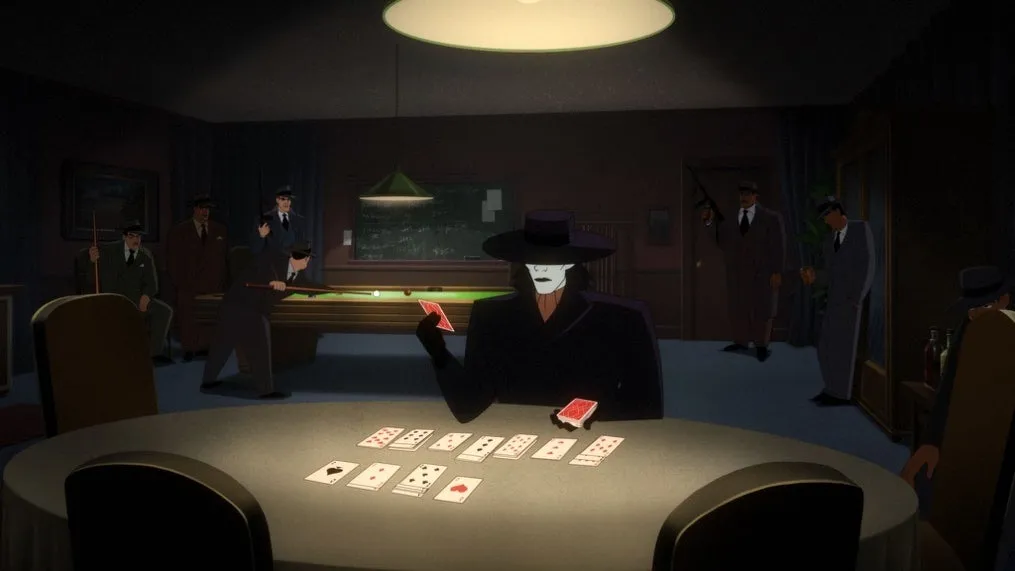
Matthew Needham voices The Joker in Batman: Caped Crusader Season 2
Prime Video confirms the casting from Comic-Con, with Season 2 launching July 31 alongside the new game.

Amazon’s Batman game launches July 31 with Prime, using phones as controllers
Batman: Caped Crusader - Chronicles drops alongside Season 2, and Prime members get it at no extra cost.