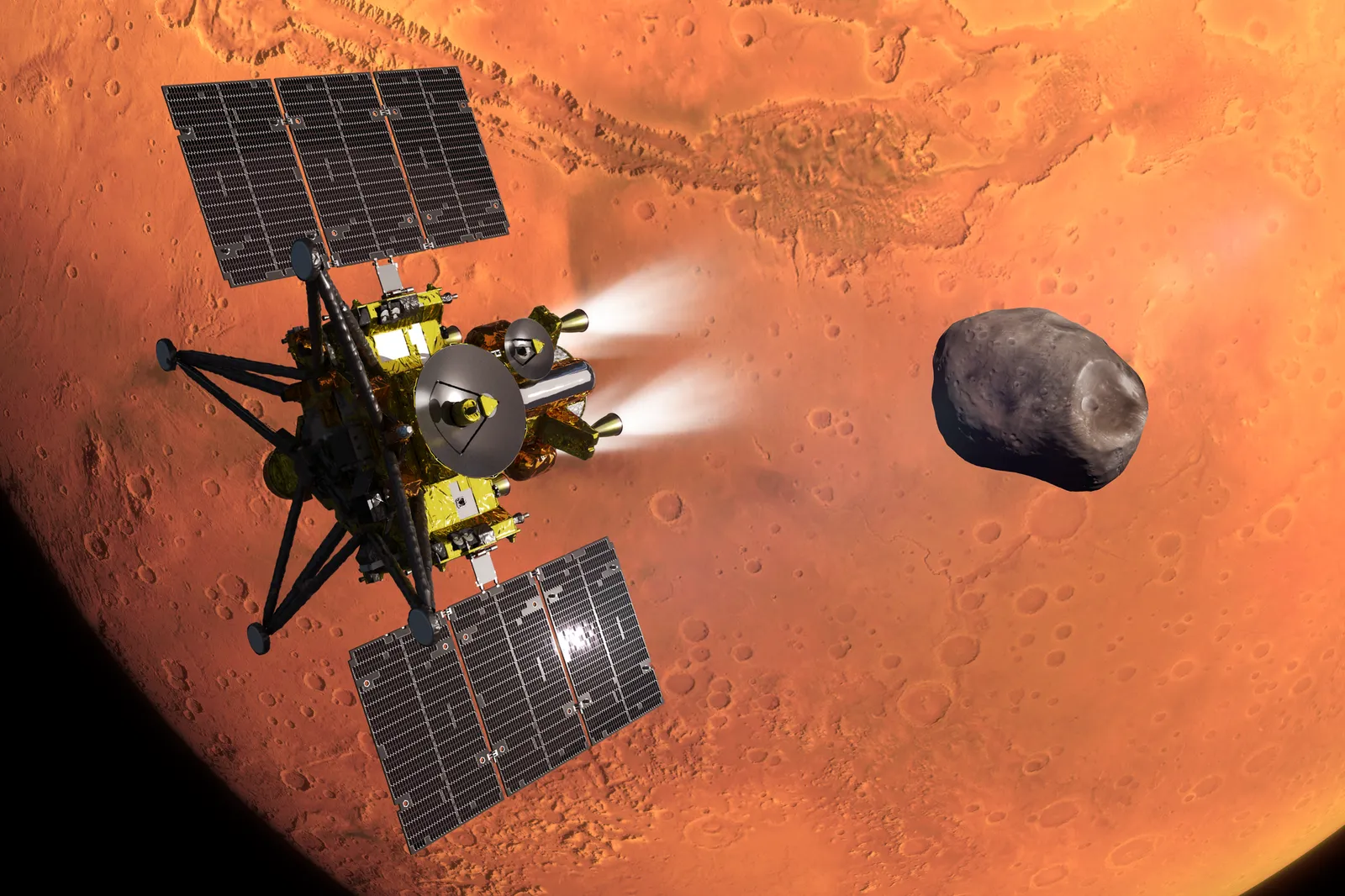
Oxford finds Mars had molten-rock rivers 15 miles below the surface
A boundary under Mars, decoded from NASA Insight seismic data, points to deep magma pooling.

Curating from trusted global sources…
13 briefings · “asa”

A boundary under Mars, decoded from NASA Insight seismic data, points to deep magma pooling.

NASA tracks brown carbon from July 14-20, 2026, and shows how smoke worsened air quality across the U.S. and Canada.

The August 2025 image of Nunatak Zaterjavshijsja reveals how an ice obstruction fractures the surrounding surface.

NASA’s virtual news conference at 2 p.m. EDT Wednesday, July 29 will preview a launch planned for Aug. 30.

NASA’s Psyche mission captured Mars surface features during its transit to a metal-rich asteroid, adding new data for science and strategy.
NISAR teams begin continuous access to L-band and S-band products, turning glacier stress into signal-level science.
A compact, multiview particle-detection instrument could turn CubeSats into near-Earth science platforms without sacrificing data quality.

SpaceX will help Orion beam high-definition video and data-heavy downlinks through Starlink lasers into Houston.

See the specific concepts NASA selected for NIAC Phase I in 2026, and why they matter for future missions.

A new nulling interferometer and a 100 km space baseline aim for 10^10 star-planet contrast and surface-feature resolution.

A July 17 composite photo shows Mars turning from crescent to close approach as Psyche gains speed for the 2029 asteroid arrival.

The new NASA-STD-3001 requirement ties habitable-air exposure to a 24-hour time-weighted average, with peak spikes handled.