

13,800-year-old Alaska camp reveals oldest dwelling in the Americas
A base camp in Alaska is rewriting the timeline of the first Americans, with the oldest house, needles, and possible dog bones ever found in the Western Hemisphere.
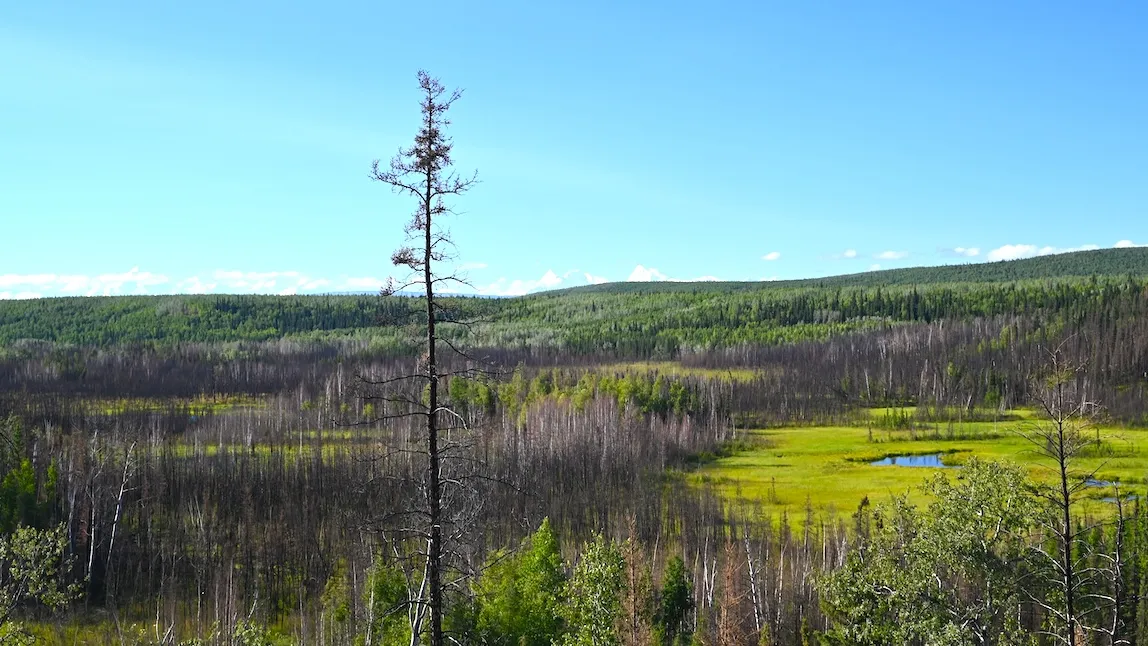
Archaeologists led by Kelly Graf at the University of Kansas have uncovered a 13,800-year-old base camp in Alaska with the oldest dwelling and needles in the Western Hemisphere, plus possible early domesticated dog bones. The discovery reshapes understanding of how the first Americans settled, with cultural links across the Bering Land Bridge and south of the ice sheets.
A 13,800-year-old base camp in interior Alaska is forcing a rewrite of the first chapter of human history in the Americas. Archaeologists led by Kelly Graf, an archaeologist at the University of Kansas, have unearthed what they call the earliest potential case of a habitation structure in North America: a hearth, a small pit, and a dirt stain where a wooden post once stood, likely the remains of a lean-to or early tent house. The site, named Shégˊ Xdaltthˊíˊ ("They Were There" in the Alaska Native Athabascan language), sits about 34 miles southeast of Fairbanks and was used off and on for a millennium by some of the first people to settle the continent. The discovery, published Wednesday in the journal Science Advances, also yielded the oldest needles ever found in the Western Hemisphere, a pendant made from antler, and bones that may belong to the earliest domesticated dogs in the Americas. For executives and decision-makers, the find is a reminder that the conventional timeline of human migration - and the assumptions built on it - can be overturned by a single well-placed dig.
Graf told Live Science she expected to find "hunting tools and knapping debris surrounding a hearth or two," but instead stumbled onto "a base camp with tens of thousands of artifacts." The scale is what makes Shégˊ Xdaltthˊíˊ remarkable. Most Beringian sites are small seasonal hunting camps scattered across a vast geographic area, leaving huge gaps in the story of how people entered the Western Hemisphere. Genetic and archaeological studies suggest the ancestors of today's Indigenous Americans arrived around 21,000 years ago, but the new find shows that by 13,800 years ago, at least one group had settled in enough to build structures, cook meat in an earth oven, and craft tools and jewelry. The researchers described the complex feature as evidence of people "settling in" to their new territory, and wrote that "early Alaskans knew their surroundings well."
The site's artifacts also reveal a surprising web of connections. The stone tools - diamond-shaped hafted bifaces crafted from rhyolite and basalt - are unique to central Alaska but similar to tools found much farther west in Beringia, in modern-day northern Siberia. Obsidian artifacts came from a geological source hundreds of miles to the northwest, meaning people were moving raw materials across vast distances. The bones of more than a dozen wolf-like animals add another layer: analysis of one jaw showed it belonged to a population of wolf-like animals unique to central Alaska, not a dire wolf or a Pleistocene gray wolf. Current genetic evidence suggests early domesticated dogs in North America came from Siberian wolves, and the timing and location of Shégˊ Xdaltthˊíˊ provides circumstantial evidence that the people there may have been dog owners. "Like humans, potentially, the canids of Shégˊ Xdaltthˊíˊ and other early Alaskan sites were recent immigrants from Asian Beringia," the researchers wrote.
The cultural connections run south as well as west. The eight bone needle fragments found at the site are the oldest eyed needles ever discovered in the Western Hemisphere, previously known only from Paleoindian sites in temperate North America. The antler pendant, with a hole drilled at one end and a point at the other, resembles personal adornment items found farther south. "The co-occurrence of these cultural features at the single site of Shégˊ Xdaltthˊíˊ is truly notable," the researchers wrote, and it "highlight[s] the strong cultural connection between early Beringians and Americans." Whether the people themselves traveled these routes is still unclear. "It would be hard to pin down whether or not they were moving back and forth during a lifetime, but at least we can say there is a connection," Graf said.
For those who track how industries and institutions respond to new evidence, the study is a case study in the value of revisiting old assumptions. Spencer Pelton, an archaeologist at the University of Wyoming who was not involved in the research, wrote in an accompanying perspective that Shégˊ Xdaltthˊíˊ is "the oldest site in the Americas containing a large and rich assemblage of features, artifacts, and faunal refuse indicative of prolonged residential occupation, providing an unprecedented glimpse into the lives of North America's first residents." The find also underscores the importance of local knowledge: two of the study's co-authors are elders from Alaska Native corporations nearest to the site, who named the site and helped decide where to excavate. Graf is already planning future digs and hopes to bring younger Alaska Native people into the field, noting that "Alaska is a big place and so remote, so there are really just a few small areas that have been intensively investigated."
The broader implication is that the peopling of the Americas is still a young science. Only two archaeological sites, including the 24,000-year-old Bluefish Caves site in the Yukon, suggest humans were settling in Beringia considerably earlier than Shégˊ Xdaltthˊíˊ. Each new excavation has the potential to shift the timeline, the routes, and the relationships between early populations. For leaders in any field, the lesson is straightforward: the evidence base is never complete, and the most confident narratives are often the ones most vulnerable to a single new data point. The people at Shégˊ Xdaltthˊíˊ were not just passing through - they were building homes, sewing clothes, cooking for large family groups, and maintaining ties across thousands of miles. That is not a footnote in history; it is a new foundation for understanding how the Americas were settled.
This story's Key Insights and Take-aways are locked.
Create a free account to unlock Executive Actions for one credit.
Register to UnlockAlways free for Executives Club members. Join the Club
More in Science

Alaska's 1,580-foot tsunami had warning signs. Scientists just found them.
Rapid glacier retreat, heavy rainfall, and thousands of tiny tremors preceded Alaska's 1,580-foot tsunami, a warning for every coastal community in a warming world.

The rare mutation that lets high-risk brains dodge Alzheimer's
Scientists found a natural defense against protein buildup, opening a new path to preventive treatments.

3,000 steps a day may halve Alzheimer's decline, study finds
New research links a modest daily walk to less tau buildup and nearly half the cognitive and functional decline, even for those with early signs.