

41,677 structurally deficient bridges, yet sensing plans still miss the hidden damage
Federal bridge inspections are “snapshots” up to 24 months apart. Here’s where quantum sensors could actually help.
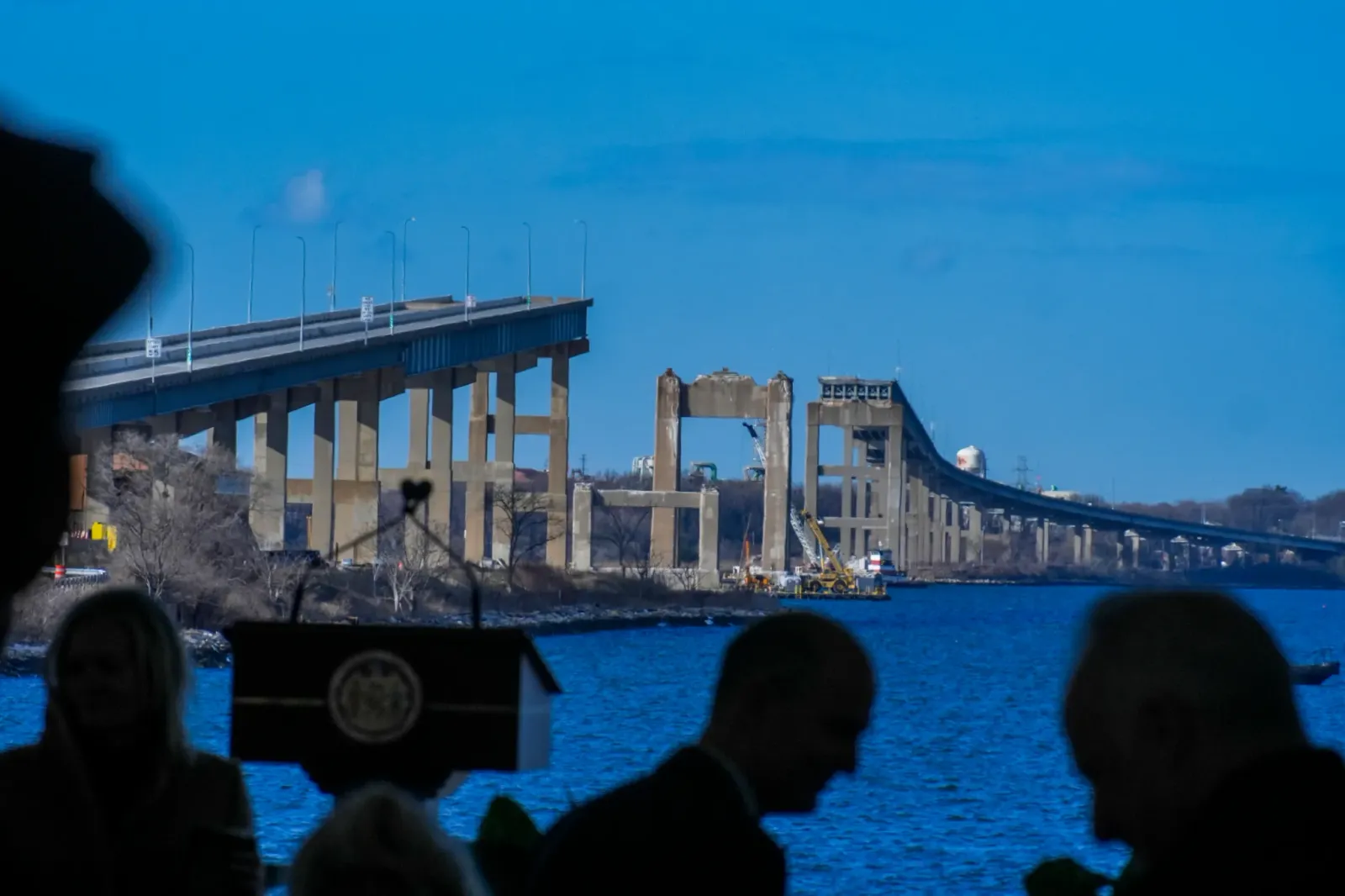
Fortune spotlights the gap between current inspection rules and the hidden deterioration behind bridge decks. The piece argues that quantum sensors could extend sensing in the messy real world, especially for magnetic inspection.
Every bridge has parts drivers never see. And when 41,677 American bridges are rated poor, the problem is often happening where nobody looks until it is too late. “Poor” does not mean unsafe, but it does mean at least one key bridge element received a poor rating, indicating deterioration or cracking that will require significant repair. That is why the central limitation is so brutal: current federal inspections are essentially snapshots, taken on a schedule that can be up to 24 months apart.
Under current federal rules rooted in National Bridge Inspection Standards mandated by Congress in 1968, many bridges must be inspected in at most 24-month intervals. Higher-risk bridges can require shorter intervals, such as those carrying heavy interstate traffic, those with aging structures or known defects, or those built over saltwater. Lower-risk bridges may qualify for longer intervals. But in all cases, a bridge can change between visits. Corrosion can spread below a deck that looks sound. A small fatigue crack can sit inside a weld. A flood can wash soil away from a pier while the roadway above looks unchanged. By the time cracks, loose concrete, or lane closures show up, the cheapest repair window may already have closed.
The bridge inspection problem becomes a national balance sheet issue fast. The United States has more than 624,000 highway bridges. About 220,000 need major repair or replacement, and 41,677 are rated poor, also called structurally deficient. The average U.S. bridge is about 47 years old, with many near or past their designed 50-year life. About 45% have exceeded their planned design lives. That aging reality helps explain why timing matters: typically, it is less costly to preserve bridges in fair condition than those already in poor condition. The price tag for making all identified necessary U.S. bridge repairs would cost about US$467 billion.
And the “why now” is not theoretical. Past failures show how small details can matter on big structures. The 2007 I-35W bridge collapse in Minneapolis killed 13 people and injured 145. One contributing factor was undersized gusset plates, steel plates that connect intersecting beams, along with added weight and construction loads. The piece’s point is not that a sensor can prevent every collapse. It is that better measurement can help engineers notice when important details are changing, before visible damage forces a crisis response.
So what do we use today? Sensors extend inspections by tracking how change forms between scheduled checks. The existing toolbox is big, but it is not one perfect device. Some sensors see. Drones can photograph cracks and loose concrete. Infrared cameras can show heat patterns linked to damaged deck zones. LiDAR, short for light detection and ranging, can build three-dimensional maps. Some sensors listen. Ultrasonic testing and impact-echo probes send sound waves into concrete or steel. Acoustic emission sensors listen for active cracking. Accelerometers track how a bridge vibrates. Some sensors scan below the surface. Specialized radio tools attempt to locate hidden steel, trapped moisture, empty pockets, or crumbling layers inside concrete. Magnetic and electrical instruments try to guess whether that buried steel is rusting away.
One theme runs through all of it: combining methods. A bridge deck inspection robot uses subsurface radar, electrical tools that measure moisture, and a standard camera. It then builds simple visual maps showing the exact health of the bridge deck. Fiber-optic sensing could be another route. Researchers have shown that existing telecommunication cables can record bridge vibration signatures. But here is the catch executives should care about: sensors provide evidence, not verdicts. Engineers still have to decide whether to repair, restrict traffic, or close a bridge by considering inspection history, traffic loads, weather, material condition, and measurement uncertainty. Field data is messy. Wet concrete can blur radar results. Traffic, wind, and temperature can mask vibration changes.
This is where the quantum angle becomes more than a science fair buzzword. Quantum sensors may help when the signs of structural distress are weak, buried, or noisy. Quantum sensors use quantum systems such as atoms or electron spins as highly sensitive probes. By measuring shifts in atomic properties in response to extremely subtle changes in gravity, motion, or magnetic fields, they can detect flaws that traditional instruments might miss. The nearest-term opportunity, the piece says, is likely magnetic inspection.
The author notes that their lab co-authored a review, not yet peer-reviewed, on quantum magnetometers for infrastructure inspection. These sensors identify signals from induction responses, magnetic flux leakage, stress, corrosion, and operational currents. In plain terms, they may help map weak magnetic fields near steel, cables, or electrical conductors. Changes in those local magnetic fields can reveal hidden rust, snapped wire strands inside a thick suspension cable, or abnormal stress points in steel before a crack even forms. Atomic magnetometers are a type of quantum sensor that uses atoms in a vapor cell to measure faint magnetic fields and can operate at room temperature.
But the hard part is not building a record-setting sensor in a quiet lab. It is making a device that works on a noisy bridge, near traffic, weather, steel, and electrical interference. Quantum sensors will matter only where they beat cheaper classical tools in real inspection conditions. The strategic stake for decision-makers is simple: inspection regimes are time-limited by regulation, and hidden deterioration is not. If sensing extends the visibility window, the market for smarter maintenance shifts from reactive repairs to earlier, more cost-controlled intervention.
This story's Key Insights and Take-aways are locked.
Create a free account to unlock Executive Actions for one credit.
Register to UnlockAlways free for Executives Club members. Join the Club
More in Technology

Nvidia's $89B data center quarter: the 9 companies cashing in
The AI buildout is minting fortunes beyond GPUs, and memory, cloud, and cooling suppliers are riding the same wave.

Google quietly links your phone number to every Android account on your SIM
Adding a SIM now ties your phone number to all Google accounts - and future accounts inherit it. Here's the security and privacy stakes.

Hijacker AI 'Skynet mode' runs 100,000 attack steps against exposed models
Symantec caught a criminal AI agent that borrows other models, steals data, and mines crypto; the only relief is no confirmed victims yet.