

6.5 million Somalis face severe hunger as drought, floods, and aid cuts pile up in Mogadishu
Zeynab Ibrahim fled a shrinking town, but hunger followed her into an IDP camp, exposing how fragile food security is.
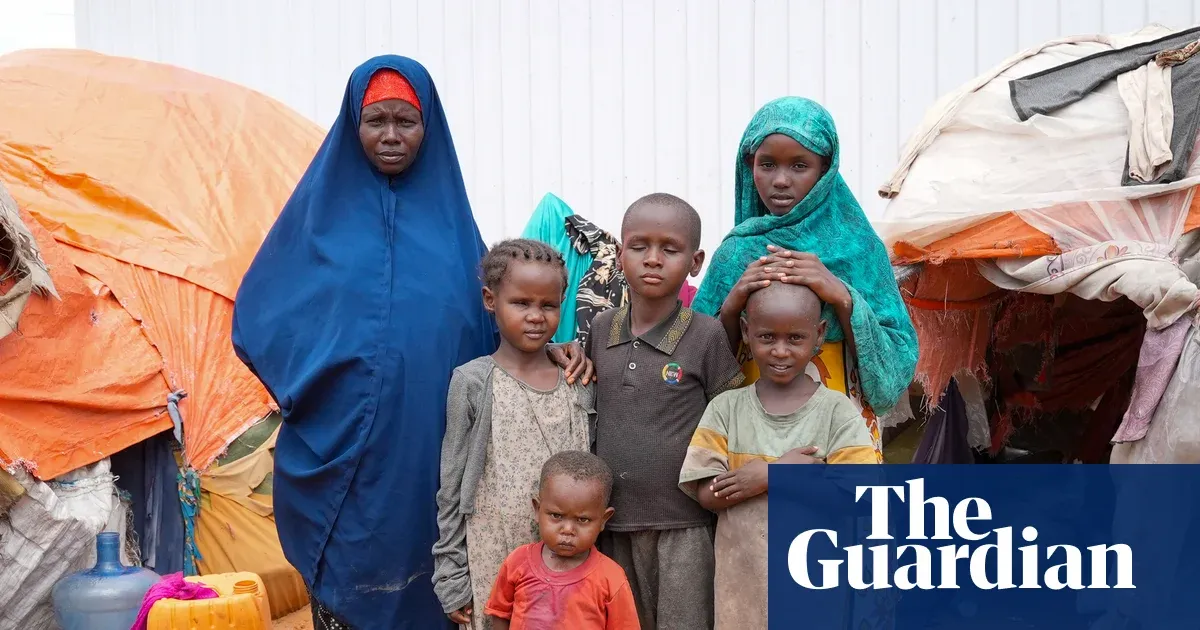
Zeynab Ibrahim says her town in Somalia shriveled for three years as rains failed and reservoirs depleted, pushing her and her family into a camp for internally displaced people in Mogadishu. The consequence for decision-makers is stark: climate shocks plus conflict and aid cuts can turn displacement into a sustained hunger crisis.
More than 6.5 million Somalis have been pushed to the brink of severe hunger, as the climate crisis, fighting, and cuts in aid leave families stranded in a cycle of despair. The numbers are staggering, but the human shape of them is immediate: in Mogadishu, in a camp for internally displaced people (IDP), Zeynab Ibrahim sits in front of her shelter and describes what three years of failed seasons did to her community.
For three years, Ibrahim watched her little town “shrivelled up and died.” The rains never came. Reservoirs were depleted. Farms gradually turned to dust. Hunger and sickness swept through the village, claiming the lives of many, including four of Ibrahim’s 10 children. She says, “We tried every means to survive - selling dried grass and digging up water from the barren earth. Unfortunately, there was nothing left, so we had no choice but to escape to save our children.” The climate shock that started as drought and land collapse did not end with flight. It followed families into camps.
This is the part that matters for executives, fund managers, and anyone setting strategy for humanitarian, development, or impact-linked budgets: displacement does not automatically reset risk. When climate stress collides with conflict and aid reductions, people can become trapped in limbo where basic needs are perpetually underfunded. Ibrahim’s story is anchored in that reality. She is not simply recounting an evacuation. She is describing a trail that kept going after the move, with hunger and sickness persisting because the underlying drivers were not resolved.
To understand why this becomes a “stay bad” problem, it helps to map incentives and constraints. Humanitarian operations typically rely on funding flows, supply chains, and access to affected areas. If those flows are cut, even well-intentioned responses can shrink just as needs spike. In settings where fighting is active, access can worsen quickly, and logistics become more expensive and slower. Climate-driven drought then becomes a multiplier, reducing local food production and depleting water reserves. When families flee, the demand for food, water, and medical support rises in a concentrated location. If assistance does not scale accordingly, the gap shows up as malnutrition and preventable illness.
The Mogadishu camp Ibrahim is in is in the Kahda district of Somalia’s capital. In these circumstances, camps can become downstream destinations for people pushed out by failed harvests and collapsing rural livelihoods. That is one reason the phrase “internally displaced” can be misleading for decision-makers. Internally displaced people may not cross an international border, but their survival math can look like cross-border refugee crises: scarce resources, overcrowding pressures, and limited ability to earn income. Ibrahim’s account of selling dried grass and digging up water from barren earth underscores how quickly coping strategies erode. When the options run out, families escape not because conditions suddenly improve, but because conditions become unsustainable.
For boards and leaders overseeing humanitarian, food security, or social-risk portfolios, the second-order implications are hard to ignore. When the climate crisis and fighting reduce productive capacity, hunger risks become structural. Aid cuts can then lock in that structure by failing to provide a bridge to recovery. Even if rainfall returns later, displaced populations may have already lost assets, livelihoods, and health, making recovery slower and more expensive. The result is a longer tail of demand for food assistance, health services, and shelter support, which strains budgets and can force tough tradeoffs.
There is also a portfolio and governance angle. Severe hunger at this scale implies that planning assumptions based on “short-term spikes” may be wrong. Executives who manage programs tied to food security often model scenarios around seasonal variation. Ibrahim’s story suggests that multi-year drought impacts can compound, and that displacement can convert climate shocks into prolonged humanitarian obligations. For decision-makers, the key question becomes less “Can we respond during the peak?” and more “Can we prevent the peak from becoming a plateau?”
In the end, Ibrahim’s testimony is a reminder that climate and conflict do not simply displace people. They reshape the odds of survival. More than 6.5 million Somalis are now facing severe hunger, driven by the climate crisis, fighting, and cuts in aid. If you lead in the systems that fund, deliver, or govern relief and resilience in places like Somalia, the strategic stakes are immediate. The question is whether strategies treat drought-driven migration as an endpoint. Ibrahim’s story argues it is the beginning of another phase, one where hunger and sickness can follow families into the camp unless support keeps pace.
This story's Key Insights and Take-aways are locked.
Create a free account to unlock Executive Actions for one credit.
Register to UnlockAlways free for Executives Club members. Join the Club
More in Business

Anthropic’s Levant Alpöge cracks the Jacobian conjecture after 87 years
A Harvard valedictorian used Claude to hit a 1939 breakthrough, but the missing “why” is the real problem.

Uber buys Delivery Hero for nearly $15B, vaulting to top food delivery outside China
The deal doubles Uber's dual-services footprint and pushes a ride-and-eats bundling play into 50 more markets.

Epic and Google drop settlement bid, forcing rival Android app stores by July 22
Google told the court it is ready to carry third-party app stores starting Wednesday, July 22.