

Anthropic’s Levant Alpöge cracks the Jacobian conjecture after 87 years
A Harvard valedictorian used Claude to hit a 1939 breakthrough, but the missing “why” is the real problem.

Anthropic employee Levant Alpöge used Claude’s Fable 5 to resolve the Jacobian conjecture, a problem tied to Ott-Heinrich Keller’s work since 1939. For decision-makers, the competitive risk is not just AI solving math, it is AI solving it without the proof-style “story” that institutions can trust.
On Sunday afternoon, an Anthropic employee, Levant Alpöge, used Claude’s Fable 5 to resolve the Jacobian conjecture, a problem mathematicians have wrestled with since 1939. By the time Kevin Buzzard woke up in London the next morning, the result had been verified, and within hours it was the talk of the Imperial College London pure mathematics department. At the time of writing, Alpöge’s post announcing the result has drawn more than 20 million views on X.
The kicker, and the reason this feels like more than a nerd flex, is that the solution passes the setup at the heart of the conjecture but still fails the test. The Jacobian determinant holds steady at -2 everywhere, yet three different starting points are sent to the same destination. In other words: the expected behavior didn’t show up, so the conjecture does not hold.
Buzzard called it “a big day,” and he framed the moment as both thrilling and unsettling. The result is tied to a century of work: the conjecture traces back to German mathematician Ott-Heinrich Keller, and it is built on an even older concept from Carl Gustav Jacob Jacobi and the Jacobian determinant. The field’s job was brutally simple to describe and brutally hard to do, because this kind of problem asks what mathematicians call “maps,” meaning when you can go from outputs back to inputs under certain conditions. For decades, researchers couldn’t prove Keller’s conjecture true, or find a reason it was false. Now the models have found a counterexample that works on the math’s rules, then breaks its expected outcome.
Why does this matter beyond pure math? Because this is the same story the AI world has been living in across disciplines: rapid progress on the surface, and a nagging gap underneath. Akhil Mathew, the University of Chicago mathematician who Alpöge credits with suggesting the problem, put it plainly to Fortune. You can check the result is correct, but “it would be nice to be able to tell a story.” That phrase lands because in formal mathematics, “story” is really “proof.” Proofs are a chain of logical steps that end at the claim you are making, and they are the currency of trust. They can be hundreds of pages long, and they often take months of explanation for experts to verify.
Current AI models, Buzzard said, can produce the “how” without the “why.” And when the “why” is missing, the institution does extra work to convert a plausible output into accepted knowledge. That is not just an academic problem, it is a governance problem. If a model can reach correct answers without transparent reasoning, then peer review, attribution, and reproducibility become harder to scale. That is why the source points to a broader movement: in June, 16 researchers from 15 universities published the Leiden Declaration on Artificial Intelligence and Mathematics, urging the profession to set guardrails around transparency, attribution, and peer review before AI changes what mathematical knowledge even means.
This is also happening in a time when humans may be losing structural power to AI. The source links AI breakthroughs to mid-2025 momentum, when models first solved five of six problems at the International Mathematical Olympiad. From there, more problems fell quickly, including OpenAI’s model disproving an 80-year-old Erdős conjecture on combinatorial geometry in May. Meanwhile, funding for mathematics research has been under pressure, with the source stating federal funding for mathematics research has fallen roughly 72% under the Trump administration’s cuts to the National Science Foundation. It also notes PhD admissions at top research universities are down 15% this fall, the second consecutive year of contraction, and that George Washington University’s math doctorate will admit no funded students at all.
So the anxiety is not just “AI can do math.” It is “math institutions might not have the bandwidth to keep up with what AI produces.” Mathew called this moment a “very rapid and very unsettling change,” especially for junior mathematicians. Michael Harris, in a June essay in Boston Review, argued that the AI industry treats reasoning as commercially worthless and human mathematicians as a “beta version of intelligence.” His framing matters because it puts the spotlight on incentives. If understanding is devalued, then the system optimizes for outputs, not for the proof narratives that let humans and machines collaborate safely.
And yet, there is a counter-move inside Buzzard’s own world: Lean. Buzzard’s career project is Lean, a popular computer language in which proofs are checked by machine rather than by exhausted PhDs. He said the proof was already checked in Lean by the time he woke up. That is a crucial second-order implication for boards, labs, and investors: the endgame may not be “AI writes proofs humans understand,” but “AI writes proofs machines can verify,” shifting trust from expert judgment to verification pipelines.
The final, more subtle stake is what Buzzard called “taste,” the ability to ask the right question. He argued that machines are “abysmal” at question-asking, producing questions that are boring, obviously true, or obviously false. The monuments of the field are named for the people who posed them, not the people who settled them. It is “not a coincidence,” Buzzard said, because coming up with the right question requires a brilliant mathematician. If executives take anything from this: the competitive advantage may move from solving to steering. AI can sprint through search. Humans still have to decide what is worth searching for, and institutions need mechanisms to preserve that judgment as math, like so many domains, accelerates under machine pressure.
For decision-makers in AI-adjacent work and research-heavy organizations, the strategic question is simple: will your governance and verification model keep up with systems that produce correct answers faster than they produce the proof-style reasoning that traditional review expects? The Jacobian conjecture is a headline. The real test is whether your trust architecture can absorb the next one just as quickly.
This story's Key Insights and Take-aways are locked.
Create a free account to unlock Executive Actions for one credit.
Register to UnlockAlways free for Executives Club members. Join the Club
More in Business
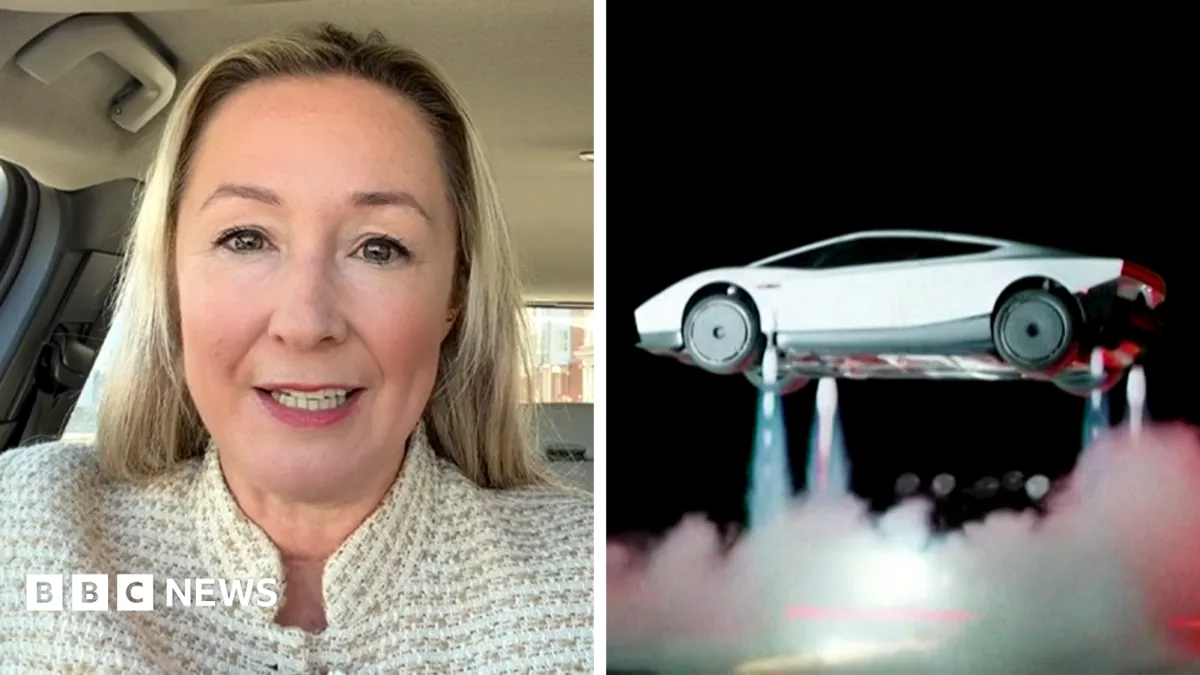
Elon Musk unveils a flying car, and SpaceX helped build it
The Tesla CEO's showcase at a SpaceX facility signals a future where road and rocket engineering converge.

Apple's $2,000 iPhone Duo opens preorders, taking on Samsung and Google
Apple's first foldable hits the market at a premium price, reshaping a category Samsung and Google have led.

Pope Leo XIV, first American pope, diagnosed with lung cancer
The 71-year-old Chicago-born pontiff underwent successful surgery on his right lung, and his diagnosis raises new questions about his AI-focused papacy and the Vatican's future.