

977 Days a Hostage: Was Forgiveness Just Stockholm Syndrome?
A journalist's two-and-a-half-year ordeal in Somali pirate camps forces a question every crisis negotiator and leader must face: where empathy ends and survival instinct begins.
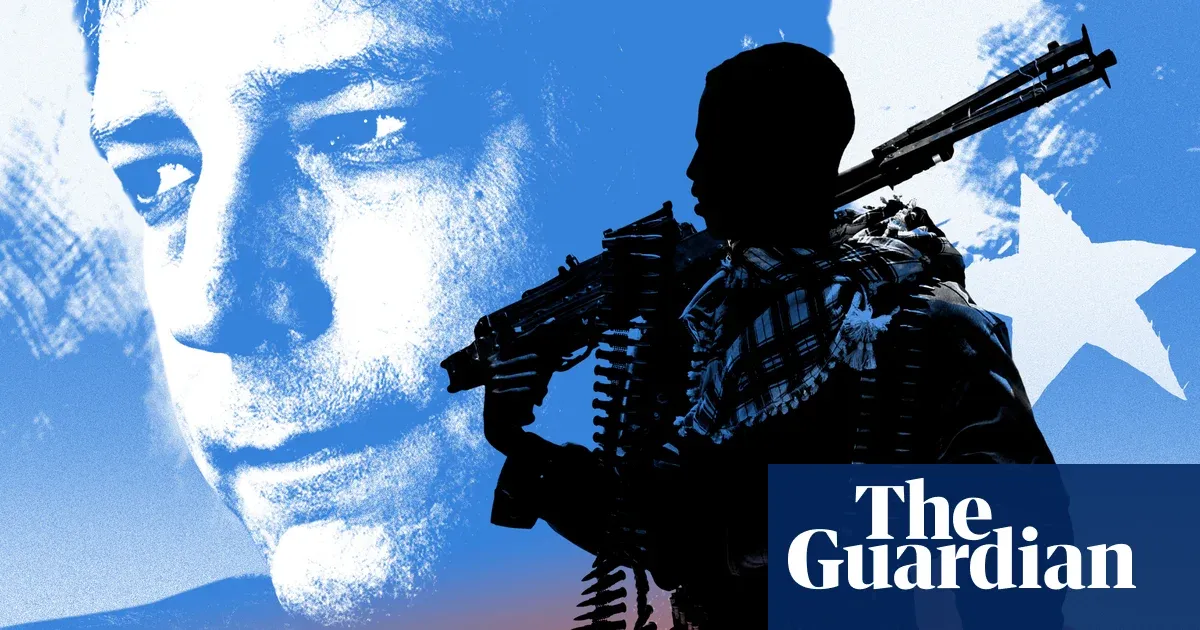
A journalist held captive for 977 days by Somali pirates recounts how the idea of mercy helped him endure, then asks whether real forgiveness would be a form of Stockholm syndrome. For leaders facing prolonged crises, the account offers a raw case study in psychological endurance and the hidden costs of empathy.
Nine hundred seventy-seven days. That is how long a journalist spent as a hostage of Somali pirates after being kidnapped on the 10th day of a reporting trip to cover the outbreak of modern piracy off the coast. In a first-person account, the journalist describes the ordeal and poses a question that cuts to the core of survival psychology: "At first the idea of mercy was something that helped me through the ordeal. But would real forgiveness be a form of Stockholm syndrome?" The number alone is staggering - two and a half years of captivity, most of it on a thin, sweat-soaked foam mattress on the floor of a dusty room.
The journalist knew one of his captors as Mohamed Tahlil, a "gentle pirate" who oversaw a team of guards during the first months of captivity. The conditions were brutal and monotonous: concrete prison houses that changed but never improved, stretches in the Somali savannah sleeping on the ground, and a six-month period aboard a hijacked tuna vessel with 28 fishers from east Asia captured weeks earlier. Guards sat with AK-47s, listening to the radio or chewing khat, a narcotic plant. The question of forgiveness is not academic - it is a survival mechanism that the journalist himself used, and now he wonders if it crossed into a psychological trap.
For context, the journalist had traveled to Somalia specifically to report on the rise of modern piracy, a phenomenon that exploded off the Horn of Africa in the late 2000s and early 2010s. Pirate gangs, often organized and well-armed, captured ships and held crews for ransom, sometimes for years. The journalist was captured on land, but the gang was organized to capture ships at sea, a detail that underscores the sophistication of these operations. His account is a rare first-person window into a world that most executives only see in risk assessments or insurance premiums.
The psychological dynamics of captivity are well documented, but this account adds a personal layer. The idea of mercy - of seeing captors as humans rather than monsters - was a tool for endurance. It made the days bearable. But the journalist now confronts a darker possibility: that this empathy was not a choice but a conditioned response, a form of Stockholm syndrome where the captive identifies with the captor to survive. The distinction matters, because it blurs the line between genuine moral forgiveness and a survival-driven rationalization.
For leaders, this is not an abstract philosophical debate. Anyone who has faced a prolonged negotiation, a hostile takeover, a regulatory battle, or a PR crisis knows the pressure to humanize the adversary. Empathy can be a strategic asset - it helps you read the other side, anticipate moves, and find common ground. But the hostage account reveals the risk: when empathy becomes a coping mechanism, it can distort judgment. The captive who forgives may be making peace with the situation, or they may be surrendering to it.
The journalist's question - "would real forgiveness be a form of Stockholm syndrome?" - is a challenge to anyone in a position of prolonged stress. It forces a distinction between empathy as a tool and empathy as a trap. In business, the equivalent might be a founder who starts to rationalize an abusive investor's behavior, or a CEO who begins to see a relentless competitor as a partner. The line is invisible, and the stakes are high.
The strategic takeaway is not to abandon empathy, but to audit it. Ask yourself: Is this empathy helping me see clearly, or is it helping me survive a situation I should be trying to change? The journalist survived 977 days, and he is still asking the question. For executives, the lesson is that the mind's survival mechanisms can outlive the crisis. The ability to forgive is powerful, but only if it is a choice, not a reflex.
This story's Key Insights and Take-aways are locked.
Create a free account to unlock Executive Actions for one credit.
Register to UnlockAlways free for Executives Club members. Join the Club
More in Business

Elon Musk unveils a flying car, and SpaceX helped build it
The Tesla CEO's showcase at a SpaceX facility signals a future where road and rocket engineering converge.

Apple's $2,000 iPhone Duo opens preorders, taking on Samsung and Google
Apple's first foldable hits the market at a premium price, reshaping a category Samsung and Google have led.

Pope Leo XIV, first American pope, diagnosed with lung cancer
The 71-year-old Chicago-born pontiff underwent successful surgery on his right lung, and his diagnosis raises new questions about his AI-focused papacy and the Vatican's future.